

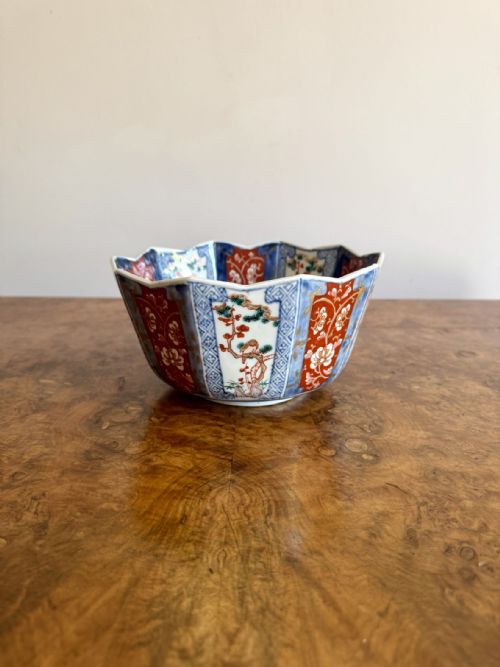


Panelled Blue Ceramic Dish
These panelled blue ceramic dish selections offer robust earthenware and porcelain forms decorated in rich cobalt pigments, bringing centuries of export trade history straight to the table.
Panelled Blue Ceramic Dish
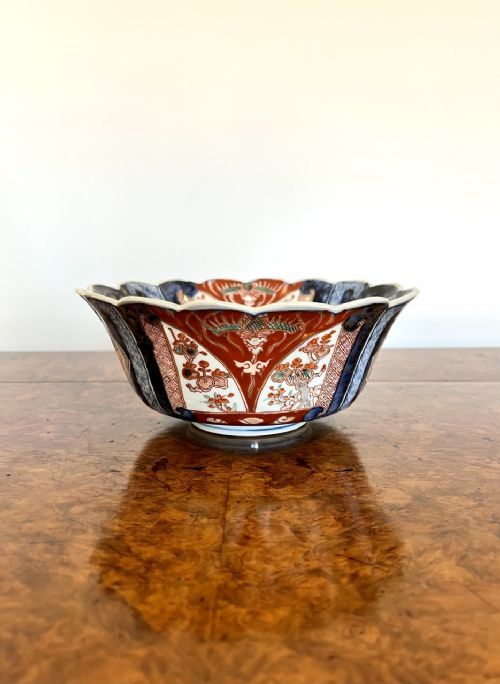
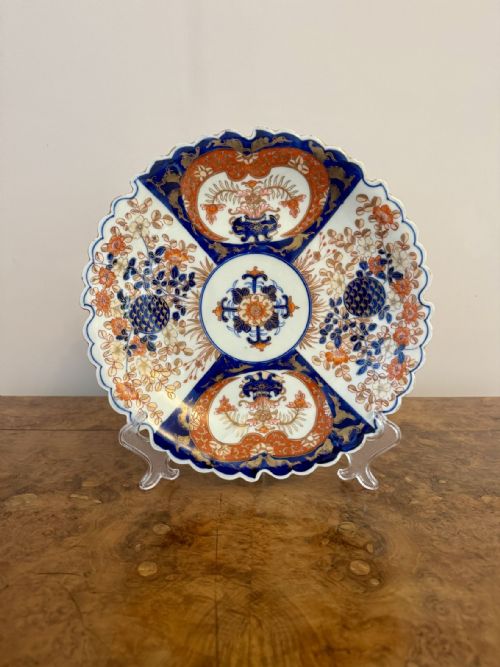
A panelled blue ceramic dish unites segmented geometric borders with vibrant cobalt decoration across earthenware and porcelain bodies. These pieces trace roots from sixteenth century Chinese export kilns through to nineteenth century Japanese imari workshops and Dutch delft potteries.
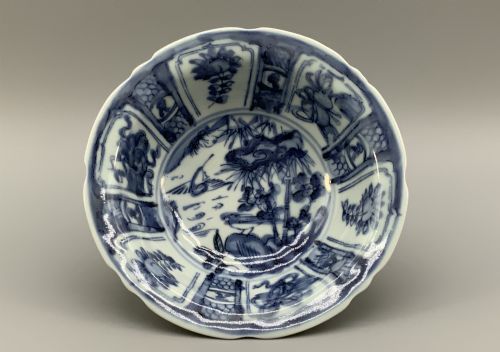
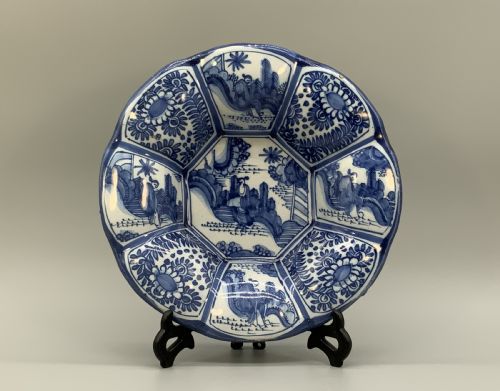
Buyers meet lobed bowls, chargers, and plates featuring compartmentalised designs influenced by far eastern trade routes. The selection spans early Wanli periods up to nineteen-twenties imari wares, showing deep historical range.
Materials and construction
Potters shaped porcelain and tin-glazed earthenware into lobed and hexagonal forms, applying cobalt underglaze pigments before high firing. Selected items incorporate gold leaf detailing over the glaze for rich surface contrast.
The technique relies on precise brushwork within panelled borders, using cobalt pigment to achieve deep blues characteristic of Ming, Kangxi, and Imari traditions.
Panelled Blue Ceramic Dish Retail Price Guide 2026
Typical asking prices for panelled blue ceramic dish among the pieces listed under this phrase on Sellingantiques today, from the lower quarter to the upper quarter. They describe what is for sale here now, not the wider market.
Early export potters divided plates into panels simply to keep the cobalt pigment from running while inside the kiln.
Judging quality
Quality rests on the crispness of the panelled divisions and the depth of the cobalt underglaze pigment. Stronger examples display controlled brushwork and balanced symmetry across lobed or hexagonal rims.
Purity of the white ceramic body and precision in the compartmentalised design separate standard production wares from finer export pieces.
The Panelled Blue Ceramic Dish Glossary
- Kraak
- A type of Chinese export porcelain characterised by panelled radial borders and central motifs, produced mainly in the late sixteenth and seventeenth centuries.
- Imari
- Japanese export porcelain decorated in underglaze blue, iron red, and gold, named after the port from which the wares were shipped.
- Lobed
- Having deeply curved indentations or sections along the rim and body, creating a scalloped profile.
- Charger
- A large decorative plate or platter used primarily for display rather than dining.
- Chinoiserie
- European artistic styles reflecting Chinese decorative motifs, popular in Dutch and British ceramics.
Panelled Blue Ceramic Dish: Frequently Asked Questions
How do I date a blue ceramic dish?
Dating relies on examining the ceramic body, pigment tone, and stylistic painting conventions found within the panelled borders. Early pieces show sixteenth or seventeenth century export characteristics.
Later nineteenth and twentieth century pieces adopt brighter palettes and heavier potting techniques, reflecting the evolution of imari and delft traditions.
Were these dishes meant for dining?
Larger chargers and heavily decorated panelled plates served principally as display pieces on sideboards or walls during earlier centuries. Smaller lobed bowls and dishes saw more practical domestic use at the table.
Display remains the primary purpose for most surviving examples due to their decorative cobalt surfaces.
What is the difference between kraak and imari?
Kraak wares feature distinct panelled borders framing central motifs executed in cobalt blue on a translucent porcelain body. They originate from sixteenth and seventeenth century China.
Imari wares incorporate broader colour schemes including iron red and gold alongside cobalt blue, stemming from Japanese kilns and later European imitations.
How should I care for antique ceramic dishes?
Display these pieces securely using padded plate hangers or stable stands designed for heavy chargers and bowls. Keep them away from direct sunlight and areas subject to sudden temperature changes.
Wash gently by hand in lukewarm water using mild detergent only when necessary, avoiding abrasive scourers entirely.