

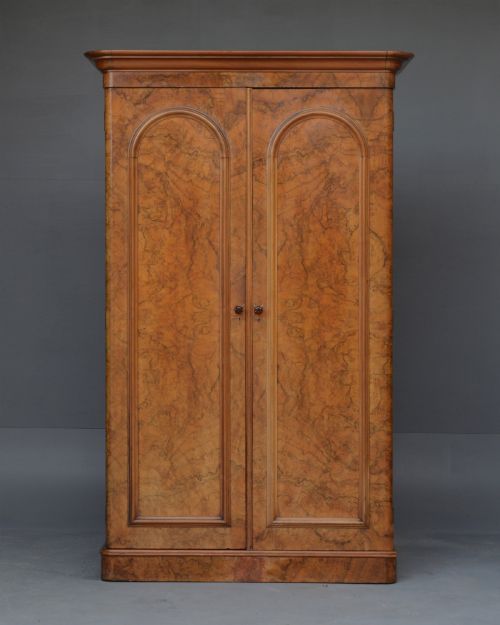
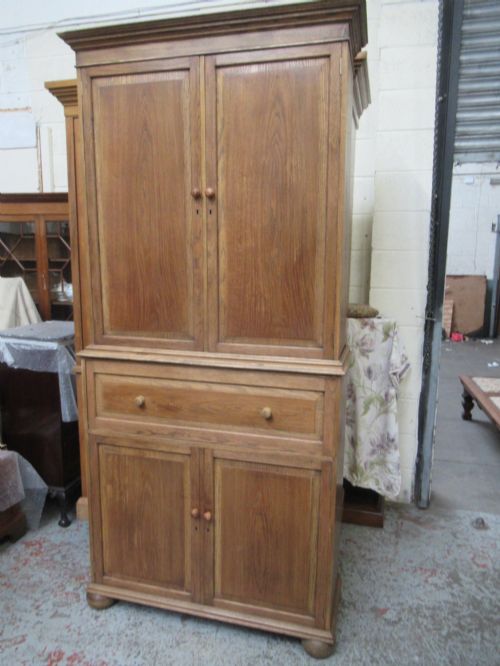
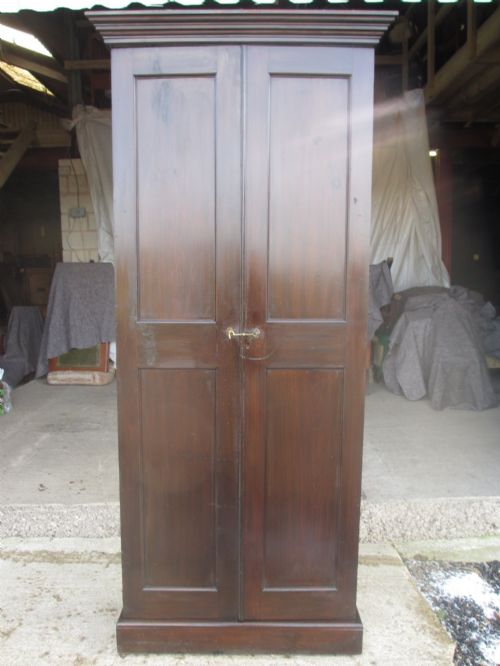
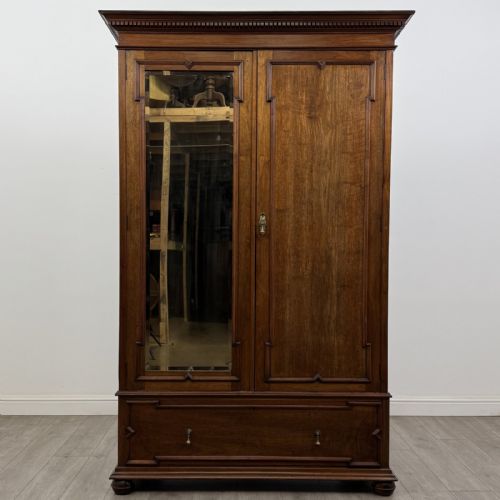
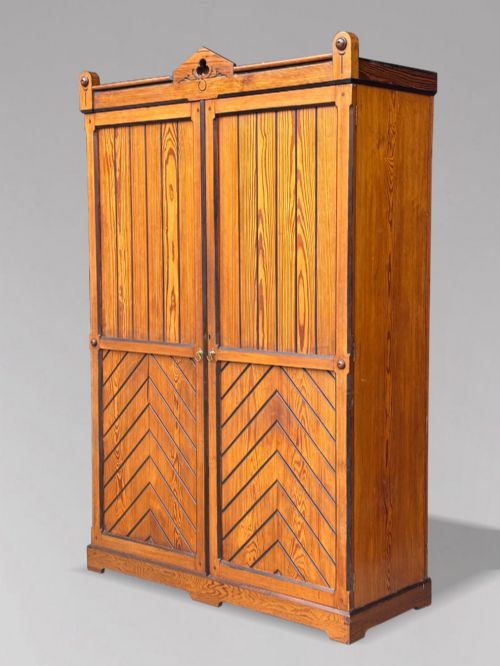
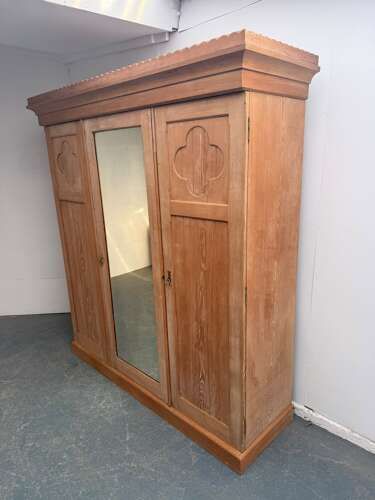
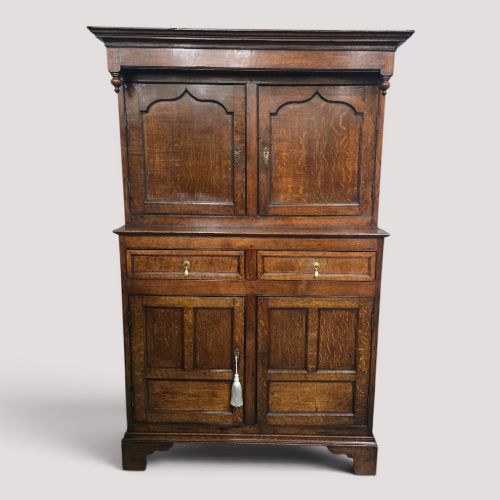
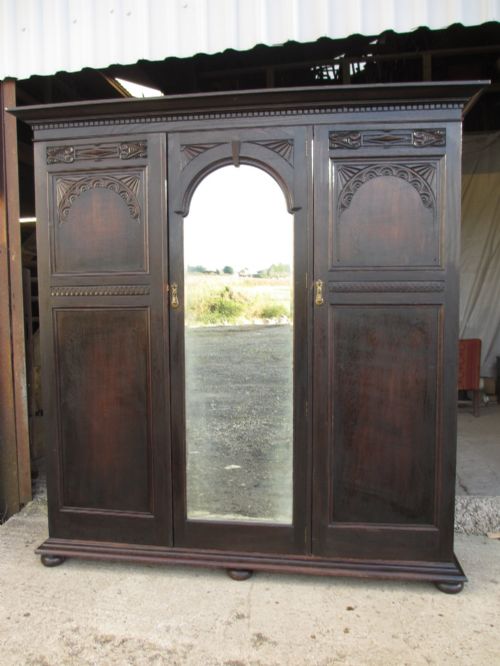
Paneled Wooden Armoire
A paneled wooden armoire offers substantial storage through centuries-old joinery, bringing deep historical presence into a modern bedroom.
Paneled Wooden Armoire
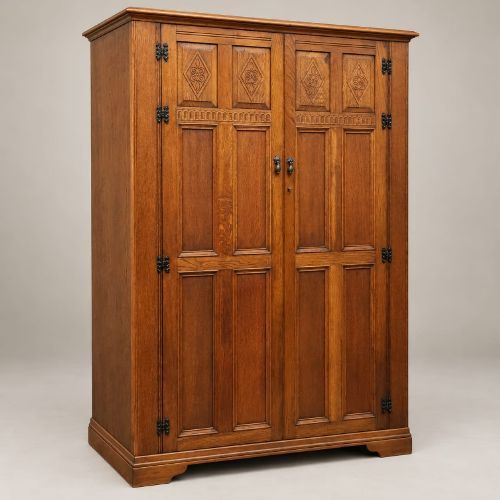
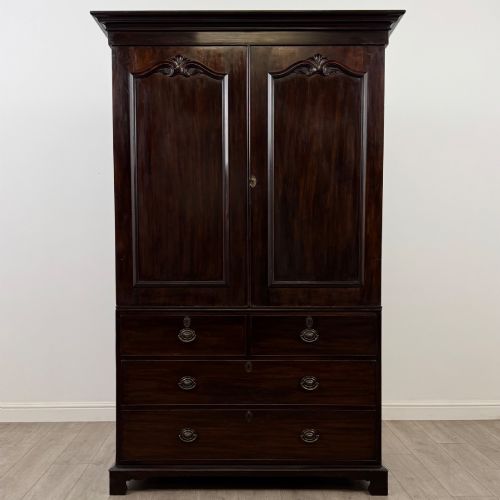
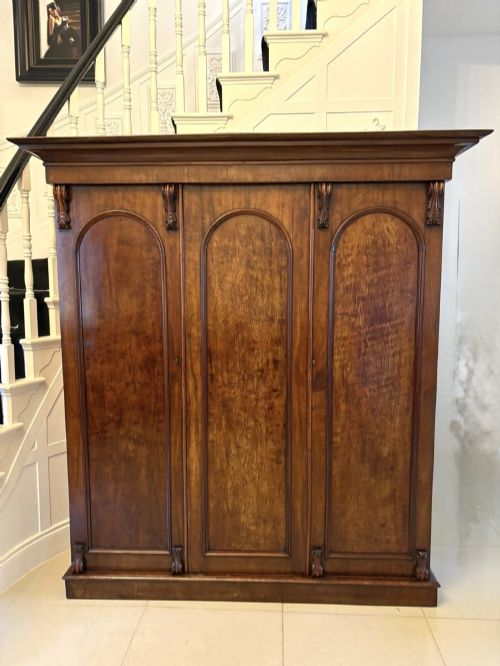
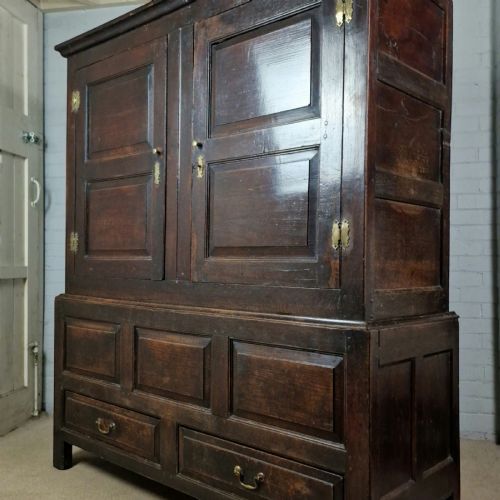
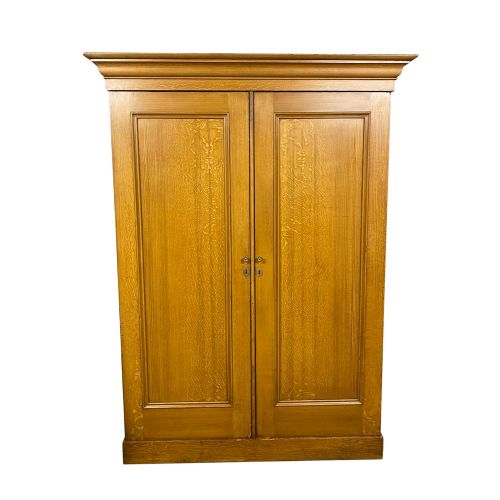
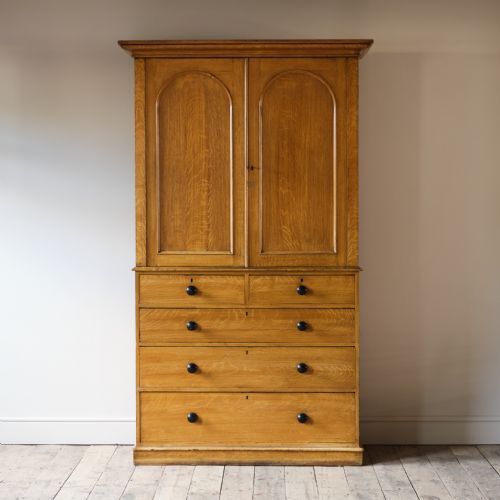
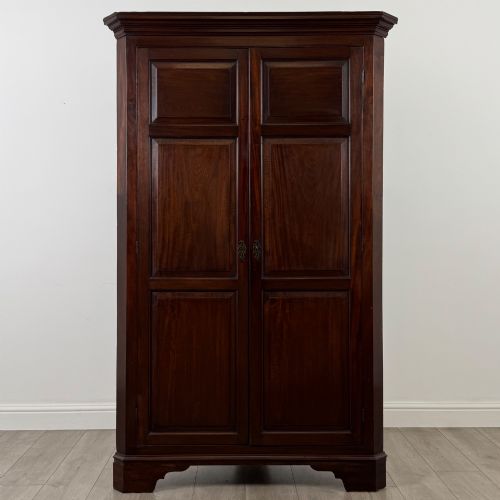
A paneled wooden armoire encompasses large freestanding storage furniture, taking the form of wardrobes, linen presses, and panel-built cupboards. When searching for a paneled wooden armoire, buyers encounter robust storage solutions designed for hanging clothes or linen organisation, often built in distinct regional traditions across Britain and continental Europe.
The pieces on this page span from the seventeenth century through to the early twentieth century, crossing Georgian, Victorian, Edwardian, and Arts and Crafts periods. Oak and mahogany dominate the earlier and formal iterations, while pine, walnut, and chestnut appear in regional and continental pieces, frequently presenting panel-door construction.
Formations range from tall two-door cupboards and hanging wardrobes to complex compactum designs and linen presses fitted with internal sliding trays. Buyers meet both substantial breakfront configurations and petite regional armoires, each reflecting the domestic requirements of its original era.
Materials and Construction
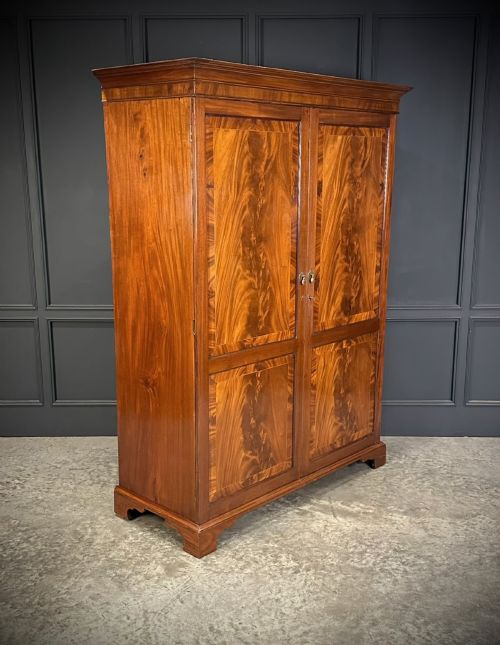
Makers relied on solid timbers such as oak, mahogany, pine, and walnut, frequently enhancing fine surfaces with flame mahogany veneer or burr walnut. Frame-and-panel construction allowed timber to expand and contract naturally with seasonal humidity changes without splitting the primary structure.
Hardware played an essential functional role, incorporating brass escutcheons, robust iron hinges, and occasionally sliding door mechanisms. Surfaces were finished in various ways, from traditional wax polish and French polish to original scumble paintwork and decorative black or grey painted coats.
Paneled Wooden Armoire Retail Price Guide 2026
Typical asking prices for paneled wooden armoire among the pieces listed under this phrase on Sellingantiques today, from the lower quarter to the upper quarter. They describe what is for sale here now, not the wider market.
Listings feature oak, mahogany, walnut, and pine constructed across the seventeenth, eighteenth, nineteenth, and early twentieth centuries.
Evaluating the Build
Quality rests primarily in the integrity of the timber selection and the precision of the joinery within the panel framing. Superior pieces utilise well-figured timbers, substantial stock for internal drawer linings, and cleanly fitted dust boards that maintain alignment over generations.
Originality distinguishes standard examples from exceptional ones, particularly regarding hardware, backboards, and surface treatments. Pieces retaining their early paint schemes, original brass fittings, or undisturbed interior configurations hold greater integrity than those altered or stripped down over time.
The Paneled Wooden Armoire Glossary
- Linen press
- A tall storage piece combining sliding trays or shelves in the upper section with drawers below, originally designed for flat linens.
- Compactum
- A fitted wardrobe divided into multiple internal sections, often combining hanging space, drawers, and linen shelves within a single unit.
- Scumble
- A decorative painting technique used to simulate the grain of more expensive hardwoods like oak upon a softer timber base.
- Breakfront
- A piece of furniture where the central section projects forward from the flanking outer sections, adding architectural depth.
- Escutcheon
- A protective metal plate surrounding a keyhole, frequently cast in brass and styled to match the period of the cabinet.
Paneled Wooden Armoire: Frequently Asked Questions
How do I fit a large wardrobe?
Many older wardrobes and armoires were designed to dismantle into modular sections, such as separate cornices, base units, and side panels, specifically to navigate tight stairwells and low cottage ceilings.
Checking whether a piece uses pegged joints, bolts, or knock-down construction reveals how easily it travels and reassembles in a new room.
What is a linen press used for?
Historically, linen presses stored household textiles flat within internal sliding trays to prevent creases, while the lower drawers held bulkier items.
Modern homes utilise these deep interior trays for folded jumpers, bedding, or media storage while maintaining the traditional aesthetic of a hanging wardrobe.
How do I identify a Georgian wardrobe?
Georgian pieces typically showcase dense timbers like mahogany or oak, featuring clean architectural proportions, heavy moulded cornices, and raised fielded panels.
Construction details such as hand-cut dovetails on internal drawers and pegged frame joints help separate eighteenth-century examples from later revival pieces.
Can I paint a dark oak cabinet?
While historic pieces often feature centuries of aged patina, many regional pine and oak cupboards were historically finished in decorative paint or scumble.
Choosing to paint or strip a cabinet depends entirely on whether the current surface is original or a later, non-historic application that permits modification.