

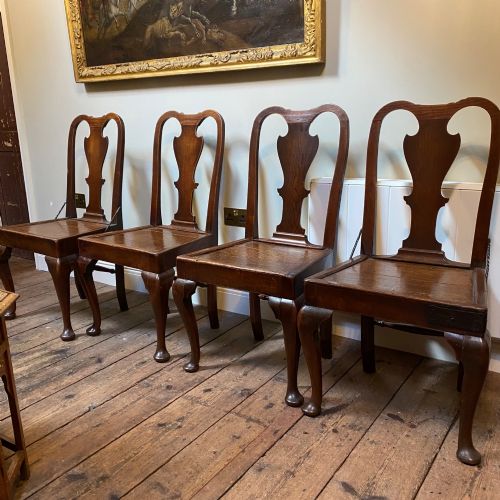
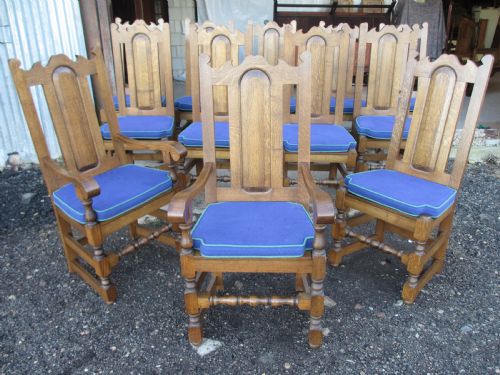
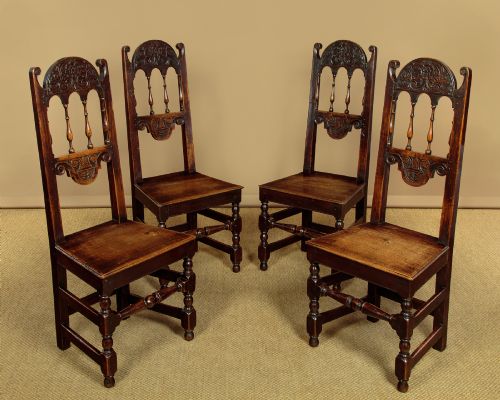
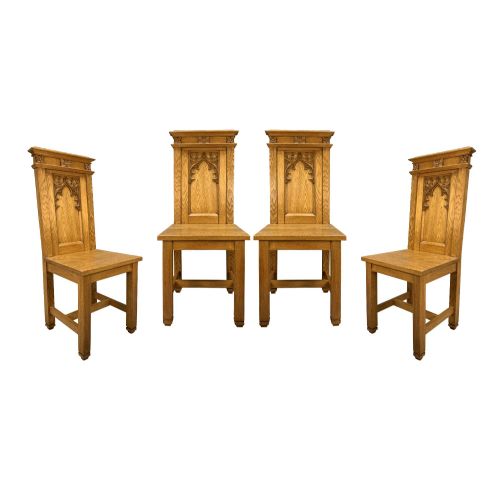
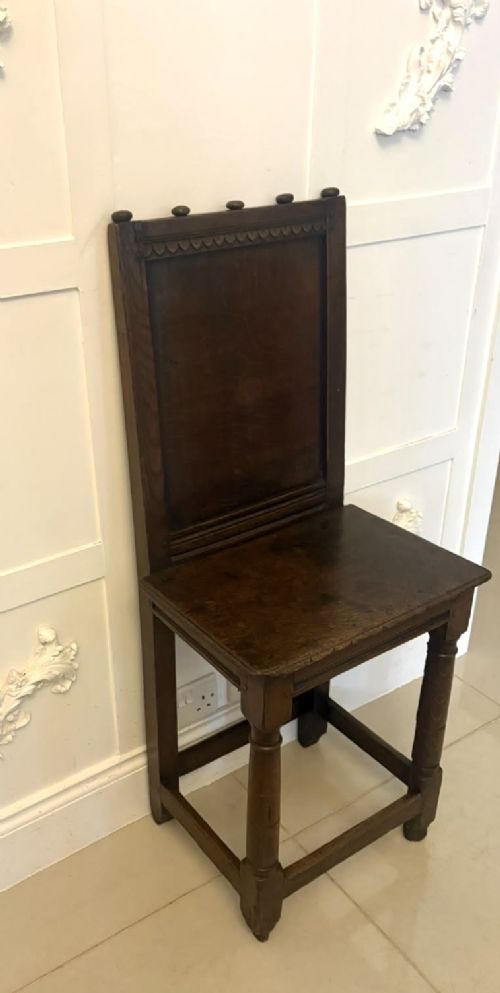
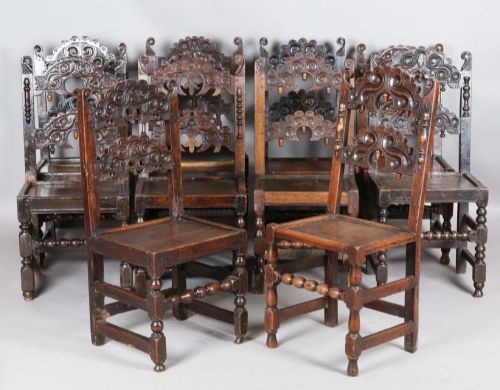
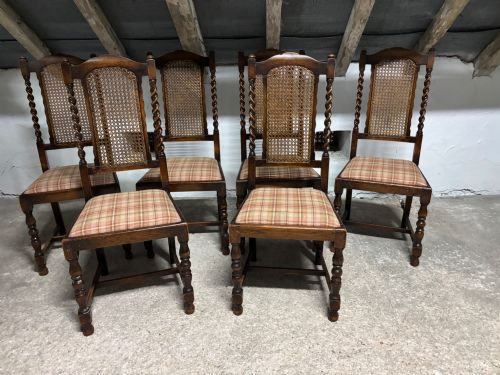
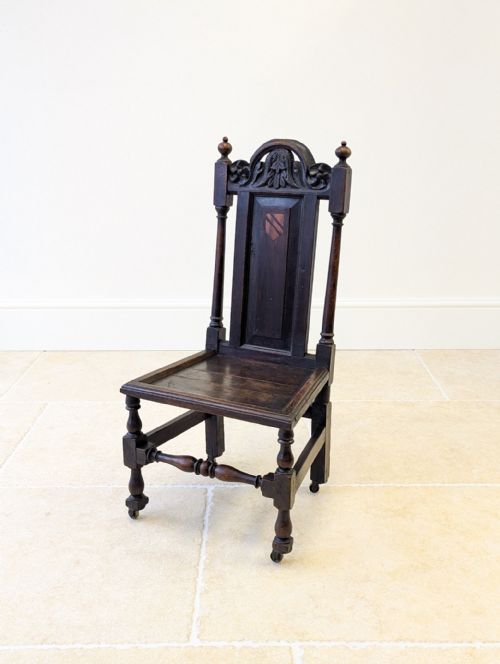


Panel Back Dining Chairs
Panel back dining chairs bring sturdy seventeenth-century character and carved timber presence straight to the dining room table.
Panel Back Dining Chairs
Panel back dining chairs encompass robust timber forms designed for seating, drawing heavily from seventeenth-century traditions and later revival movements. Buyers encounter diverse interpretations ranging from authentic early period joint chairs to early twentieth-century reproductions inspired by Jacobean and Gothic styles.
Construction and Materials
Makers relied primarily on solid English oak, shaping heavy timber through traditional joinery techniques such as mortise and tenon. Panels were typically set into grooved framework to accommodate natural wood movement over decades of use.
Decoration on these chairs often involved hand carving, utilising gouges and chisels to apply strapwork, floral motifs, or cresting rails. Certain variants incorporate cane seating or applied upholstery fabric to provide additional comfort.
Panel Back Dining Chairs Retail Price Guide 2026
Typical asking prices for panel back dining chairs among the pieces listed under this phrase on Sellingantiques today, from the lower quarter to the upper quarter. They describe what is for sale here now, not the wider market.
Listings span multiple centuries, uniting authentic seventeenth-century joined furniture with twentieth-century revival interpretations.
Judging Quality
Quality rests significantly in the integrity of the timber and the depth of the original hand carving. Crispness in the execution of stile mouldings and panel reliefs distinguishes superior examples from simpler production pieces.
The degree of original joinery intact without excessive modern timber replacement dictates structural longevity. Surface patination, developed through centuries of handling and wax polishing, marks the distinction between fine period survivals and later revival iterations.
The Panel Back Dining Chairs Glossary
- Joined chair
- A chair constructed using mortise and tenon joints secured by wooden pegs rather than metal fastenings. This method defines early solid timber seating.
- Wainscot armchair
- A heavy wooden armchair featuring a solid panelled back and panelled seat base, common in seventeenth-century domestic interiors. They command a strong presence around a dining table.
- Backstool
- An early term for a side chair without arms, usually featuring a tall upright back. These pieces were often paired with larger armchairs in matching suites.
- Jacobean revival
- A nineteenth and twentieth-century design movement that copied or reinterpreted the heavy carved oak styles of the early seventeenth century. Pieces from this era frequently appear in matched dining sets.
- Harlequin set
- A collection of dining chairs that match in general style and period but vary slightly in individual details or dimensions. Such sets were assembled over time rather than purchased as a single batch.
Panel Back Dining Chairs: Frequently Asked Questions
How do I care for antique oak chairs?
Keep wooden chairs away from direct heat sources and sudden temperature shifts to prevent the timber from splitting. Apply a quality beeswax periodically to nourish the grain and maintain a soft sheen.
Avoid using modern liquid polishes containing silicones, as these build up dull films over time. Gentle dusting with a dry cloth keeps the carved surfaces clear.
Are these chairs comfortable for daily dining?
Most early panel back chairs feature solid timber seats designed with upright posture in mind. Adding loose squab cushions provides extra comfort during longer meals without altering the chair.
Upholstered or caned variants offer slightly more give than solid oak boards. Consider how long guests will sit when choosing between wooden seats and padded versions.
Can I mix these with modern tables?
Heavy oak tones pair effectively with simple contemporary dining tables to create a striking contrast of textures. The deep patination of older timber grounds modern minimalist spaces.
Ensure the seat heights align comfortably with the underside clearance of your table. Armchairs require particular attention to ensure the arms slide beneath the tabletop.
How do I distinguish revival chairs from early ones?
Examine the tool marks and construction methods used to assemble the frame and carve the panels. Hand-cut peg holes and irregular chamfers often point towards genuine early periods.
Revival pieces made during the twentieth century display more uniform machine cutting and cleaner internal joints. Comparing the colour and wear patterns across the timber helps confirm age.