




Pale Wood Table
A pale wood table brings light and grain into a room, offering a surface of ash, oak, pine, or fruitwood shaped for dining, work, or display.
Pale Wood Table
A pale wood table encompasses forms ranging from generous farmhouse and trestle dining tables to compact side tables, consoles, and worktables. When you search for a pale wood table, you encounter pieces that have often been stripped of heavy dark finishes to reveal the natural grain beneath.
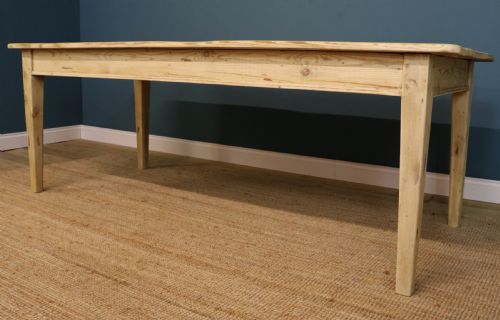
The selection includes regional pieces spanning the nineteenth and early twentieth centuries, featuring French provincial, Swedish, English country, and rustic farmhouse styles. Dining and kitchen tables predominate, alongside occasional coffee tables, servers, and writing surfaces.
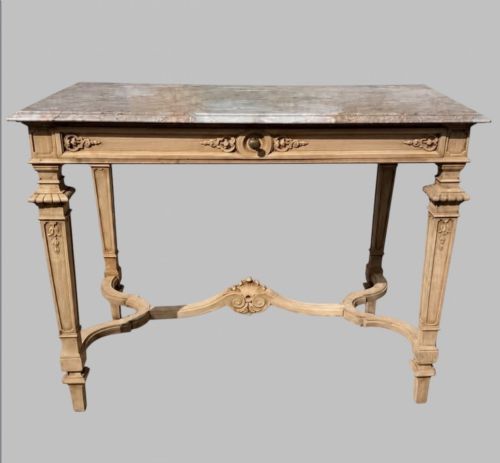
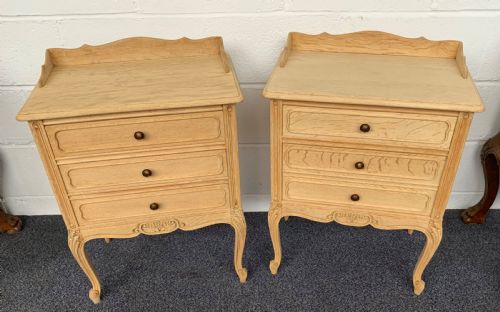
Materials vary from native pine and oak to sycamore, elm, ash, and maple, sometimes paired with marble tops, brass fittings, or traces of original paint. Many examples originate from French workshops or Scandinavian makers, reflecting domestic utility and provincial craftsmanship.
Materials and construction
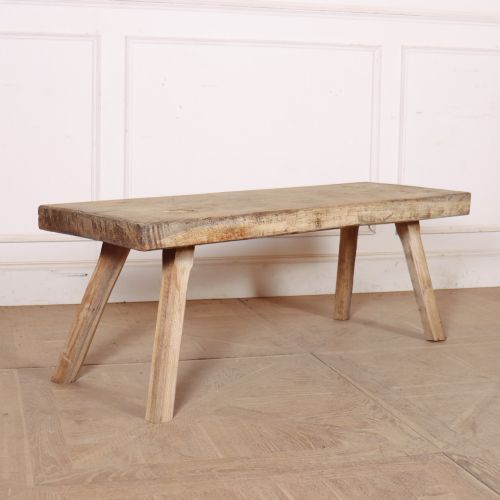
Construction relies on solid timbers such as oak, pine, elm, and sycamore, joined with traditional framing methods appropriate to heavy-use kitchen and dining furniture. Surfaces frequently show the marks of historical scrubbing or stripping, which leaves the wood bare and pale.
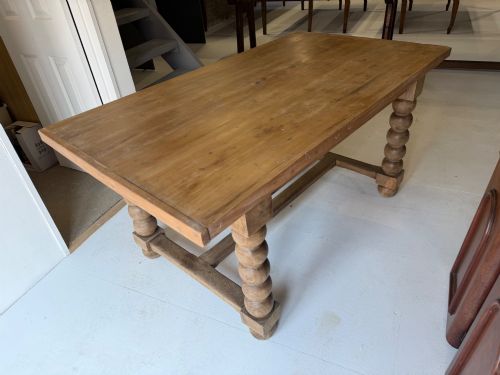
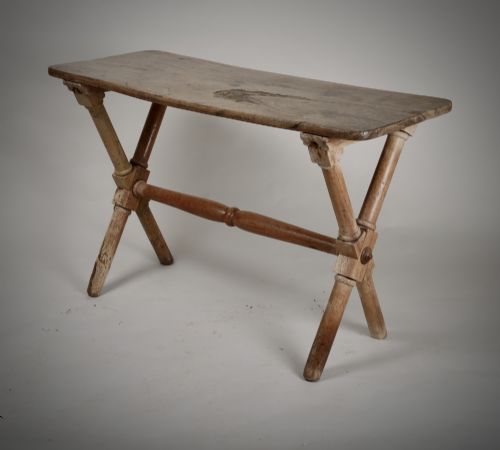
Secondary timbers like poplar and maple appear in framing and internal components, while decorative elements incorporate brass hardware or marble inserts. Joinery is straightforward and robust, utilising trestle frames, X-frames, and turned or bobbin legs to support substantial tops.
Listings feature nineteen distinct dealers offering nineteenth- and early-twentieth-century furniture in oak, pine, elm, and sycamore.
Assessing quality and character
Quality rests in the integrity of the timber and the honesty of the surface treatment, distinguishing sensitive historical stripping from modern chemical bleaching. Better examples retain crisp edges to turnings and sound structural joinery without excessive timber replacement.
Proportion and utility define the finer pieces, where farmhouse tables and trestles exhibit balanced dimensions and patination earned through decades of domestic service. The best pieces combine structural stability with untouched surface texture.
The Pale Wood Table Glossary
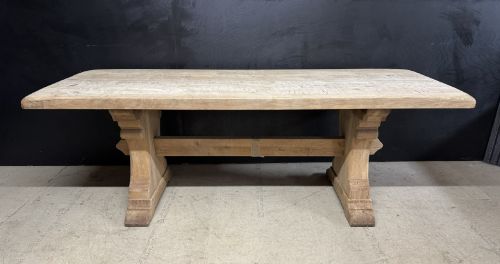
- Trestle table
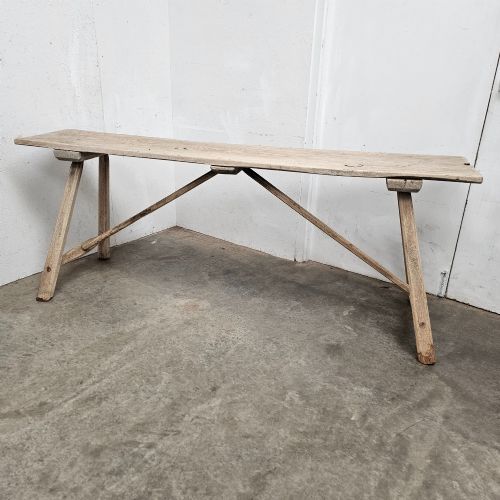
- A table comprising two or more support frames connected by a longitudinal beam or stretcher. This form allows maximum legroom along the length of the top.
- Scrub top
- A plain wooden tabletop designed to be scrubbed clean with water and sand in a kitchen or dairy. It typically develops a pale, smooth, weathered surface over generations.
- Demi-lune console
- A half-moon shaped table designed to stand flat against a wall. These pieces frequently appear in matched pairs.
- Cricket table
- A small, light three-legged table with a round top, traditionally used beside a fireplace. The three legs ensure stability on uneven floors.
- Bleached oak
- Oak timber treated or weathered to lighten its natural warm tone. This finish highlights the medullary rays and open grain of the wood.
Pale Wood Table: Frequently Asked Questions
How do I clean a pale wood table?
Dust regularly with a dry cloth and wipe spills immediately with a damp cloth. Avoid harsh chemical cleaners that strip natural oils from untreated timber.
Apply a neutral beeswax sparingly if the surface feels dry, buffing it gently to maintain a soft sheen without creating a glossy film.
Are these tables suitable for daily dining?
Most surviving examples were built for robust domestic use in kitchens and farmhouses, making them exceptionally sturdy for modern dining. Solid timber construction handles daily life well.
Use coasters and heat mats to protect historic wood from water rings and thermal shock, preserving the natural grain and scrubbed texture.
How can I tell the period of a wooden table?
Examine the tool marks, joinery methods, and hardware beneath the top and along the frame. Hand-cut joints and forged iron screws indicate earlier craftsmanship.
Patina develops naturally through handling and age, showing wear patterns around legs and edges that modern reproductions cannot replicate.
What is the difference between scrubbed pine and bleached oak?
Scrubbed pine results from physical washing and wear that removes soft summer growth, leaving a pale, textured surface. Bleached oak involves chemical or natural lightening of denser hardwood.
Pine offers a softer, lighter hue with knotty grain, while oak displays prominent growth rings and greater structural weight.