
Paired Walnut Nightstands
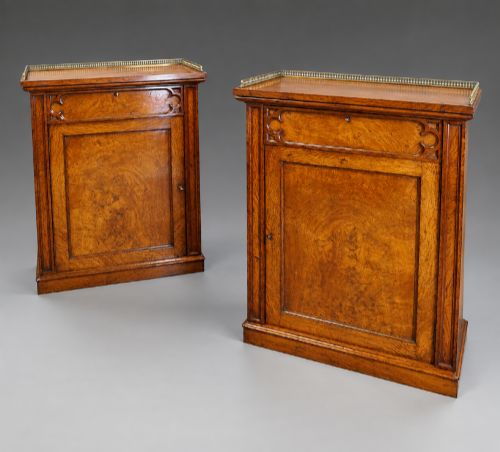
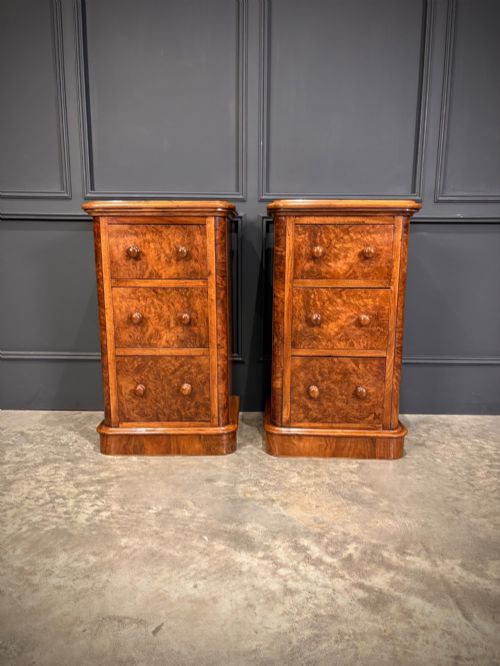
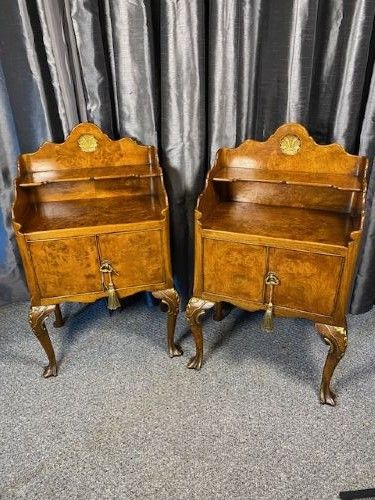
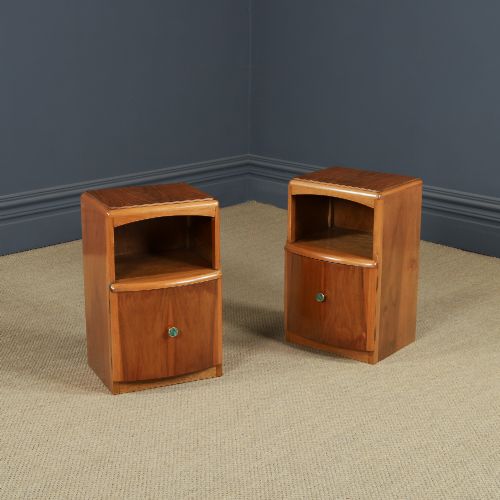
Paired walnut nightstands bring matched symmetry to the bedside, offering surface space and concealed storage across periods from Victorian to Art Deco.
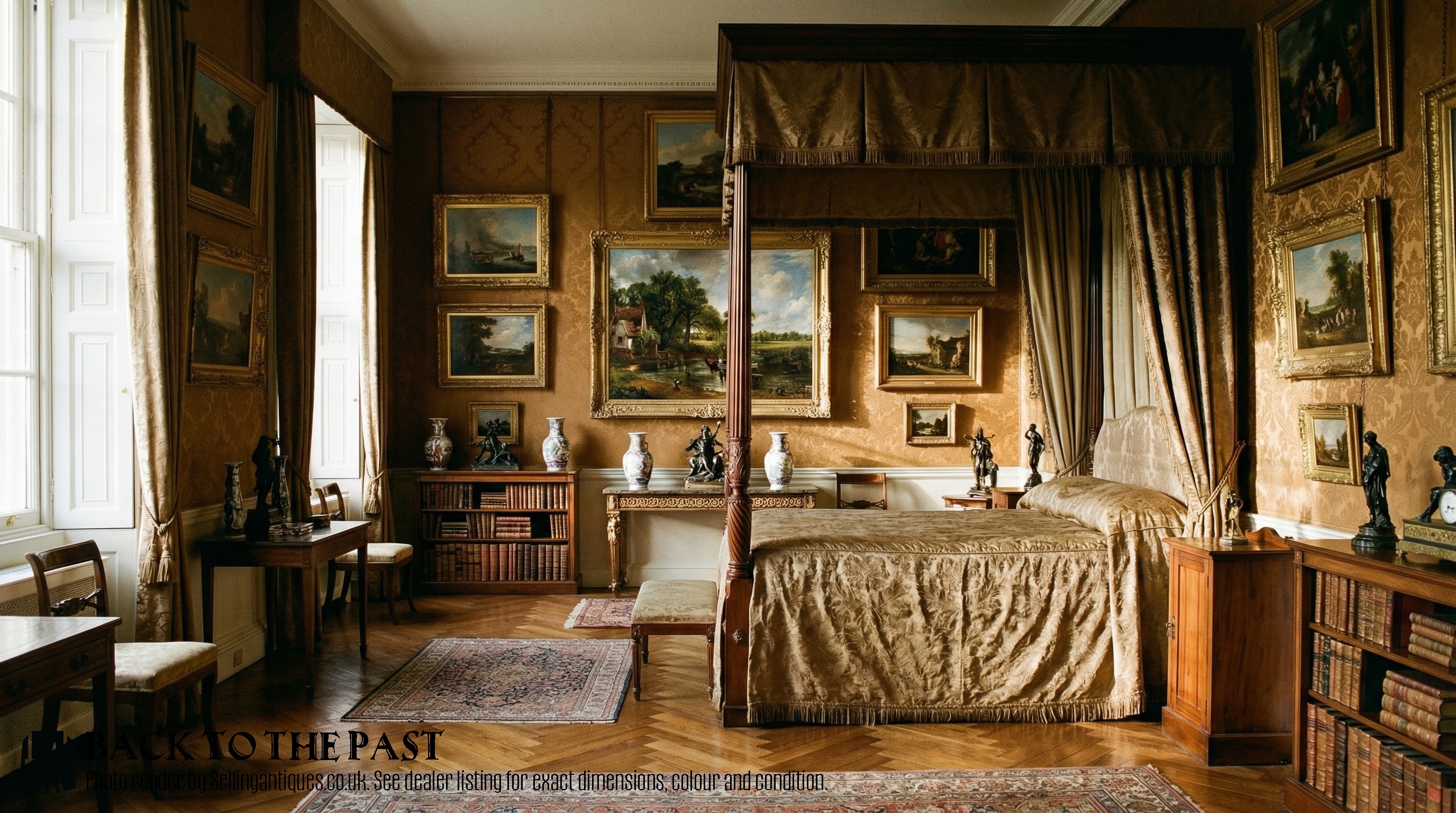
Paired Walnut Nightstands
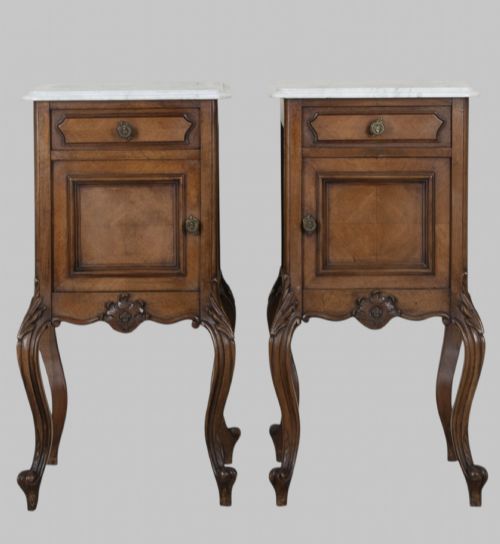
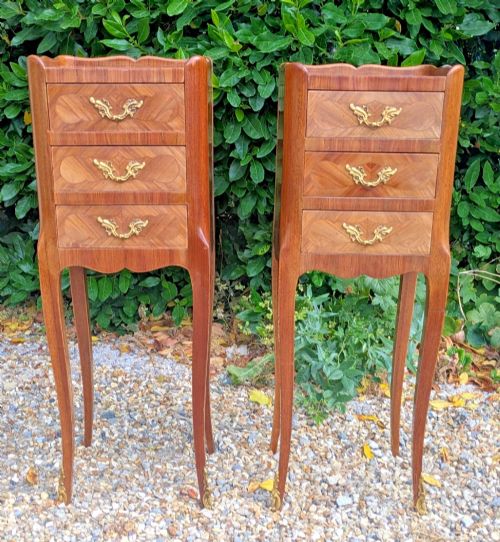
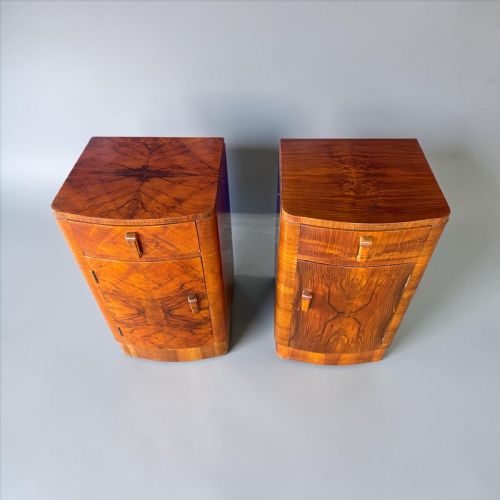
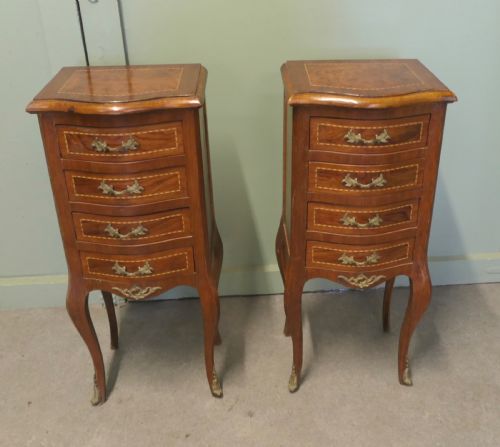
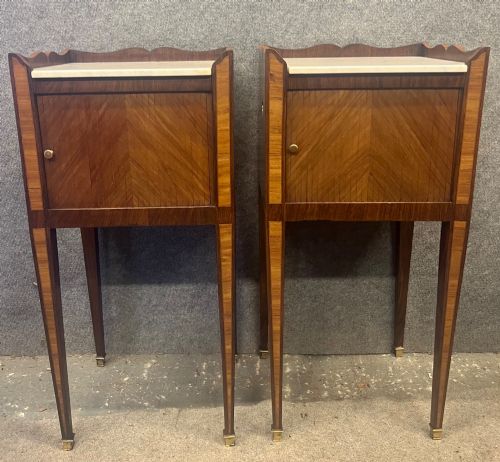
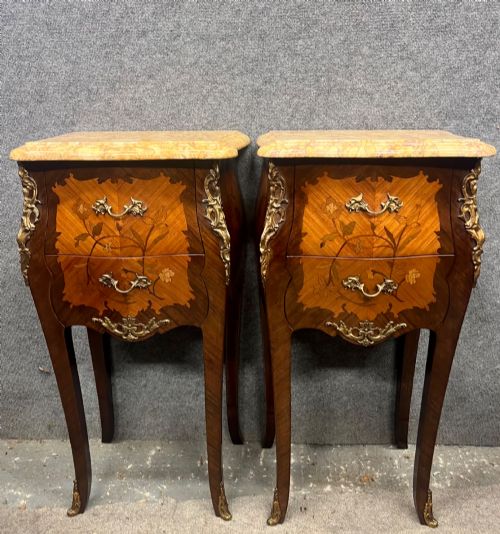
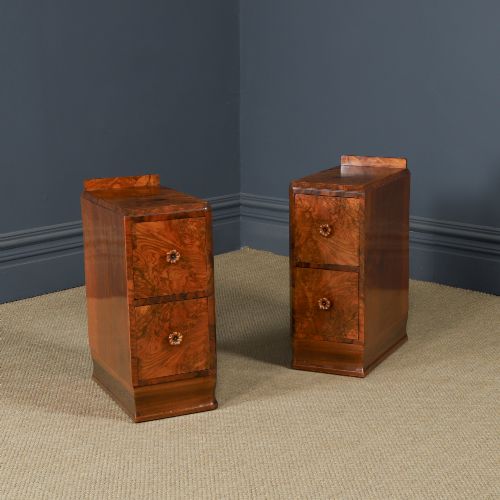
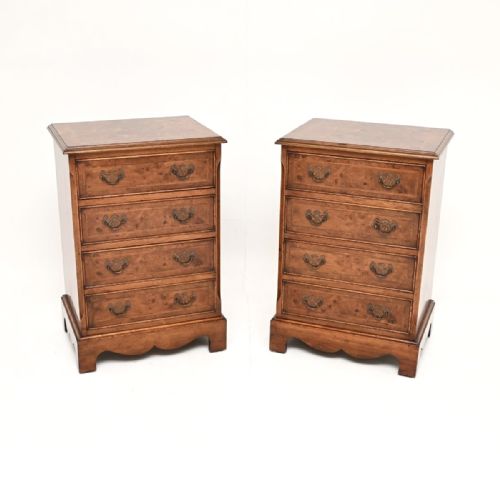
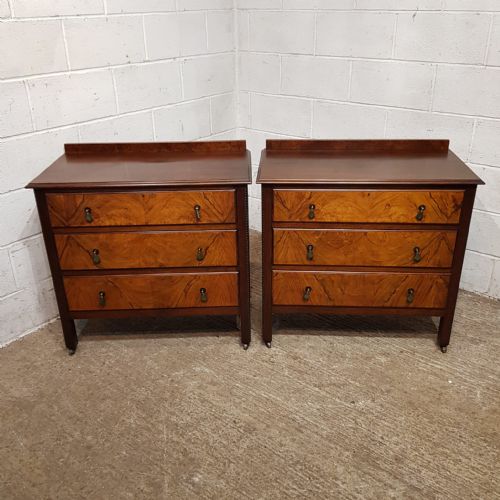
Paired walnut nightstands span bedside cabinets, chests of drawers, and pedestal cupboards produced from the Victorian era through the Art Deco period. These matching pairs originate from English and French workshops, utilising walnut timber configured as bedside tables, side lockers, and lamp tables.
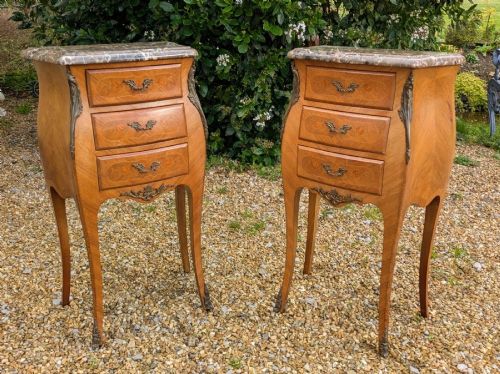
The selections available on this page run from mid-Victorian burr walnut chests dated around eighteen-sixty to nineteen-thirties Art Deco designs. Buyers frequently encounter French marble-topped bedside cabinets alongside English walnut pieces featuring open areas, cupboards, and drawers.
Quality and Proportion
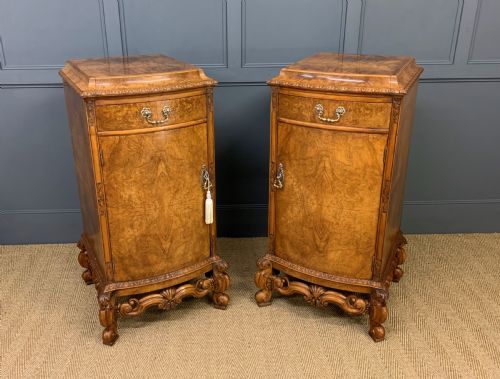
Proportion and matching symmetry dictate the standing of paired walnut nightstands, particularly where book-matched burr walnut veneers flow evenly across two matching cabinet doors. The crispness of marquetry inlay and the integration of original brass hardware or undamaged marble tops separate standard examples from finer commissions.
Structural integrity within the drawers, carcase joints, and the precision of fitted doors reflect the original workshop standards. Pieces showing consistent timber selection across both items maintain greater harmony than assembled matches.
Some Art Deco pairs manage to look like miniature skyscrapers while holding your midnight glass of water.
The Paired Walnut Nightstands Glossary
- Burr Walnut
- A timber harvested from walnut tree growths, producing swirling, highly figured grain patterns utilised for decorative veneer work on cabinet doors and tabletops.
- Ormolu
- Gilded bronze mounts and decorative fittings applied to French furniture styles, providing metallic contrast against dark walnut timber.
- Marquetry
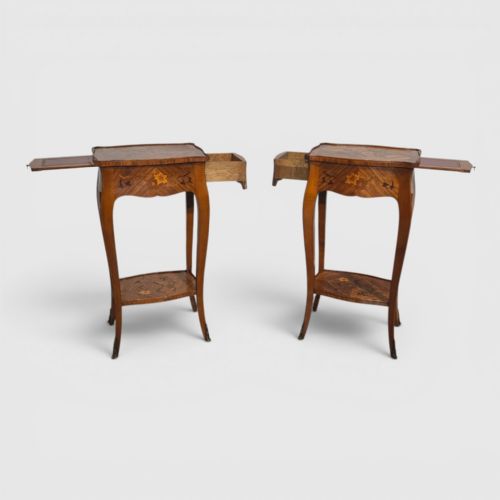
- The art of applying pieces of veneer to a structure to form decorative patterns, frequently seen in floral or geometric motifs on bedside table tops.
- Pedestal Cupboard
- A vertical cabinet featuring a single door enclosing internal shelving or storage space, often scaled for bedside placement.
- Serpentine
- A curved furniture front curving outward at the centre and inward at the sides, creating a gentle undulating shape.
Paired Walnut Nightstands: Frequently Asked Questions
What periods do these nightstands come from?
The listings span the Victorian era, the Edwardian period, and the nineteen-twenties and nineteen-thirties Art Deco movement. Pieces originate from both English and French makers.
Designs range from mid-nineteenth century burr walnut chests to streamlined interwar tables with open storage and matching cupboards.
Do these bedside tables come with marble tops?
Several French bedside cabinets feature fitted marble tops, often in white or grey varieties. These were integrated to provide a durable, wipe-clean surface beside the bed.
Other variations utilise solid walnut, figured burr veneer, or inlaid marquetry surfaces depending on the regional style and period.
How do English and French nightstands differ?
French bedside cabinets frequently incorporate marble tops, ormolu mounts, serpentine fronts, and enclosed cupboard spaces designed as lamp tables or side lockers. English versions tend to focus on drawer configurations and pedestal cupboard formats.
Both national traditions utilise walnut and burr walnut veneers, though French pieces more commonly display intricate marquetry inlay.
Are these nightstands sold as matching pairs?
Every listed set consists of a matched pair designed to sit on either side of a bed. These pairs share identical dimensions, timber selection, and decorative detailing.
Buyers find matched chests, lamp tables, and bedside cabinets intended to create visual symmetry in a bedroom scheme.