

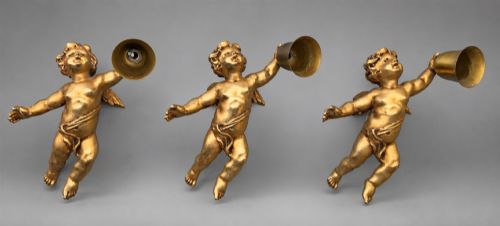
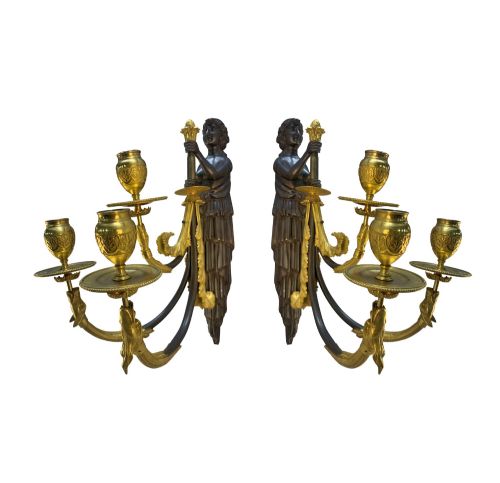
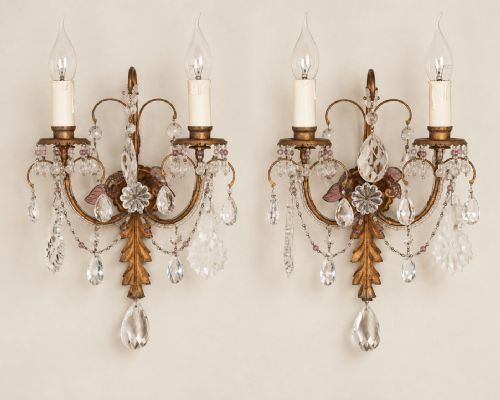
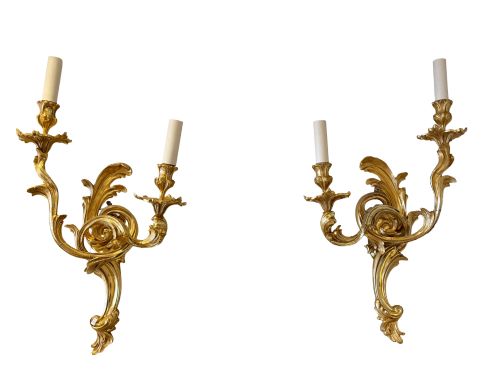
Paired Sconces
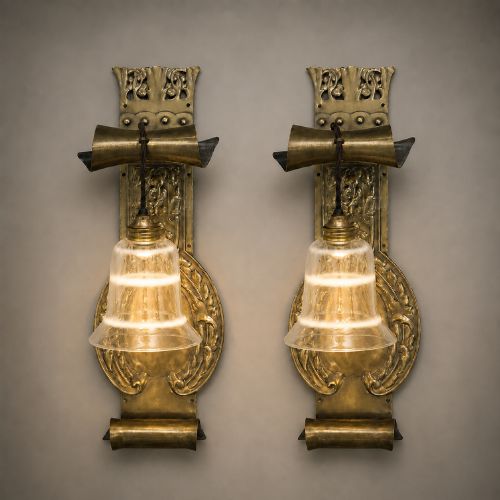
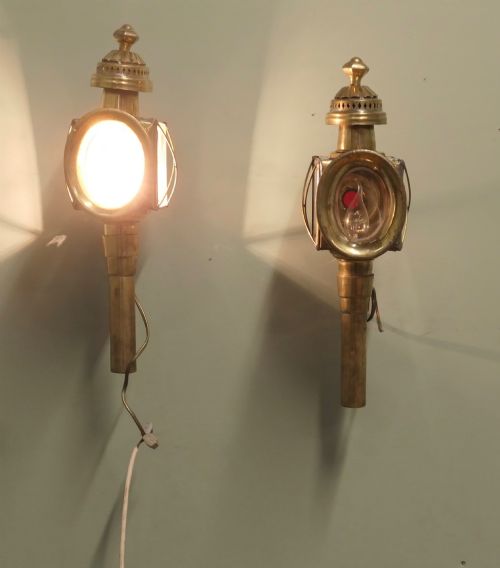
Paired sconces provide symmetrical illumination across rooms, appearing in forms from brass wall lights to giltwood girandoles across the nineteenth and twentieth centuries.
Paired Sconces
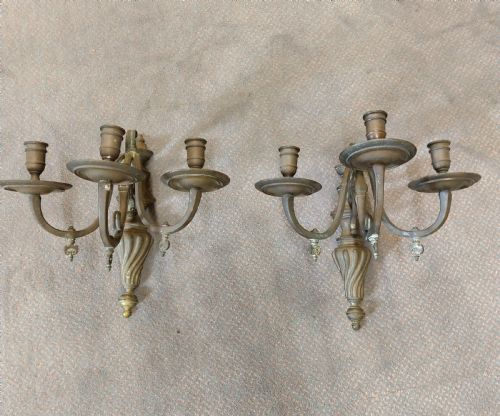
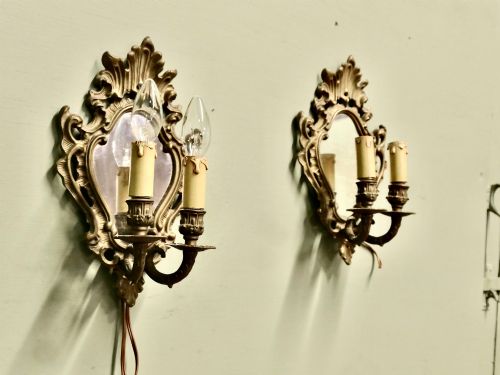
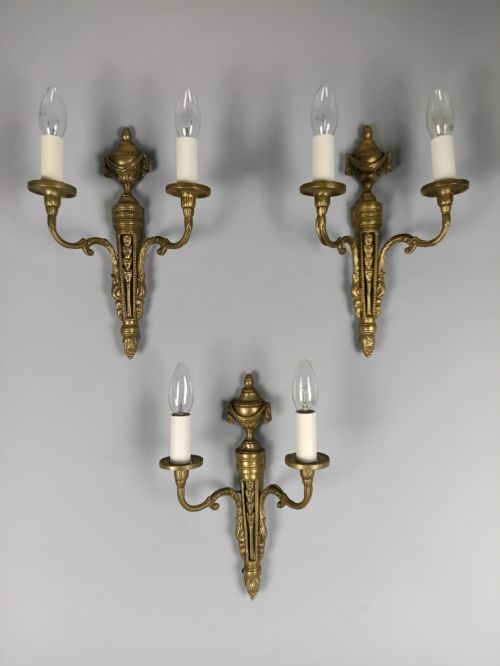
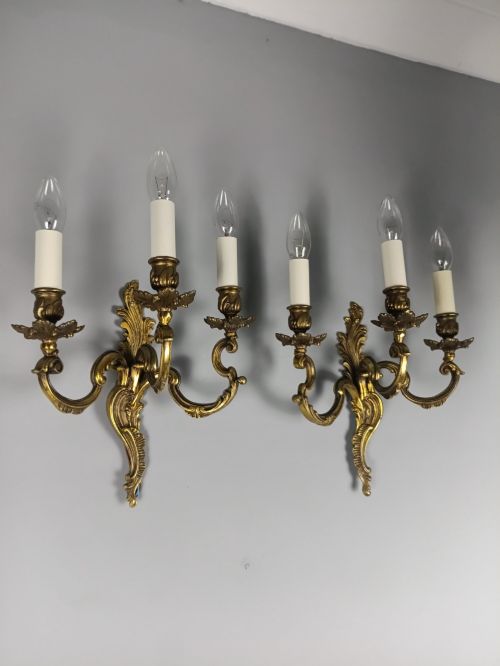
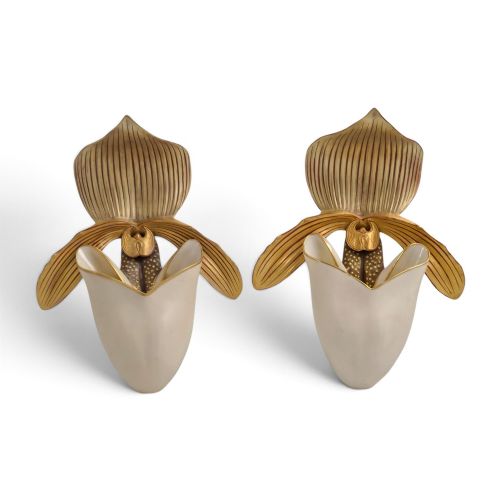
The selections span multiple centuries and design idioms, originating predominantly from French workshops alongside English, Italian and German makers. Common forms include multi-branch wall lights, candelabra and girandoles outfitted with candleholders or electric fittings.
Nineteenth-century examples frequently adopt Rococo Revival or Empire styles in heavy metals, whilst twentieth-century offerings lean towards giltwood, brass and streamlined Art Deco profiles. Buyers select these items to achieve architectural symmetry and period authenticity in interior schemes.
How they were made
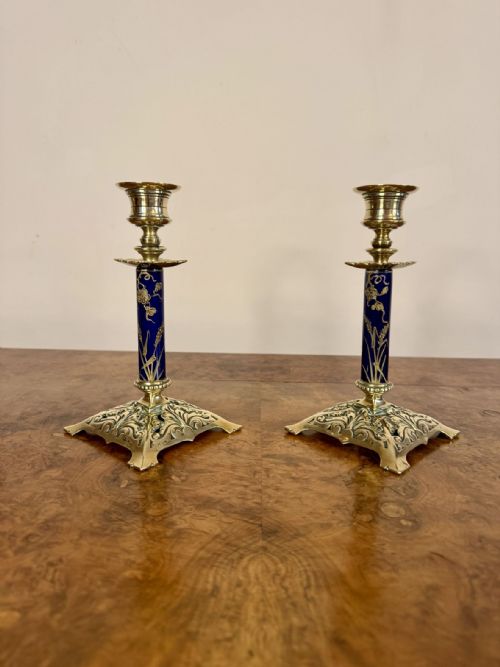
Metal sconces rely on casting techniques utilising brass, bronze, or ormolu, often finished with fire-gilding or silver plating to achieve reflective surfaces. These metallic frames support arms that hold candles or electric bulbs.
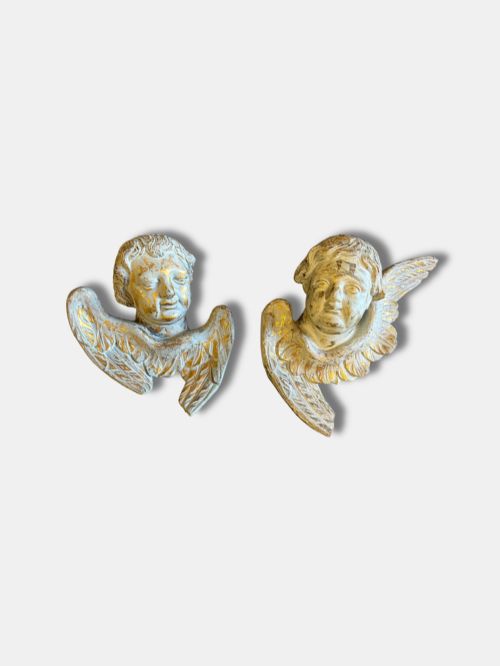
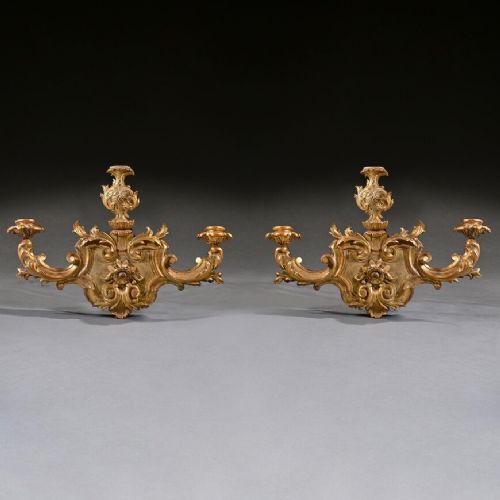
Wooden alternatives employ carved timber, particularly giltwood or painted tollware, shaped into floral motifs, ribbons or classical scrolls. Gilded finishes are applied using thin metal leaf laid over prepared gesso grounds.
Glass and crystal components, including cut pendants and drops, integrate with metal or wood frames to amplify light dispersion. Wrought iron variants utilise forged scrollwork suited to heavier structural demands.
Paired Sconces Retail Price Guide 2026
Typical asking prices for paired sconces among the pieces listed under this phrase on Sellingantiques today, from the lower quarter to the upper quarter. They describe what is for sale here now, not the wider market.
Listings feature items spanning the eighteenth, nineteenth, and twentieth centuries, incorporating materials such as brass, gilt bronze, crystal, and carved giltwood.
What varies in quality
Quality diverges significantly in the crispness of surface ornamentation, where hand-chased bronzes and deeply carved giltwood display sharper detail than mass-produced castings or moulded compositions. The depth and warmth of the original gilding or plating indicate the standard of production.
Structural integrity depends on the rigidity of the arm attachments and the weight of the backplate, ensuring the sconce supports its branches securely against the wall. Superior examples maintain balanced proportions and secure joints across multi-branch configurations.
Maison Bagues
The Paired Sconces Glossary
- Girandole
- A branched wall light or sconce that incorporates a mirror to reflect and multiply the illumination.
- Ormolu
- Gilded bronze produced through mercury amalgamation or modern electroplating, popular in French decorative arts.
- Appliqué
- A French term frequently applied to wall-mounted lighting fixtures or sconces.
- Tollware
- Metalware painted with japanning or enamel finishes, common in decorative domestic accessories.
- Giltwood
- Timber substrates coated with gold leaf or powder over a gesso base.
- Putti
- Depictions of chubby male infants, often winged, used as decorative motifs in Rococo and Baroque designs.
Paired Sconces: Frequently Asked Questions
How do I hang heavy wall sconces?
Heavy sconces require direct anchoring into wall studs or appropriate masonry fixings to support the combined weight of the metal and glass components.
Ensuring secure mounting prevents structural strain on the wall plate and keeps multi-branch fixtures level.
Were these originally for candles or electricity?
Many older pieces began as candle holders before undergoing conversion to electricity during the twentieth century.
Original configurations often retain drip pans and candle nozzles, whilst converted examples integrate internal wiring through the backplates.
How do I clean giltwood sconces?
Giltwood surfaces require gentle dusting with a soft, dry brush to avoid disturbing the delicate gold leaf.
Moisture and harsh cleaning agents damage the underlying gesso and finish, so liquid cleaners must be avoided entirely.
What is the difference between an appliqüe and a sconce?
Appliqué is a traditional French term for a wall-mounted light fixture, functioning identically to what is commonly termed a wall sconce.
Both descriptions refer to decorative brackets secured to vertical surfaces to provide illumination.