








Paired Pedestal Occasional Tables
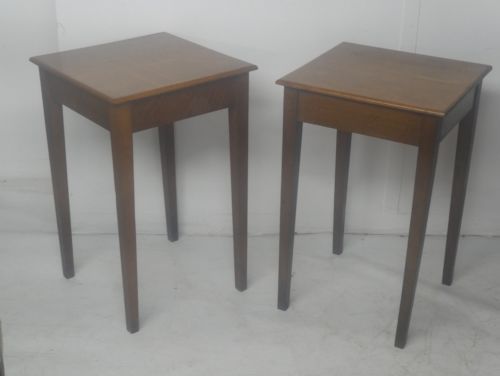
These paired pedestal occasional tables bring symmetry and convenience to a room, offering matching surfaces for lamps, drinks or display.
Paired Pedestal Occasional Tables
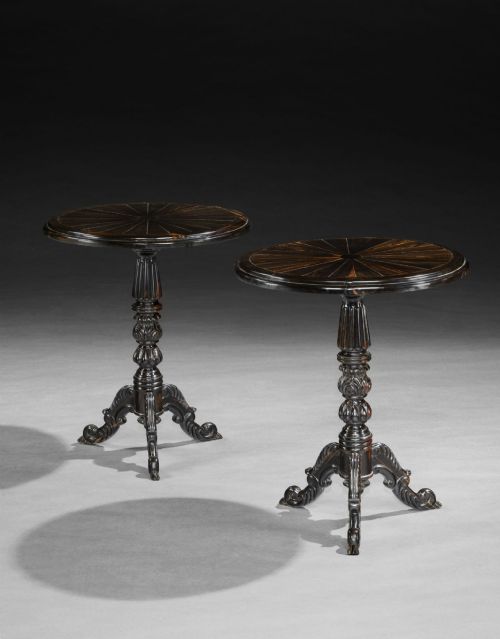
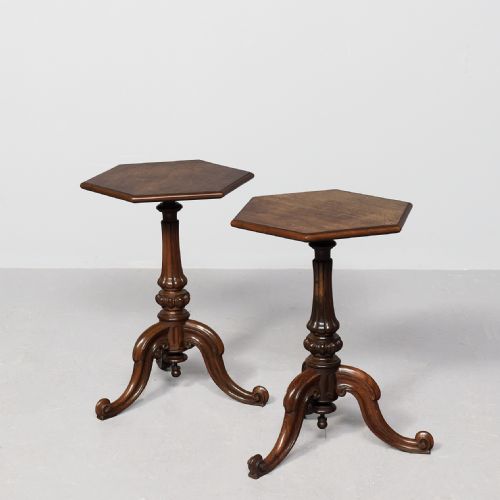
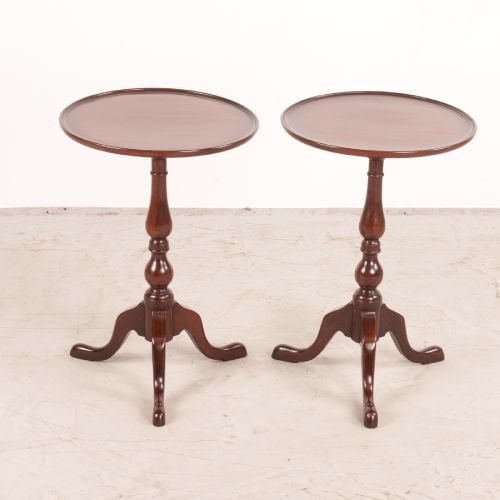
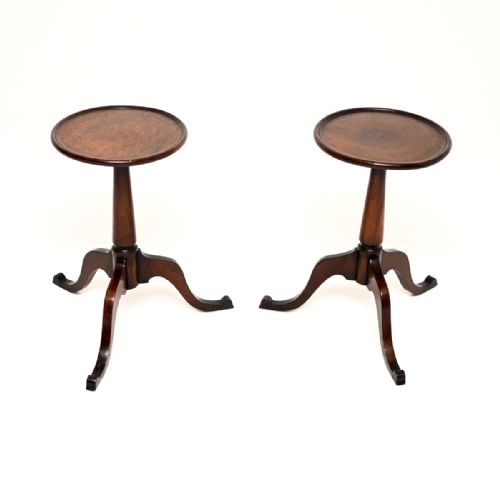
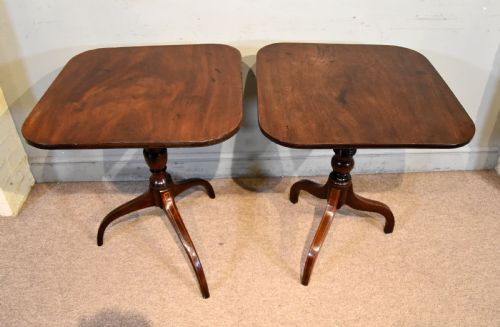
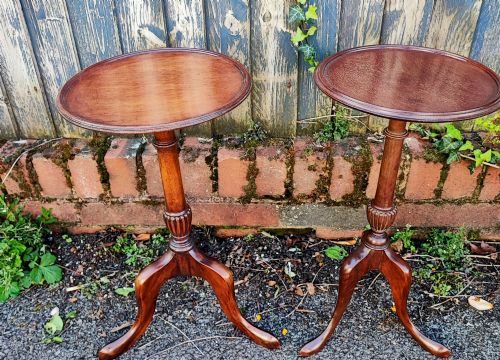
Paired pedestal occasional tables are matching sets designed for smaller surfaces around a room, most commonly seen as wine tables, side tables, lamp tables, and plant stands. The pieces available draw from a wide chronological span, running from the Georgian period through the Regency era and into the Edwardian years and 1920s.
Forms vary from tripod wine tables and urn stands to console tables, sofa tables, and low bedside surfaces. Timber origins range from local British mahogany, walnut, oak, and ash to imported rosewood, ebony, satinwood, and Chinese hardwood.
Regional variations include French, Swedish, and Anglo-Indian designs alongside traditional British cabinetry. Buyers encounter both symmetrical pairs made together and matched pairs assembled later from individual pieces.
Materials and Construction
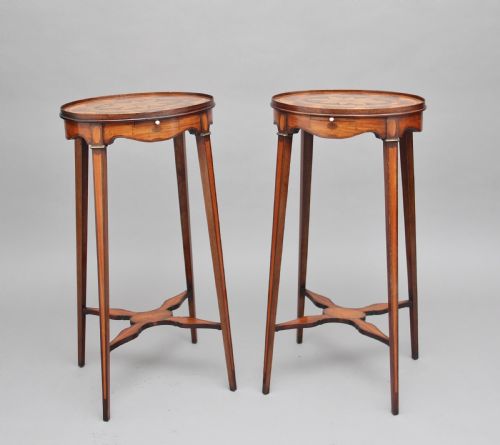
Makers utilised solid timbers and decorative veneers, applying mahogany, walnut, rosewood, and satinwood over secondary woods. Inlaid details incorporate contrasting stringing, satin birch, and ebony, while specific examples employ brass, leather, silvered bronze, and malachite.
Pedestal construction typically involves a central turned column rising from three or four splayed feet, often taking the form of tripod tables. Joinery relies on traditional turning, carving, and mortise and tenon methods to support the small tabletops.
Camel tables carved in Anglo-Indian workshops bring a touch of the exotic to the traditional British pedestal lineup.
Craftsmanship and Proportion
Quality rests in the precision of the timber selection, such as figured mahogany or burr elm, and the crispness of any carved or inlaid decoration. Superior examples maintain balanced proportions between the central column and the supporting feet.
The integrity of the structural joints where the top meets the pedestal dictates stability, separating robust practical tables from more fragile decorative stands.
James Mein of Kelso
The Paired Pedestal Occasional Tables Glossary
- Tripod table
- A small occasional table supported by a central pillar on three legs. This form gained popularity during the 18th century for serving wine or holding candles.
- Sofa table
- A rectangular side table traditionally placed in front of or beside a sofa, often featuring drop leaves and paired pedestals or trestle ends.
- Urn stand
- A tall, slender pedestal table designed to hold a heated water urn for tea service. They often feature elevated rims or small pull-out slides.
- Inlay
- A decorative technique where contrasting woods, metals, or shell are set into recesses flush with the surface. This method creates geometric patterns or pictorial designs on tabletops.
Paired Pedestal Occasional Tables: Frequently Asked Questions
What is a pedestal occasional table?
A pedestal occasional table is a small, movable surface supported by a central column rather than four corner legs. They function easily beside chairs or sofas for holding lamps and small items.
Most examples operate as wine tables or lamp tables, offering a compact footprint that suits smaller spaces without dominating a room.
How do I use a matched pair?
Matched pairs work well placed symmetrically on either side of a fireplace, sofa, or bed. They create visual balance in a room while providing functional surface space.
Because they share matching timber or form rather than being strictly identical twins in some instances, they anchor a room's decor with coordinated character.
How can I tell the period of these tables?
Dating relies on timber choice, construction methods, and stylistic cues such as Regency neoclassical lines or Edwardian inlay. Georgian and Regency pieces tend to feature heavier proportions and rich mahogany, while later Edwardian and 1920s versions often incorporate lighter satinwood or painted finishes.
Examining the underside and joint construction reveals the age of the woodwork and the manufacturing techniques used.