




Paired Coffee Tables
Paired coffee tables are matching companions for a room, bringing balanced surface space and period character.
Paired Coffee Tables
When you search for paired coffee tables, you encounter sets of matching surfaces designed to coordinate a room layout. These items span various forms from the nineteenth and early twentieth centuries, including low tables, lamp tables, and occasional tables.
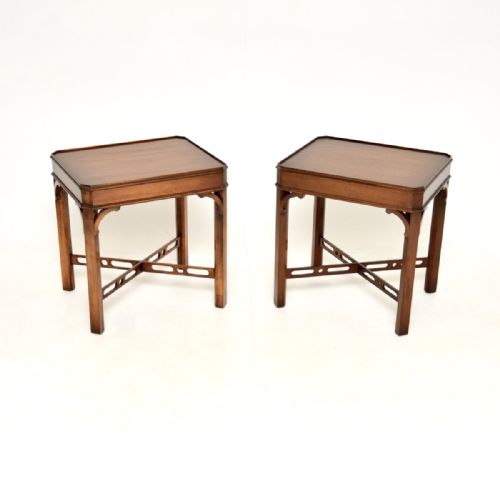
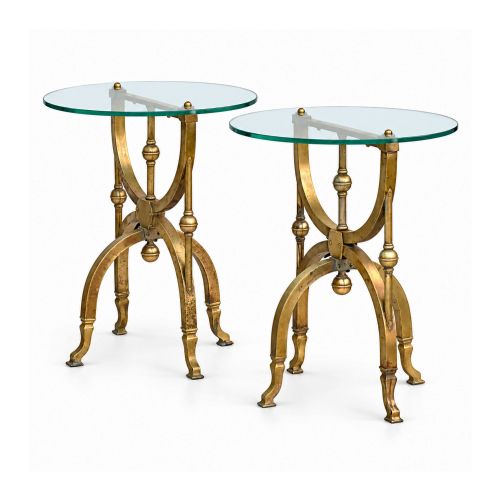
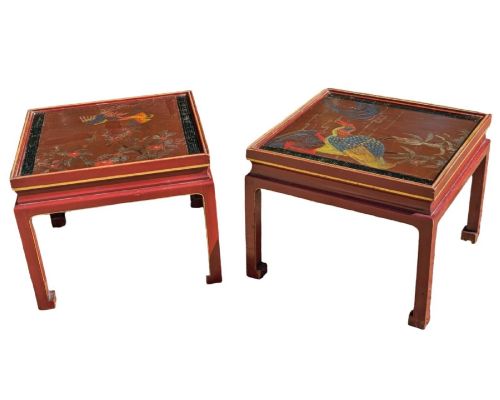
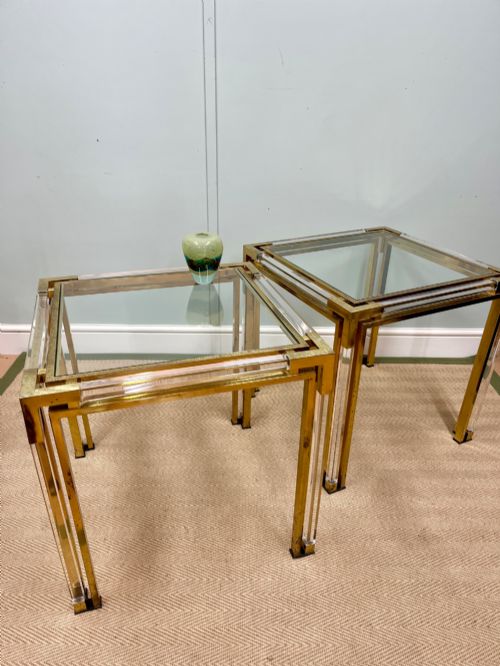
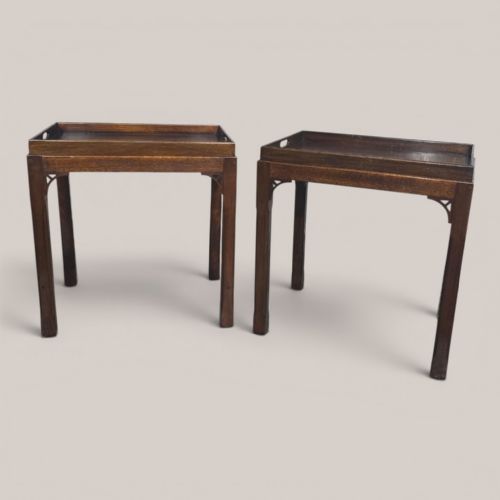
The selection here encompasses diverse regional styles and materials, ranging from revival designs in mahogany to low Chinese hardwood tables and brass frames. Matching sets offer a coherent arrangement across a seating area without the friction of mismatched pieces.
Buyers meet both uniform pairs created together and matched pairs assembled later by similarity in timber and scale. These tables adapt easily to modern interiors while retaining the proportion and craftsmanship of their original eras.
Materials and Construction
Timbers such as mahogany, satinwood, and rosewood form the structural foundation of many examples, often enriched with marquetry inlay or brass detailing. Cabinetmakers utilised traditional joinery techniques to ensure stability across both items in a pair.
Metal and stone components appear frequently, combining brass frames with glass, marble, or leather inset tops. Carved elements and lacquer finishes demonstrate specialised surface work originating from diverse global traditions.
Paired Coffee Tables Retail Price Guide 2026
Typical asking prices for paired coffee tables among the pieces listed under this phrase on Sellingantiques today, from the lower quarter to the upper quarter. They describe what is for sale here now, not the wider market.
Camel tables originally served nomadic travellers, proving that even a nineteenth-century beast of burden appreciated good interior coordination.
Distinctions in Quality
The refinement of the timber and the precision of any inlay work separate standard examples from finer productions. Finer pieces display careful selection of grain and harmonious matching between the two items.
Structural integrity and the preservation of original surfaces dictate the standing of a pair. Minor variations in handmade pairs reflect period workshop practices rather than assembly errors.
Liberty & Co.·Edwards and Roberts
The Paired Coffee Tables Glossary
- Matched pair
- Two tables produced independently at similar dates or by the same workshop that share identical dimensions, timber, and design, brought together subsequently.
- Marquetry
- Decorative veneer work using contrasting woods, metals, or shells arranged in pictorial or geometric patterns on the table surface.
- Ebonised
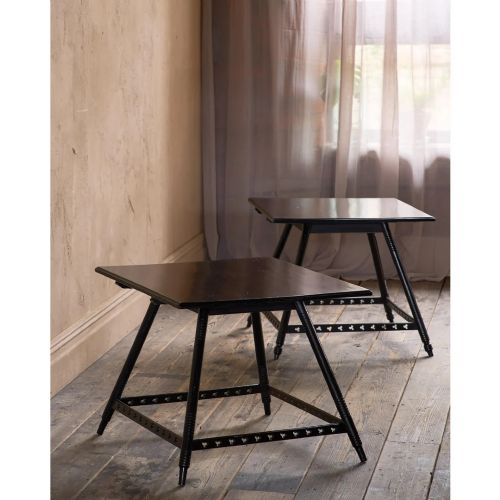
- Timber treated with a dark finish to imitate the appearance of ebony, prevalent in nineteenth-century decorative furniture.
- Tray top
- A tabletop finished with a raised moulded rim around the perimeter, originally designed to prevent items from sliding off.
- Occasional table
- A small, versatile table intended for light, intermittent use in various rooms rather than a single fixed purpose.
Paired Coffee Tables: Frequently Asked Questions
How do I use paired coffee tables?
Place them side by side to form a wider central surface, or separate them beside different armchairs to maintain visual symmetry across the room.
They also serve effectively as lamp stands or display ledges where standard single tables might leave an empty corner.
Are these tables solid wood?
Construction methods vary by period and style, with many utilising solid mahogany, hardwood, or oak frames alongside veneered surfaces.
Fine decorative examples often feature timber veneers over a stable secondary wood core to display complex grain patterns or inlay.
What is a matched pair?
A matched pair consists of two individual tables that share identical proportions, materials, and stylistic details despite originating from the same period workshop.
This term distinguishes them from tables manufactured simultaneously as a single unified set from the outset.
How do I care for leather tabletops?
Keep leather inset surfaces away from direct sunlight and excessive moisture to prevent the material from drying out or cracking.
Clean gently with a dry or slightly damp cloth and maintain the surface with appropriate leather treatments suited to antique items.