
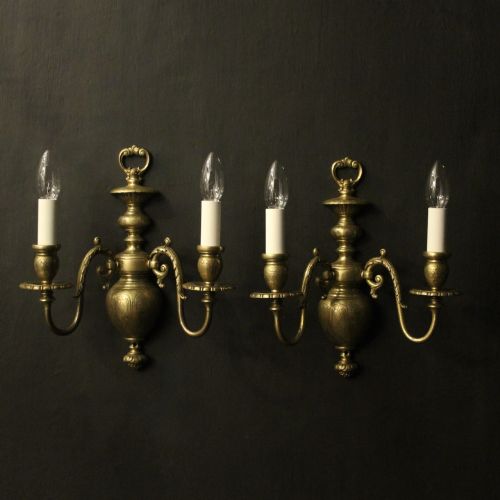
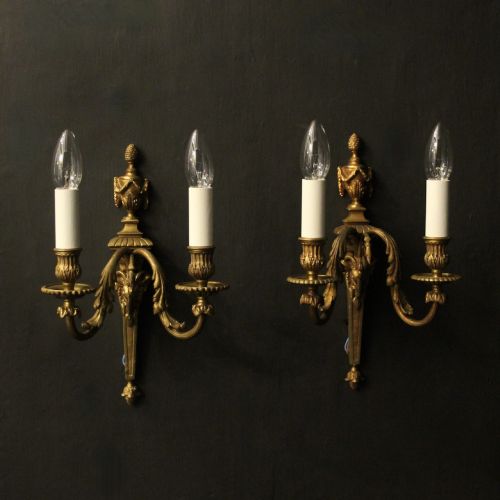
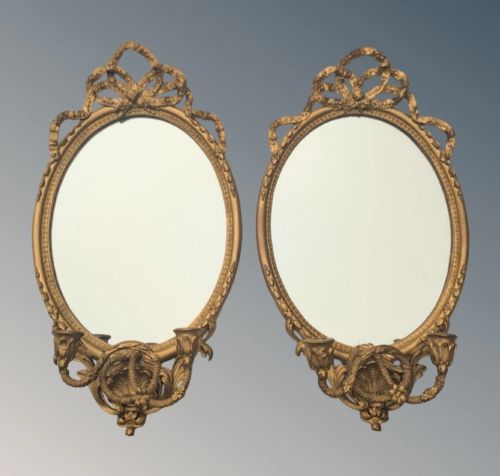
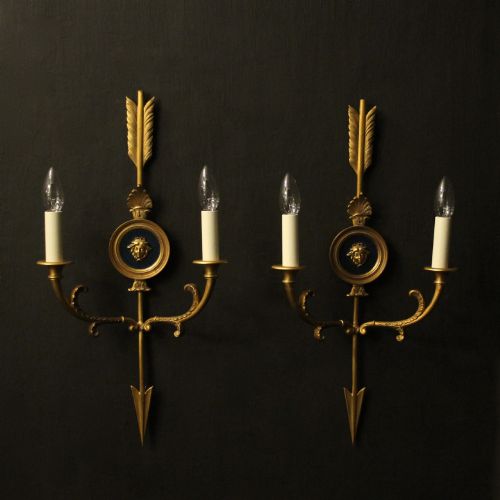
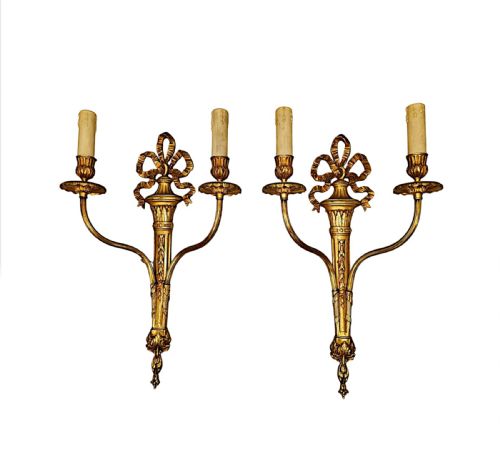
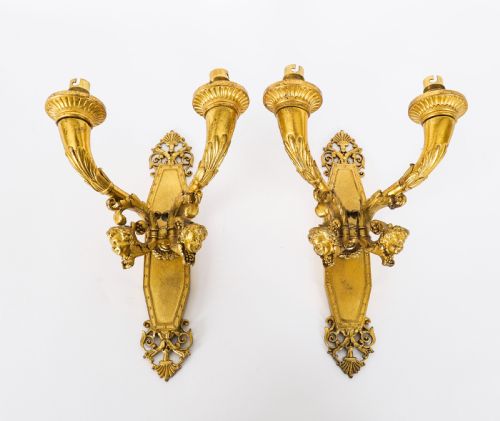
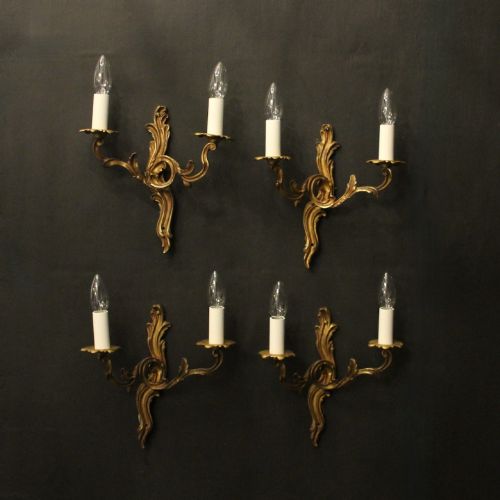

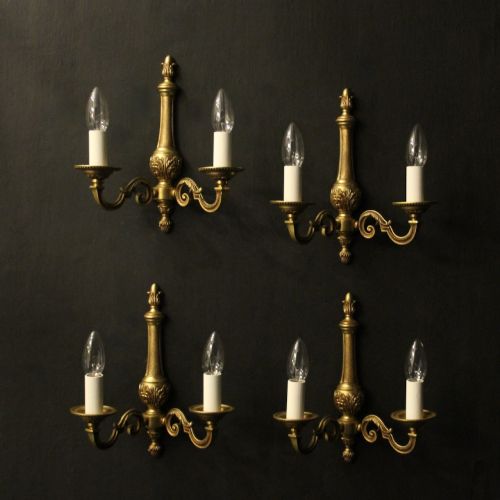
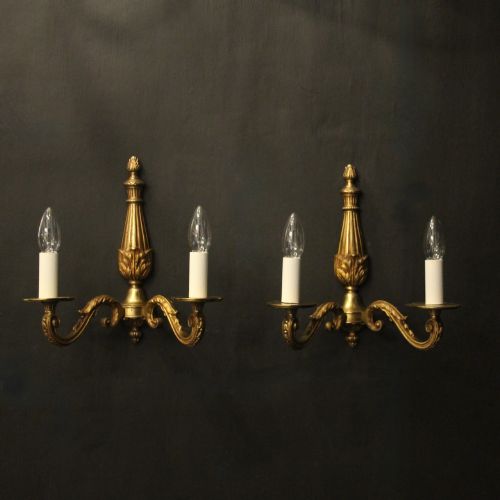
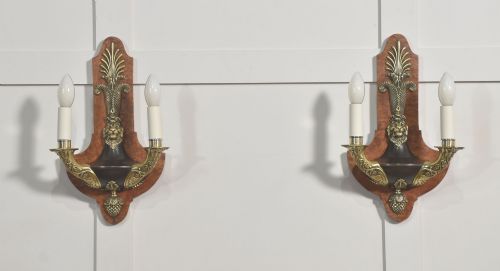
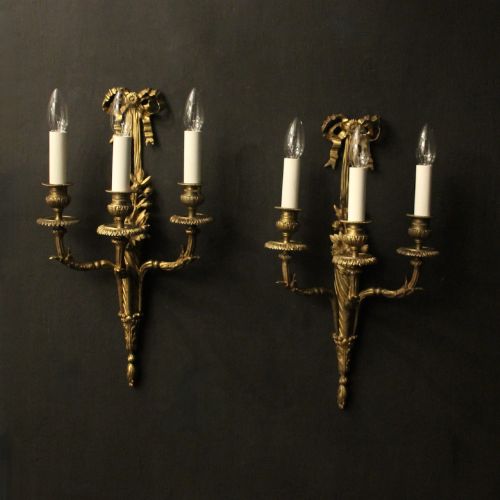
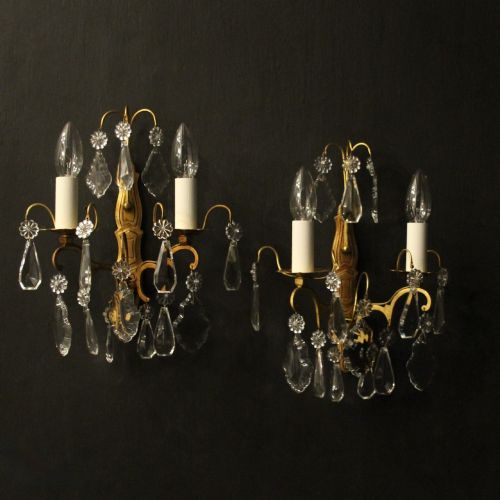
Paired Brass Wall Sconces
Paired brass wall sconces bring symmetry and warm illumination to an interior, drawing on French and English revival styles from the nineteenth and early twentieth centuries.
Paired Brass Wall Sconces
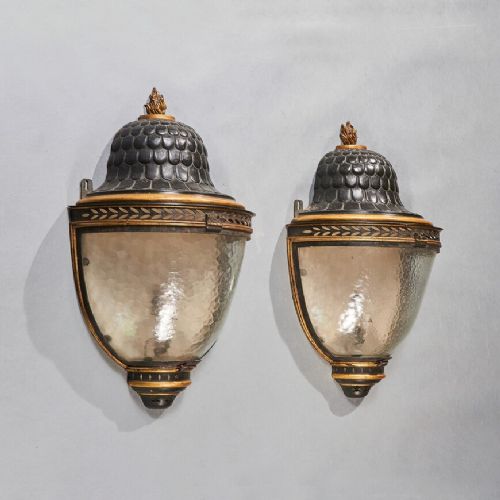
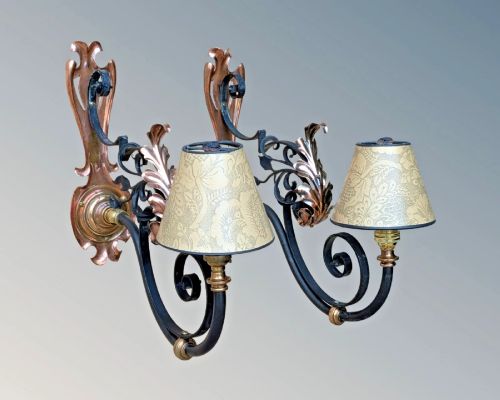
The selections span periods from the early nineteenth century through the Edwardian era and the 1930s, incorporating materials such as brass, gilt bronze, ormolu and gilded brass. Forms range from ornate French Rococo and Louis XIV revivals to simpler Arts and Crafts and Aesthetic Movement designs.
Makers and designers working in these styles utilise cast metals combined with glass, crystal or toleware elements to project candlelight or electric illumination. The resulting pieces serve both a functional lighting role and a decorative sculptural purpose on domestic walls.
Materials and Construction
The construction of these fixtures relies heavily on brass, bronze and copper, often enriched with gilding, ormolu or parcel-gilt finishes. Metal components are frequently cast, chased and wrought by hand, demonstrating techniques developed across the Victorian and Edwardian periods.
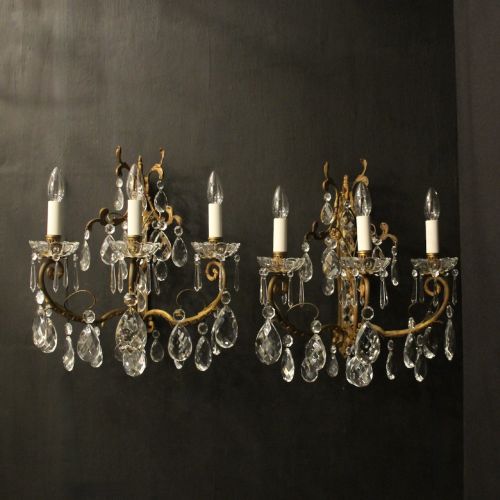
Many examples integrate cut crystal drops, glass shades or porcelain flowers into the brass framework, mounted onto timber, mirror glass or metal backplates. Fixtures range from simple adjustable brackets to elaborate multi-branch candelabras secured with structural backplates.
Listings feature brass, gilt bronze and copper across French Rococo, Arts and Crafts and Empire styles dating from the nineteenth and early twentieth centuries.
Factors of Quality
Quality in these lighting fixtures rests on the crispness of the metal casting and the depth of the chasing, particularly in ormolu and gilt bronze examples. Finer pieces display sharp detail in floral motifs, ribbons and scrolling arms without the softness seen in later or mass-produced castings.
The integrity of the gilding and the weight of the base metal distinguish superior items from standard production. Original fixings, intact crystal components and robust structural joints further separate exceptional examples from ordinary counterparts.
Casier·Bruce Talbert·W.A.S. Benson
The Paired Brass Wall Sconces Glossary
- Ormolu
- Gilded bronze produced by applying a mercury and gold amalgam to a bronze base and heating it. This technique was widely utilised in French decorative arts.
- Applique
- A wall-mounted light fitting or sconce designed to hold candles or electric lamps. These fixtures project illumination directly from the wall surface.
- Repousse
- A metalworking technique where the metal is hammered from the reverse side to form a raised design in relief. This method creates textured surface decoration on brass backplates.
- Tole Peinte
- Painted sheet metal used in the manufacture of decorative containers, lanterns and light fixtures. It provides colourful surface decoration in various hues.
- Aesthetic Movement
- A late nineteenth-century design style emphasising visual beauty over narrative or moral content. Pieces from this movement often incorporate simplified or Japoniste brass and wrought iron forms.
Paired Brass Wall Sconces: Frequently Asked Questions
How do I mount paired brass wall sconces?
These fixtures attach directly to wall surfaces using structural backplates and appropriate masonry or timber fixings. Professional installation is recommended to ensure secure wiring and weight distribution.
Positioning them at eye level or flanking a mirror achieves the intended decorative symmetry in a room.
Are these wall sconces wired for electricity?
Many surviving examples have been adapted for electricity during the twentieth century, while others retain candle or early gas fittings. Buyers should inspect the internal wiring status of each specific pair.
Qualified electricians can update or re-wire brass and bronze sconces to meet modern safety standards.
How do I distinguish French revival styles?
French Rococo and Louis XIV revivals feature exuberant scrolling foliage, cherubs and asymmetry, whereas Louis XVI and Empire styles favour classical symmetry, ribbons and urn motifs. Examining the casting quality helps identify the period.
English Arts and Crafts examples display simpler wrought iron and copper construction with visible handcrafting.
How do I clean antique brass and ormolu?
Dusting gently with a soft, dry cloth preserves the aged patina and delicate gilding on brass and ormolu surfaces. Avoid using harsh chemical polishes that strip original finishes.
Specialist conservation waxes can protect exposed metal from tarnishing further over time.