
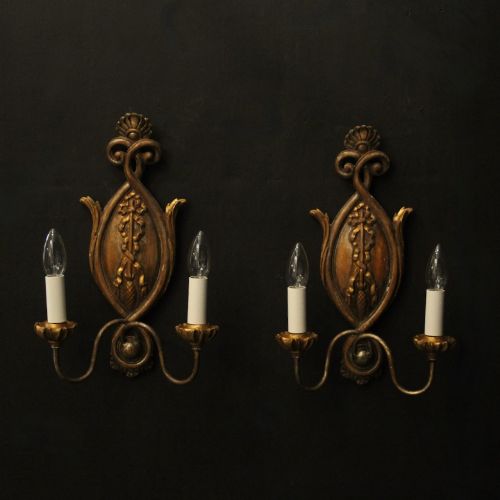
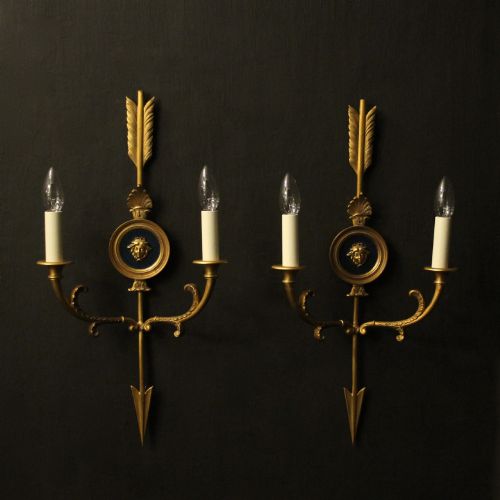
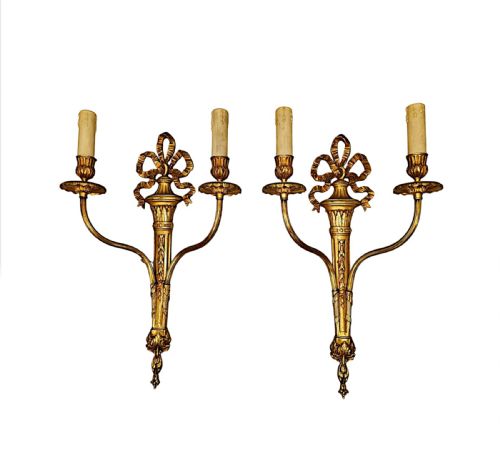
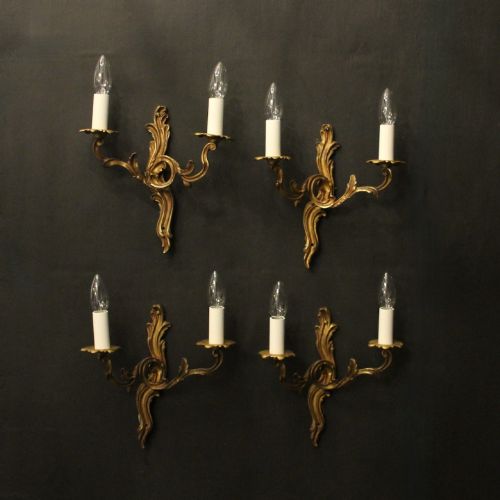
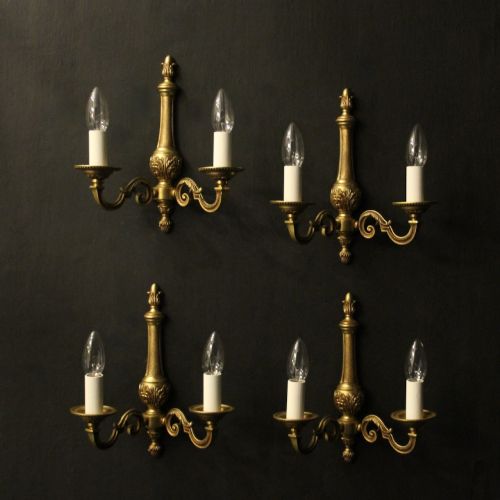
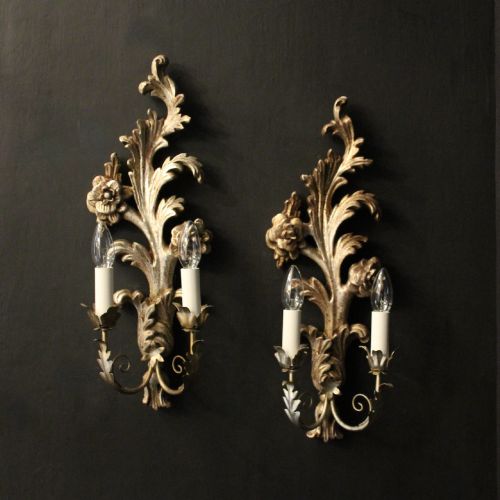
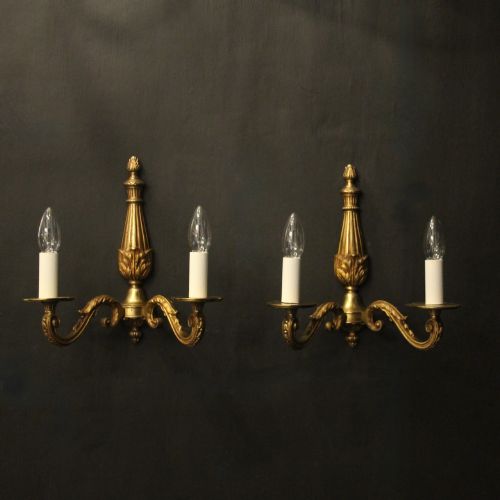
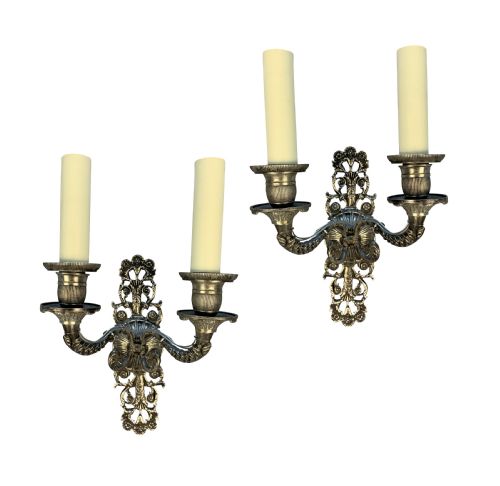
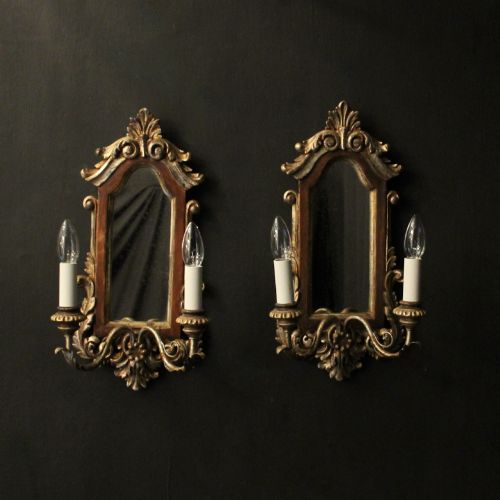
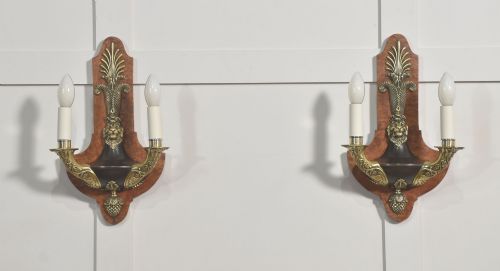
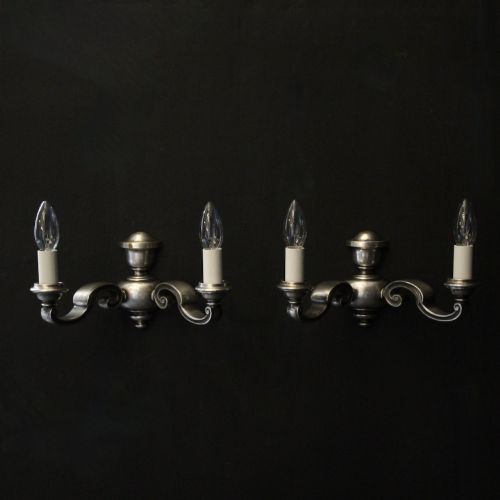
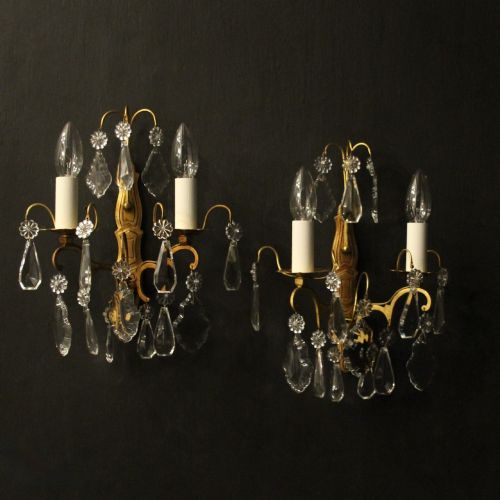
Pair Wall Sconce Arms
These pair wall sconce arms bring focused illumination and decorative presence to interiors, spanning Victorian designs to later French and Florentine revivals.
Pair Wall Sconce Arms
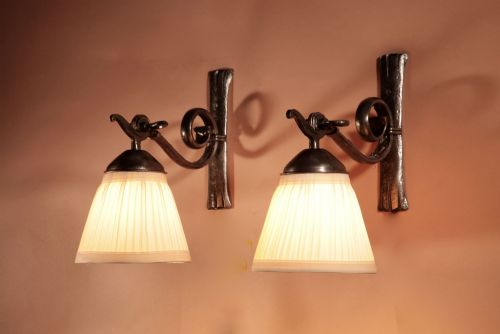
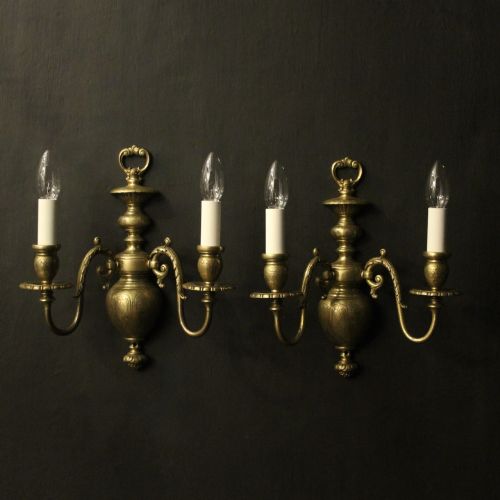
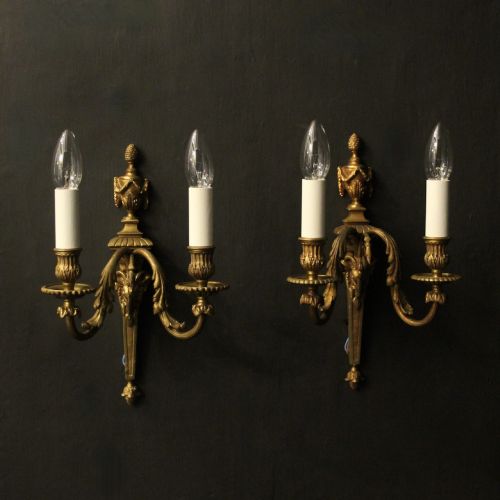
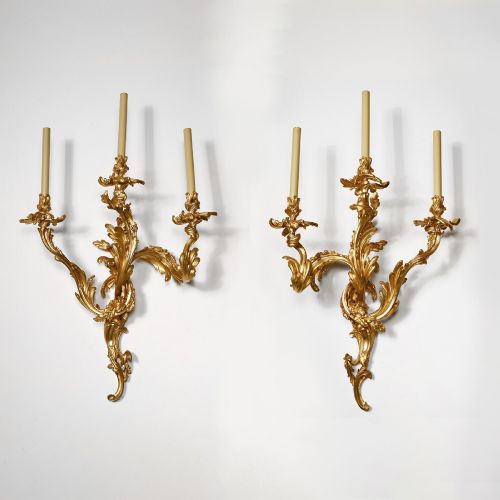
When searching for pair wall sconce arms, buyers encounter matched sets of wall-mounted light fixtures designed to project illumination from a vertical surface. These pieces frequently manifest as twin-arm or triple-arm configurations, holding candles or wired for electricity.
The selections on this page draw heavily from French, English, and Italian workshops, with origins stretching from the nineteenth century through the Edwardian era and into nineteen-thirty. Styles lean towards French Rococo, Louis XVI, Florentine, and Empire revivals.
Forms include standard wall lights alongside girandoles and specialised ribbon or cherub motifs. Buyers meet both single-arm variants and substantial multi-branch assemblies finished in various metallic and gilded tones.
How they were made
Metals form the core structure of these pieces, utilising cast bronze, brass, and ormolu alongside silver plating and solid bronze. Many fixtures rely on applied gilding to achieve a rich gold surface over the underlying metal.
Carved wood provides an alternative base, specifically seen in Florentine giltwood examples that integrate wooden scrolls and arms. Certain designs incorporate glass elements like crystal drops or Murano components alongside wood and metal.
Listings feature periods spanning the Victorian and Edwardian eras alongside nineteen-twenty and nineteen-thirty productions.
What varies in quality
The refinement of the casting dictates visual success, where crisply defined foliate scrolls and Rococo asymmetry separate superior bronze and brass work from softer secondary production. Hand-chased detailing adds depth and sharpness to the metal surface after casting.
Gilding technique creates another division, as thick fire gilding or well-preserved gold leaf retains warmth and longevity compared to flat or degraded metallic paints. The integrity of the underlying structure, whether carved giltwood or heavy cast metal, ensures stable wall mounting.
Bruce Talbert·Casier
The Pair Wall Sconce Arms Glossary
- Girandole
- A branched wall light or sconce, frequently featuring a mirrored backplate to multiply the reflected light in a room. These fixtures often display ornate carved wood or gilt metal frames.
- Ormolu
- Finely chopped high-karat gold applied to a bronze base using a mercury amalgam technique, common in French decorative pieces. This finish produces a deep, warm metallic lustre.
- Giltwood
- Wood, typically carved gesso-coated timber, that has been covered with thin gold leaf. This material is characteristic of Florentine wall lights and girandoles.
- Rococo Revival
- A nineteenth-century design movement resurrecting the asymmetric scrolls, shell motifs, and naturalistic curves of the eighteenth century. Sconces in this style display exuberant, flowing lines.
- Empire Style
- A neoclassical design language inspired by ancient Roman and Greek forms, featuring symmetrical lines and martial motifs. Pieces from this aesthetic project architectural dignity.
Pair Wall Sconce Arms: Frequently Asked Questions
What styles are available for these sconces?
The available inventory encompasses French Rococo, Louis XVI, Empire, and Florentine revivals alongside Aesthetic Movement pieces. These styles reflect nineteenth-century and early twentieth-century interpretations of earlier historic periods.
Finishes range from gilded bronze and ormolu to silver plating, giltwood, and burr walnut. Buyers can select from single-arm designs up to substantial triple-arm configurations.
How do I date antique wall sconces?
Dating relies on stylistic markers, manufacturing techniques, and material composition recorded across Victorian, Edwardian, and early twentieth-century eras. Stylistic revivals often mimic eighteenth-century forms while retaining the casting methods of their actual period of manufacture.
Examining the construction of the arms, screw threads, and backplates helps distinguish nineteenth-century castings from nineteen-thirty productions. Maker signatures or stamps, when present, provide definitive chronological reference points.
Were these sconces made for candles or electricity?
Original configurations were designed exclusively for candles, utilising drip pans and sockets sized for taper or pillar candles. Many surviving examples have subsequently been adapted to accept electrical wiring for modern use.
Conversion methods vary, with some installations preserving the original candle tubes as faux drip sleeves around modern lamp holders. The presence of wiring does not preclude returning a fixture to candle use if desired.