
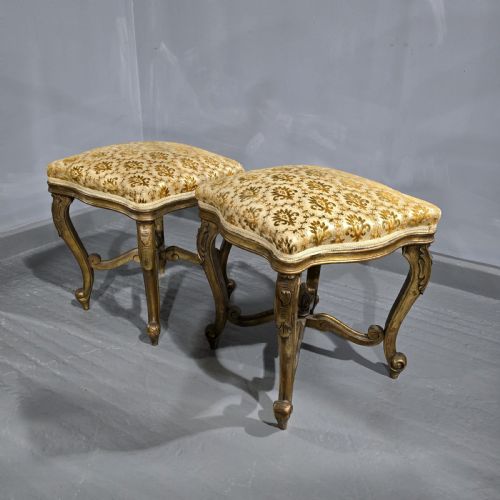

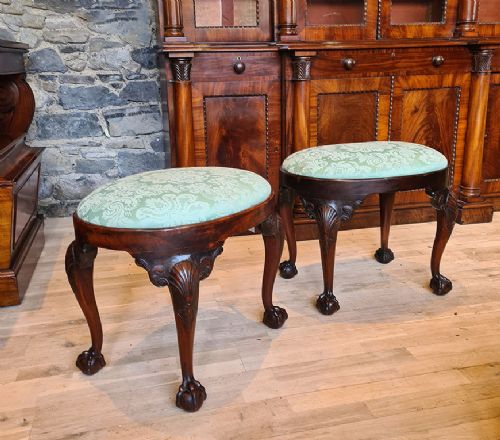
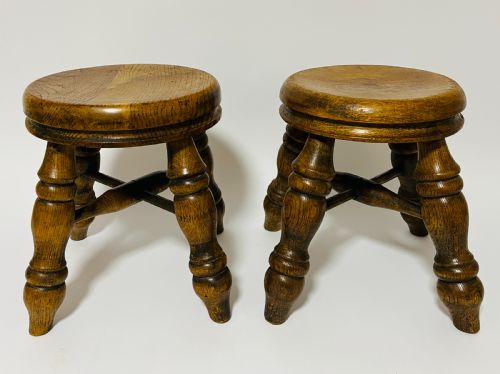


Pair Vintage Footstools
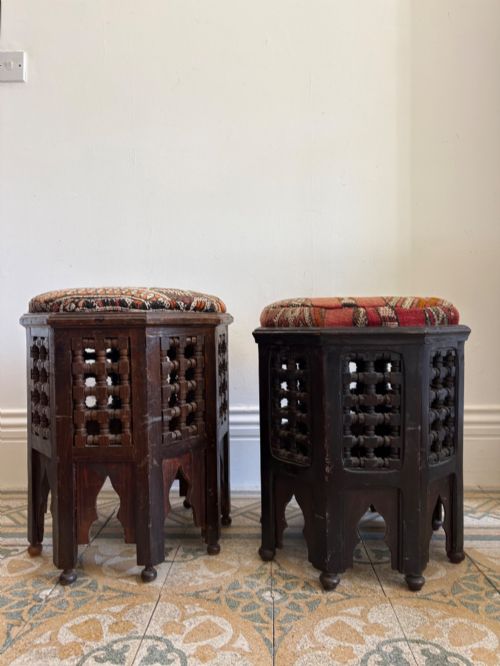
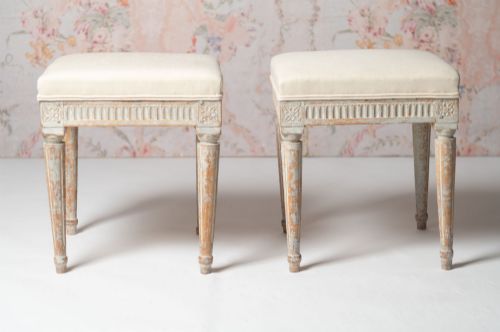
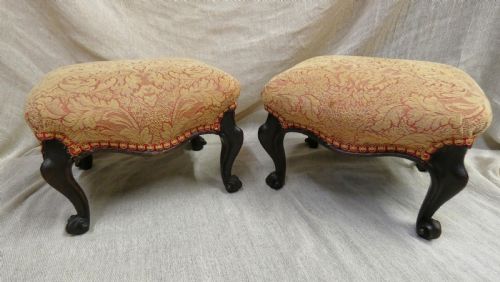
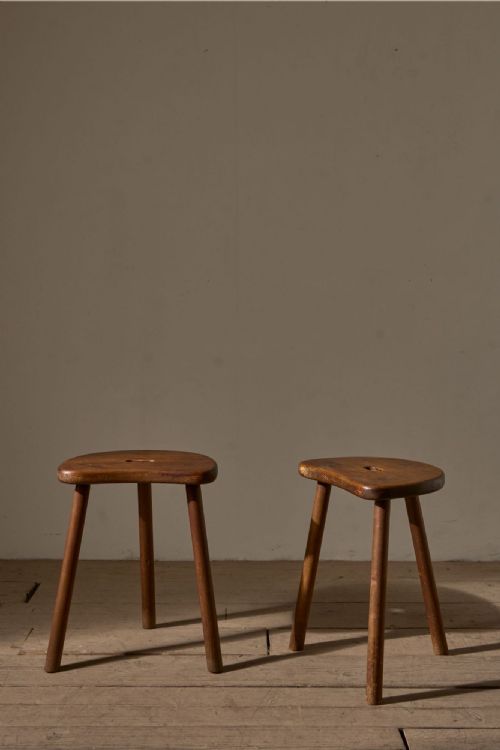
Pair vintage footstools bring balanced seating and period character into a room, offering matched upholstery and historic timber frames.
Pair Vintage Footstools
When you search for pair vintage footstools, you encounter matched sets spanning the eighteenth century through to the nineteen thirties. These items range from compact footrests designed to accompany armchairs to larger upholstered seats used independently in reception rooms.
The selection on this page demonstrates considerable variety in regional origin and stylistic influence. You frequently meet pieces reflecting British vernacular traditions alongside continental forms influenced by French and Swedish design movements.
Makers produced these matching items in various configurations, including carved timber frames, painted wooden bases, and versions featuring rush or upholstered seats. This diversity allows you to find matching pairs that suit both formal period settings and rustic interiors.
Materials and construction methods
Cabinet makers utilised a range of domestic and imported timbers to build the frames for these items. Mahogany, oak, walnut, yew, and pine appear regularly, joined by painted wood and gilded surfaces on decorative examples.
Upholstery and seating materials contribute significantly to the physical structure of each item. Workshops employed traditional textiles such as velvet, silk, leather, and woven rush supported by sturdy wooden frames and brass details.
Listings feature periods ranging from the 18th century through the Victorian era and into the 1930s, utilising mahogany, oak, velvet, and giltwood.
Distinguishing quality across the range
The sophistication of the woodwork and the integrity of the original construction separate the finer examples from standard utilitarian items. Hand-carved details, refined proportions, and the survival of original painted or gilded surfaces distinguish superior pieces.
The condition and authenticity of the upholstery materials also influence the character of each set. Items retaining period textiles or traditional stuffing methods demonstrate a higher degree of original craftsmanship than later re-covered variants.
The Pair Vintage Footstools Glossary
- Cabriole leg
- A furniture leg that curves outward and then tapers inward, finishing with a pad or scroll foot. This shape derives from ancient animal forms and gained popularity during the eighteenth century.
- Vernacular
- Everyday furniture made by local craftsmen using regional materials, prioritising utility over high-style academic design.
- Giltwood
- Timber that has been coated with a thin layer of gold leaf or gold paint. This technique added opulent reflectivity to formal seating.
- Rush
- A marsh plant used for traditional woven seating surfaces. Craftsmen twist the dried stems into cords before weaving them into a durable seat pad.
Pair Vintage Footstools: Frequently Asked Questions
Where should I place these in a room?
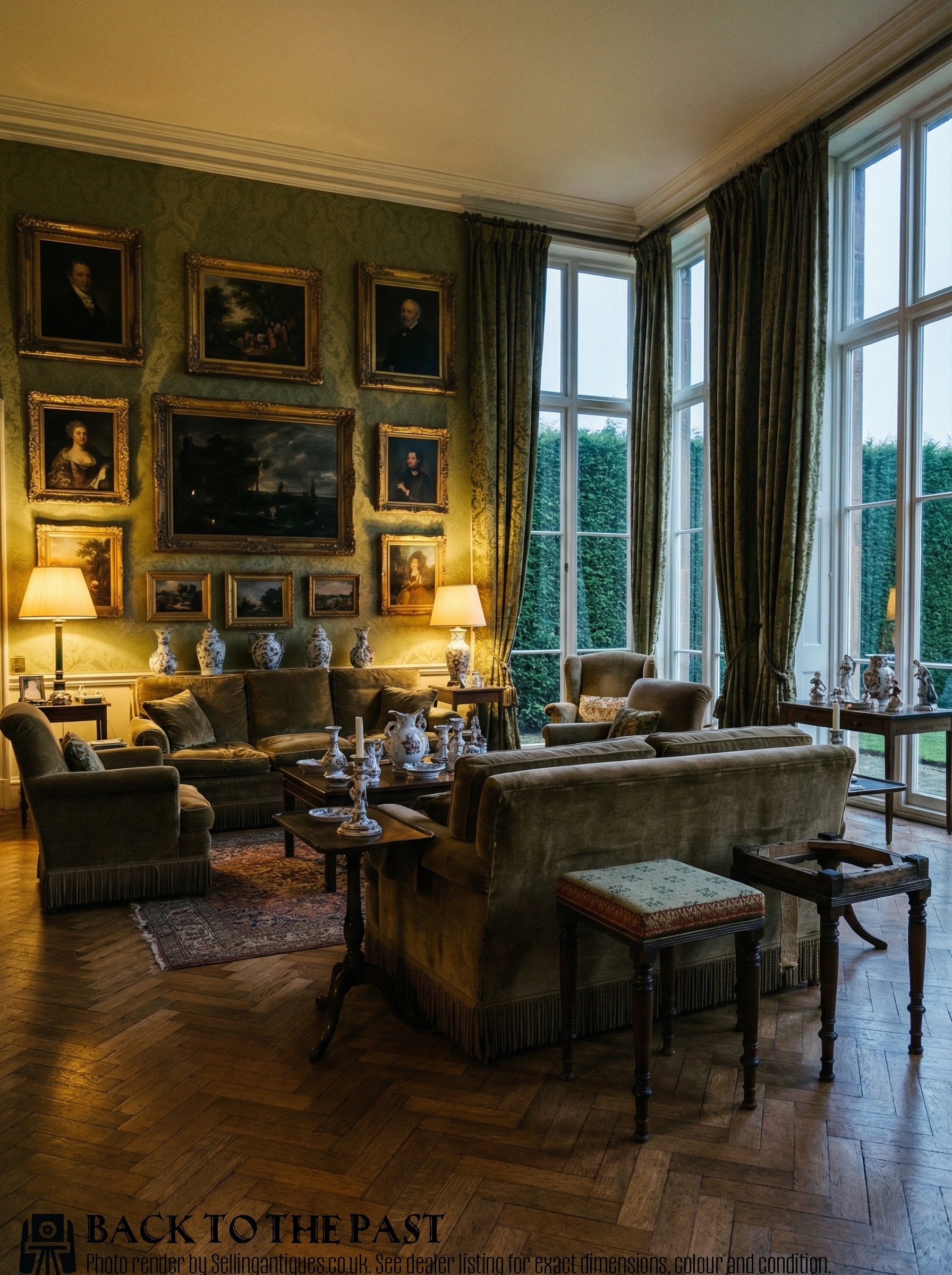
These matched sets work effectively as low seating in front of a fireplace or placed at the foot of a bed. Their balanced proportions also allow them to function as occasional seats in a hallway or sitting room.
Because they arrive as a pair, you can place them symmetrically beneath a console table or position them separately to anchor opposite sides of a seating arrangement.
How do I care for wooden frames and upholstery?
Maintain the timber frames by dusting them regularly with a dry cloth and occasionally applying a mild, quality beeswax. Avoid placing them in direct sunlight to protect antique wood finishes from fading.
Vacuum upholstered surfaces gently using a soft brush attachment. If the fabric requires deeper cleaning, consult a specialist who understands historic textiles.
How do I identify the period of a footstool?
Dating relies on examining the timber species, joinery techniques, and stylistic motifs carved into the frame. For instance, neoclassical pieces display symmetrical classical details, whereas Victorian examples often feature heavier carved timber and cabriole legs.
Comparing the construction methods inside the frame to known period standards helps clarify the decade of manufacture.
Can I use these for daily seating?
Most of these items were built to support the weight of an adult, though their primary function historically varied between footrests and low seats. Assess the structural firmness of the joints before using them for regular seating.
Lighter frames, particularly smaller eighteenth-century or delicate painted examples, suit gentle use or decorative placement rather than heavy everyday traffic.