





Pair Victorian Garden Urns
Pair Victorian garden urns bring formal classical symmetry to outdoor spaces through robust metal and terracotta vessels.
Pair Victorian Garden Urns
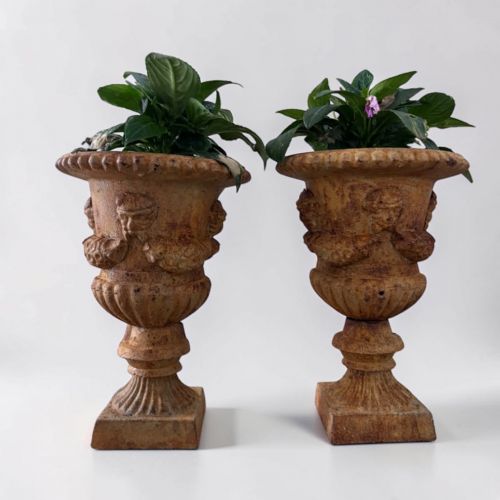
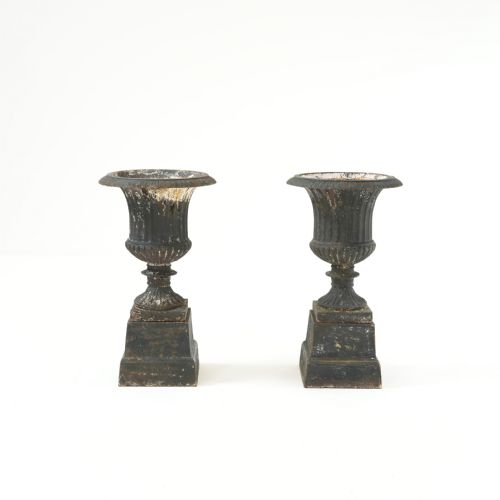
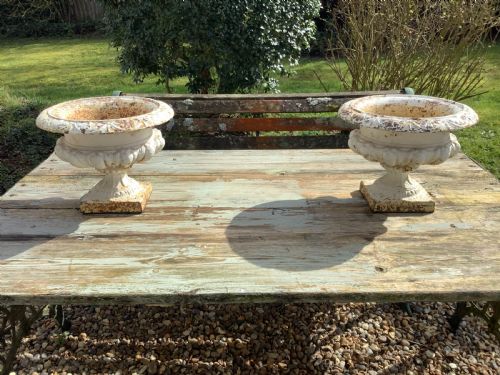
Pair Victorian garden urns are matching ornamental vessels designed for display in gardens, terraces and country house grounds. They emerge primarily from the nineteenth century in classical and neoclassical styles.
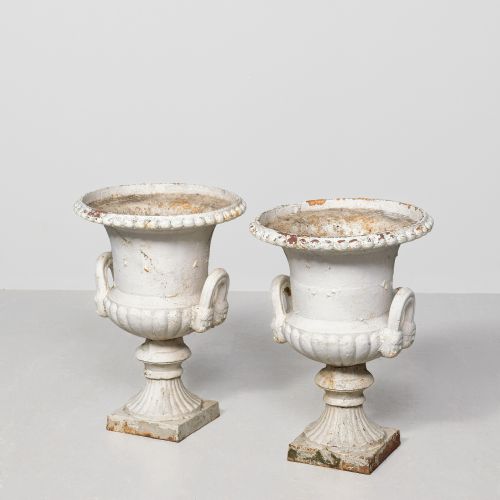
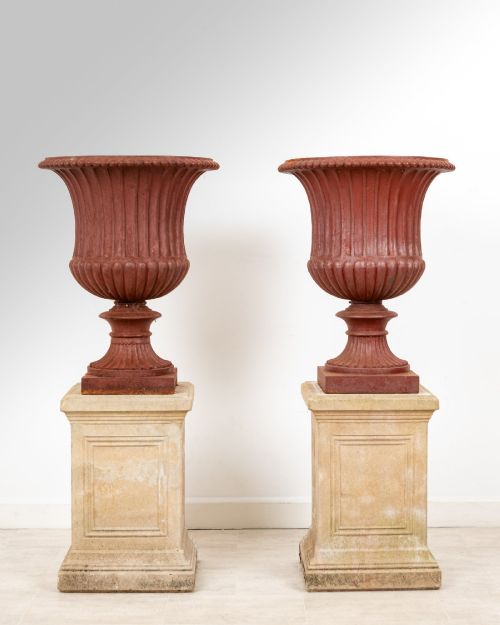
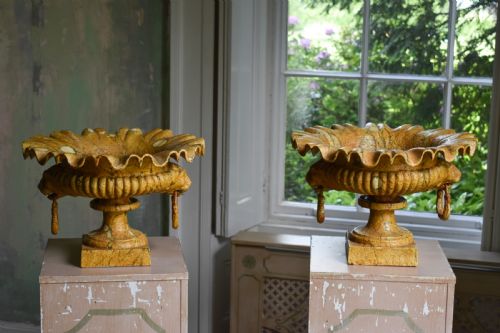
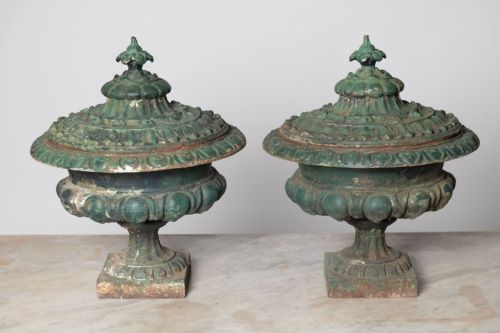
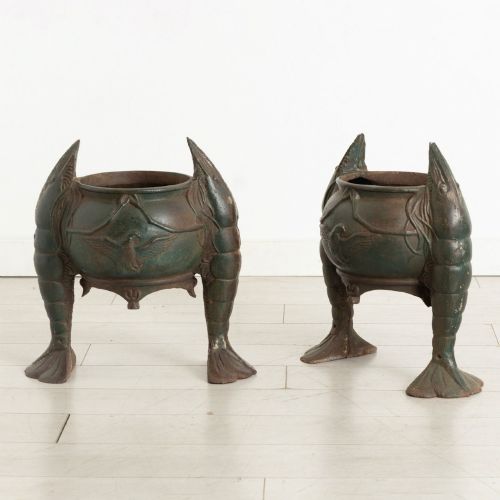
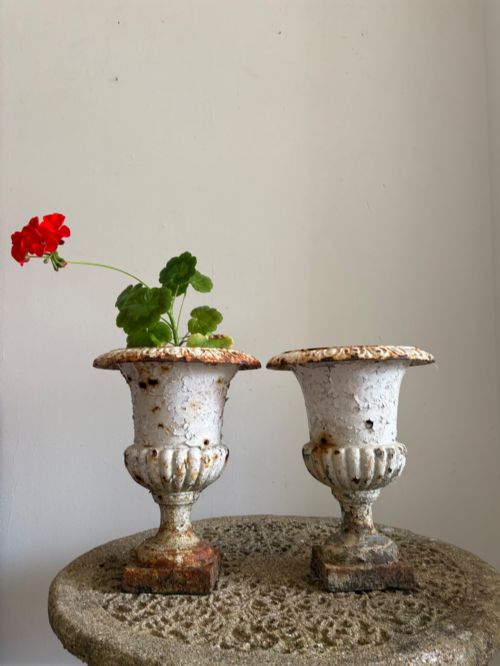
The campana shape dominates the selection, alongside tazza forms and novelty designs such as shrimp planters. These pieces frequently sit upon matching pedestals or stone plinths.
Makers and foundries produce them for outdoor landscaping, utilising durable materials to withstand the elements over generations.
Materials and construction
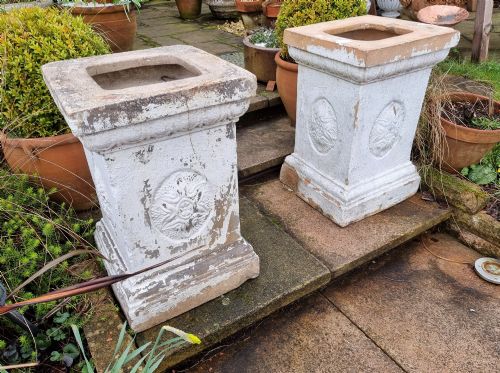
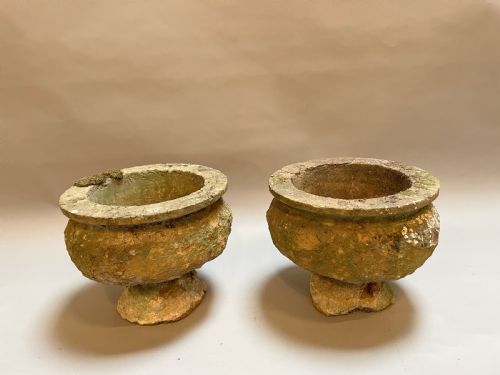
Foundries cast iron into moulds to create heavy, durable garden vessels with fluted bodies or strapwork detail. Workshops also shape soft stone, limestone and salt-glazed stoneware into matching garden ornaments.
Potters fire terracotta to form traditional country house urns, while other pieces incorporate wrought iron or retain original distressed paint.
Shrimp-shaped cast iron planters bring an unexpected marine touch to Victorian garden displays.
Quality factors
The thickness of the metal and the crispness of the casting define the standard of an iron urn. Heavier examples with original pedestals, lids or undisturbed painted surfaces command greater attention from collectors.
The integrity of the material, whether salt-glazed stoneware, terracotta or cast iron, determines how well the vessel survives weathering outdoors.
Coalbrookdale·Dunfermline Clay Company
The Pair Victorian Garden Urns Glossary
- Campana
- A bell-shaped garden urn with an everted rim and a tapering body. This form originates in classical antiquity.
- Tazza
- A shallow cup-shaped vessel on a pedestal base. These ornate garden pieces sit upon lawns or terraces.
- Plinth
- A heavy base or pedestal that elevates a garden urn. They provide structural support and visual height.
- Ststrapwork
- Ornamental metalwork resembling straps or bands. Wrought iron planters often employ this decorative technique.
Pair Victorian Garden Urns: Frequently Asked Questions
How do I place urns in a garden?
Pair Victorian garden urns suit symmetrical placement on either side of pathways, doorways or terrace steps. They function effectively as standalone focal points or planted with seasonal foliage.
Elevating the vessels upon matching stone plinths or pedestals adds architectural presence to formal outdoor spaces.
Are cast iron urns frost resistant?
Heavy cast iron withstands low temperatures reliably, though adequate drainage prevents water from freezing inside the bowl. Ensure the drainage hole remains clear before filling the vessel with compost.
Terracotta and soft stone variants require more careful placement during severe winter frosts to avoid cracking.
How do I identify a nineteenth century piece?
Nineteenth century examples display traditional foundry marks, heavy metal construction, and classical campana or tazza proportions. Original surface patination and weathered paint layers often indicate significant age.
Comparing the casting quality against documented period styles helps confirm the date of manufacture.
Can these urns stay outside all year?
Cast iron and salt-glazed stoneware endure outdoor conditions permanently, developing a stable weathered patina over decades. Regular cleaning removes debris and prevents organic growth from damaging the surface.
Moving lighter terracotta or stone vessels under cover during harsh weather protects the material from freeze-thaw damage.