
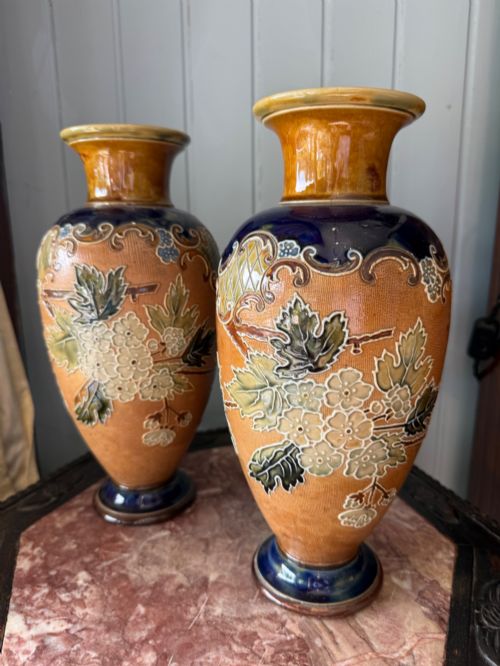
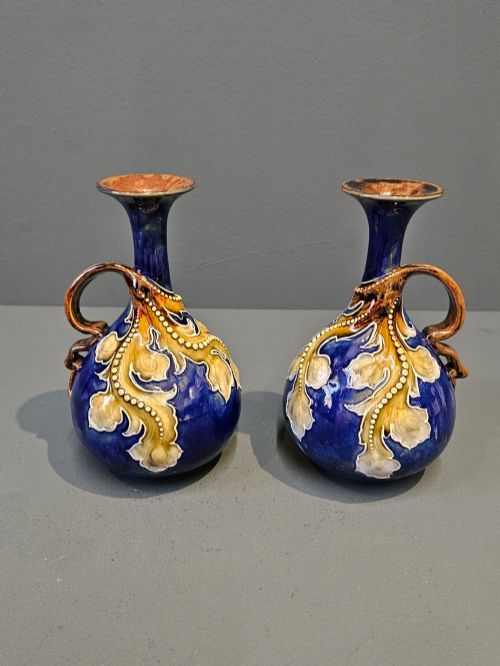
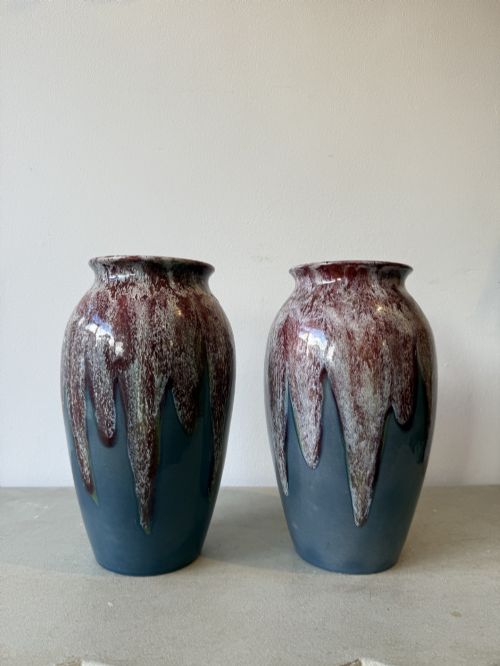
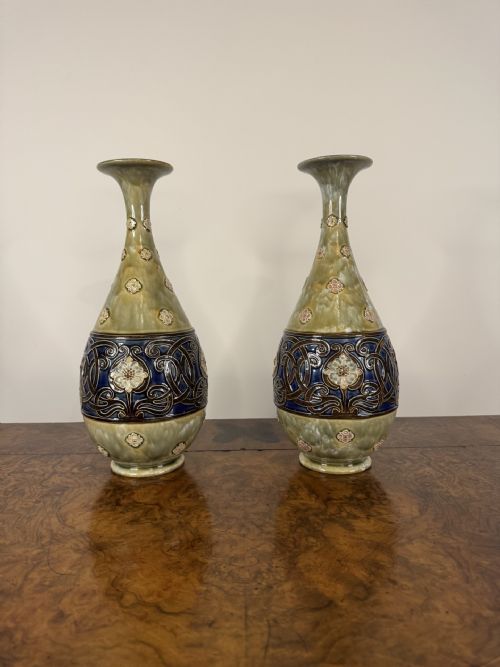


Pair Stoneware Pottery Vases
These pair stoneware pottery vases are dense, durable vessels that bring balanced symmetry and historical weight to a mantelpiece.
Pair Stoneware Pottery Vases
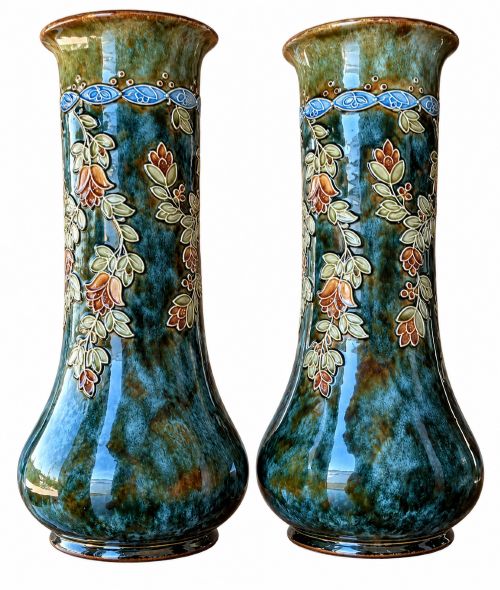
When you search for pair stoneware pottery vases, you encounter symmetrical vessels formed from dense, vitrified clay bodies. The selection spans the late nineteenth century through to the early twentieth century, taking in Victorian, Edwardian, and Art Nouveau periods.
You are most likely to meet pieces produced by the Lambeth studios of Royal Doulton, which dominate the available selection. These range from small cabinet vessels to larger baluster and shaped forms finished with distinctive glazes and applied decoration.
How they were made
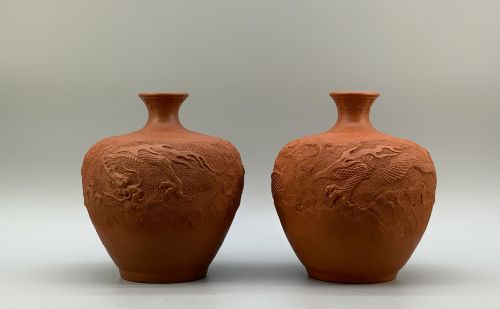
Potters shaped these vessels from heavy stoneware, terracotta, and red clay, often utilising traditional throwing and moulding techniques. The bodies were then fired at high temperatures to achieve vitrification, ensuring a durable and impermeable finish.
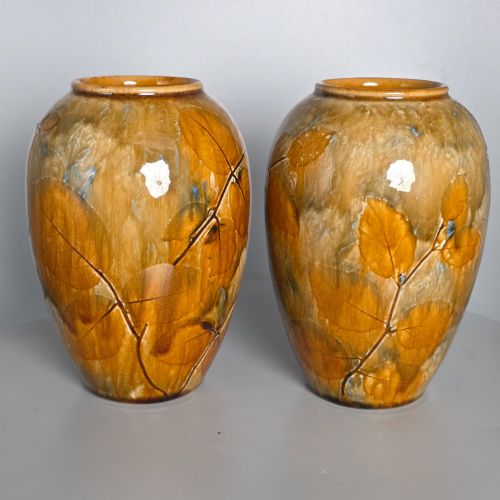
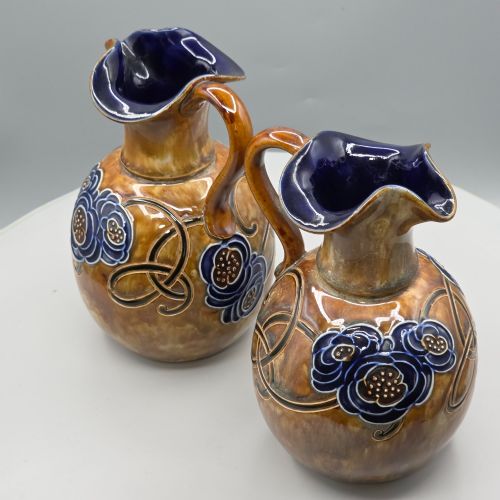
Surface decoration relies heavily on reactive glazes, enamel details, and applied slip. Techniques such as Slater's patent texturing introduced lace-pressed patterns beneath fluid colourways, while hand-painted foliage and raised motifs added tactile depth.
Early potters occasionally rolled actual Nottingham lace into damp clay to create the intricate textures found on Slater's patent vases.
What varies in quality
The distinction between standard production and top tier work rests on the ambition of the design and the sureness of the hand execution. Pieces bearing the named signatures of known studio artists demonstrate superior control over glaze reactions and modelled relief.
Proportion and crispness of form set the better examples apart from routine output. Well defined baluster silhouettes and cleanly impressed ornamentation maintain their visual authority across the pair.
Royal Doulton·Doulton Lambeth·Louisa Wakely·Emily Edwards·Ethel Beard·Mettlach Pottery·Tokoname
The Pair Stoneware Pottery Vases Glossary
- Stoneware
- A dense, high fired pottery that is impervious to liquid even without glaze. It is traditionally fired at temperatures exceeding one thousand two hundred degrees Celsius.
- Baluster
- A vertical architectural form shaped with a rounded swell near the base and a slender neck above. This silhouette provides stability and visual weight to larger display vessels.
- Slater's patent
- A decorative technique involving the impression of lace or woven fabrics into damp clay surfaces. This created textured grounds that were subsequently enhanced with metallic enamels and coloured glazes.
- Vitrification
- The high temperature process by which clay fuses into a glassy, non porous state. This transformation gives durable stoneware its characteristic strength and weight.
- Slip
- A liquid suspension of clay and water applied to pottery for surface decoration or smoothing. It can be piped, brushed, or marbled to create contrasting patterns before firing.
Pair Stoneware Pottery Vases: Frequently Asked Questions
How do I date these vases?
Dating relies on factory marks stamped into the base, alongside stylistic clues such as floral motifs or geometric borders. Victorian and Edwardian examples often carry specific impressed cyphers that narrow down the year of manufacture.
Changes in glaze chemistry and finishing techniques across the decades also help place a pair in context. Comparing the registry marks with known studio production eras confirms the timeline.
Are these vases waterproof?
The high fired stoneware body is naturally vitrified and non porous, meaning the material itself holds water securely. Many examples were designed for display rather than utility, but their composition remains stable.
Interior glazed surfaces further ensure that moisture does not seep into the clay body over time. Caution should still be applied with antique pieces featuring delicate applied enamel work.
What is Art Nouveau pottery?
Art Nouveau pottery embraces organic lines, asymmetrical floral motifs, and fluid, naturalistic shapes. This aesthetic flourished around the turn of the twentieth century across British and European studios.
Makers utilised mottled glazes and stylized plant forms to capture a sense of growing movement. On vases, this translates to sinuous stems and copper toned metallic finishes.
How should I display a pair?
Displaying a matching pair requires balanced placement where both vessels share equal light and unobstructed sightlines. Mantelshelves and sideboards offer traditional surfaces that accommodate their height and substantial weight.
Keeping them slightly apart allows the eye to appreciate the symmetry of the silhouettes and the detail of the glazes. Avoid spots prone to heavy vibrations or direct, harsh sunlight.