





Pair Silver Serviette Rings
Pair silver serviette rings are matching table accessories used to mark individual napkins, prized for dressing a formal dining table with matching metalwork.
Pair Silver Serviette Rings
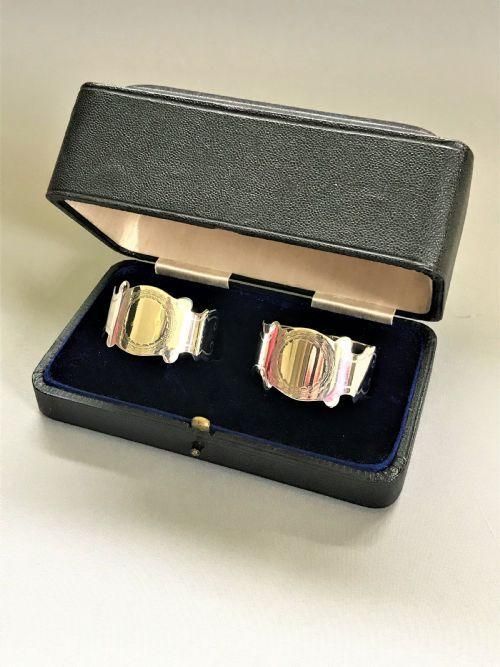
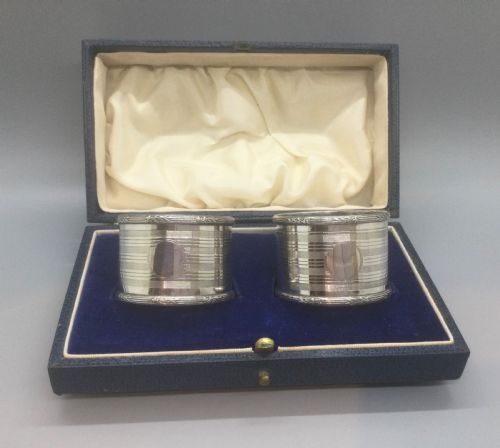
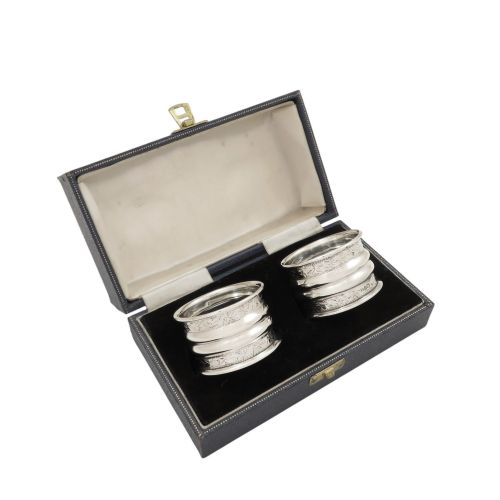
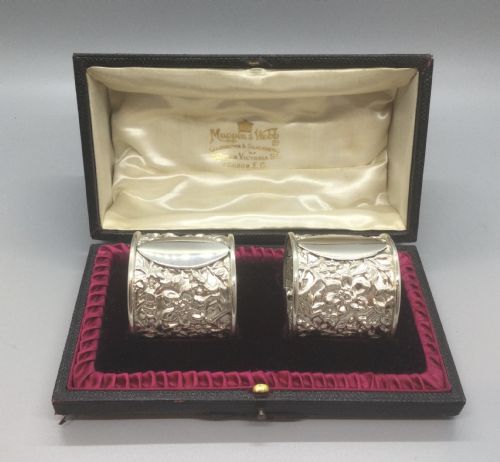
When you search for pair silver serviette rings, you are looking at matched sets of cylindrical table accessories designed to hold cloth table linen between meals. These pieces turn up in forms dating from the Victorian and Edwardian eras through to the Art Deco period, spanning styles such as George V and Arts & Crafts. The examples on this page are most frequently found in solid sterling silver, often arriving with their original fitted cases lined in silk, velvet, or leatherette.
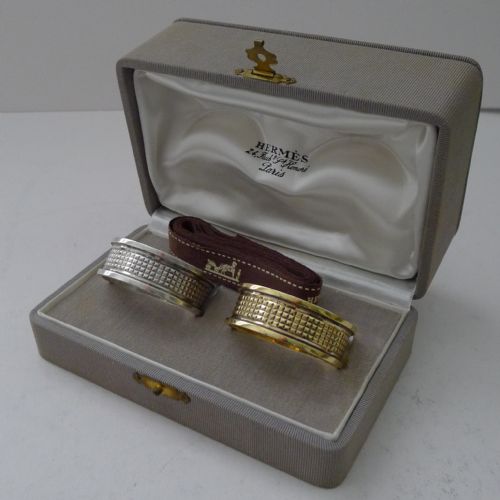
The selection ranges from plain polished bands to elaborate designs featuring belt motifs, aesthetic movement patterns, or vivid enamel work. Many survive from the late nineteenth century and the early decades of the twentieth century, bearing hallmarks from assay offices like Birmingham and London. You will also encounter specialised modernist interpretations and luxury Parisian productions, reflecting how dining customs evolved across different decades.
How they were made
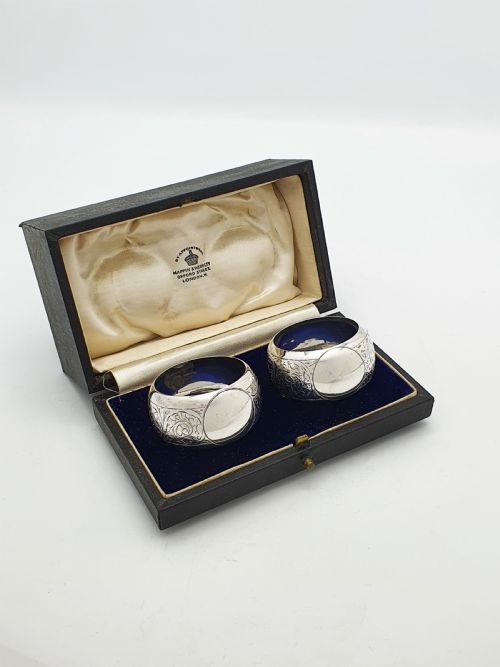
The foundation of these objects is sterling silver, worked into rigid cylinders either by sheet rolling or casting solid forms. Makers applied techniques such as piercing, engraving, and applied wirework to build up decorative surfaces around the circumference. Some incorporate contrasting media, fusing vitreous enamel directly onto the metal base or applying surface treatments like silver gilt to create internal warmth.
For presentation, makers housed these items in custom fitted boxes constructed from rigid card or wood covered in leather or leatherette, then lined with tactile fabrics like silk and velvet. The hinges and clasps on these cases were engineered to secure the silver rings firmly during transit and storage. This attention to housing matches the precision found in the metalwork itself.
What varies in quality
Quality in these pieces rests primarily on the distinction between standard commercial production and the work of notable designers or retail houses. Items bearing specific maker marks or associated with recognised creative movements display superior chasing, cleaner hallmarks, and more inventive surface decoration. The weight of the metal and the crispness of any engraved motifs separate standard utility pieces from finer cabinet examples.
The survival and condition of any accompanying fitted presentation case also influence the overall character of a set. Boxes retain higher interest when their silk and velvet linings remain intact and the exterior leatherette or leather shows minimal wear. Furthermore, the cohesion of a matched pair - where hallmarks, weight, and decorative depth align perfectly - distinguishes a well-curated set from a later assembly.
Hermes Paris·Liberty & Co·Archibald Knox·Mappin & Webb·Henry Wilkinson
The Pair Silver Serviette Rings Glossary
- Sterling silver
- A silver alloy containing 92.5 percent pure silver and 7.5 percent other metals, usually copper, chosen for durability. This standard alloy forms the body of the vast majority of antique table silver.
- Hallmark
- An official stamp applied by an assay office to indicate the metal purity, the place of testing, and the year of manufacture. These marks provide the primary evidence for dating British silver.
- Silver gilt
- Silver that has been coated with a thin layer of gold on its surface, often applied to the interior of a ring to provide a rich contrast. This technique protects the metal and adds visual warmth.
- Enamel
- A glassy substance fused to metal through high-temperature firing, creating smooth coloured decorative surfaces. It is frequently seen in Arts & Crafts designs.
- Assay office
- An official body charged with testing the purity of precious metals and striking the corresponding marks. Towns such as Birmingham and London maintained major offices.
Pair Silver Serviette Rings: Frequently Asked Questions
How were pair silver serviette rings used?
These rings were assigned to individual diners in grand households to identify and store cloth napkins between formal meals. They sat beside the dinner plate as part of the formal table setting.
Because households washed linens infrequently, keeping the napkin clean and segregated between uses was essential. The matching pair ensured that couples or seated guests had coordinated table markers.
Why do some sets come in boxes?
Many pairs were purchased as wedding gifts, anniversary presents, or christening tokens, which naturally warranted presentation packaging. Retailers supplied fitted cases covered in leatherette and lined with silk to protect the silver.
These boxes kept the items secure when not in use on the dining table. Surviving cases often feature the gilt stamp of the original retail jeweller on the interior lid.
How do I date an antique pair?
Dating relies on reading the assay office hallmarks stamped directly into the silver metal. These tiny struck symbols indicate the specific year letter, the city of testing, and the standard of silver.
Stylistic clues such as Edwardian proportions or Art Deco geometric motifs also help narrow down the decade. Comparing the box style can provide supporting evidence for the manufacturing period.
What is the difference between silver and silver gilt?
Standard silver displays the bright white reflective metallic sheen characteristic of sterling silver throughout its entire body. Silver gilt involves applying a fine layer of gold over the silver base metal.
This gilding was often used on the interior surfaces of rings to create a warm contrast against the cool exterior metal. It also offered additional protection against tarnishing from food residues.