
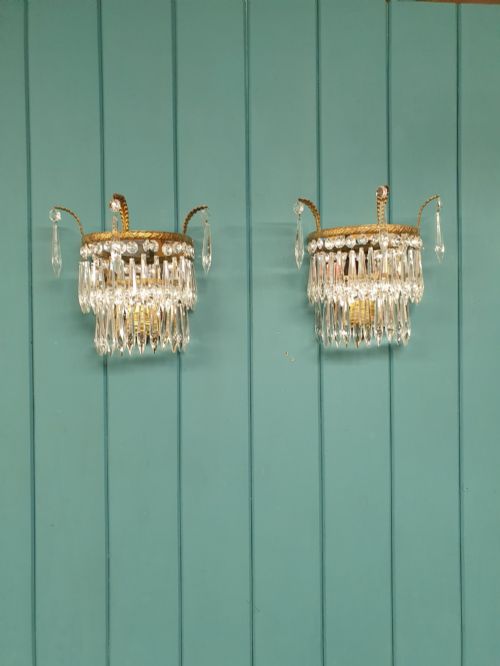


Pair Regency Wall Lights
These pair regency wall lights bring brilliant illumination and classical symmetry to a room, prized for their refined proportions and decorative metalwork.
Pair Regency Wall Lights
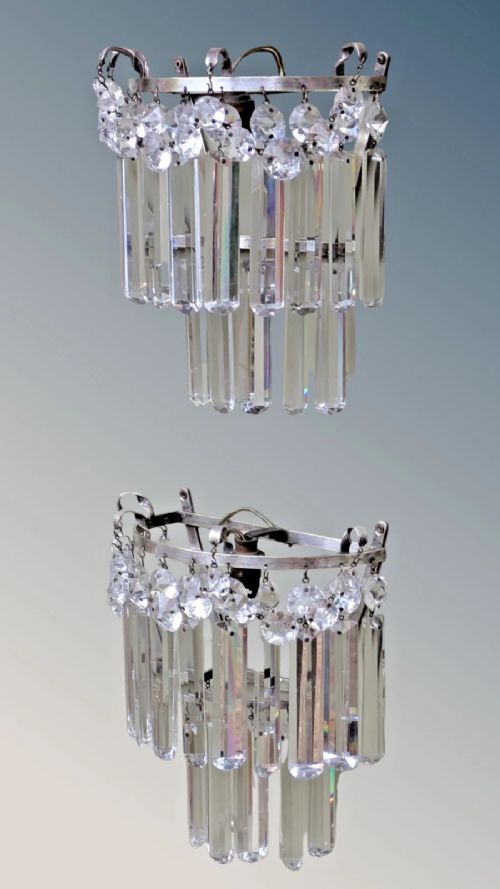
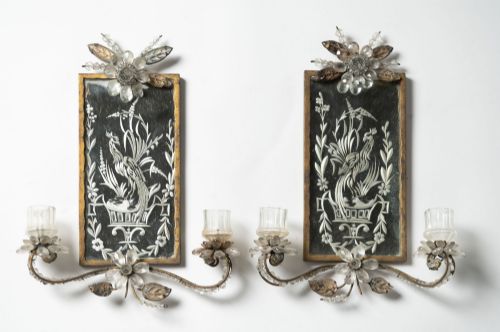
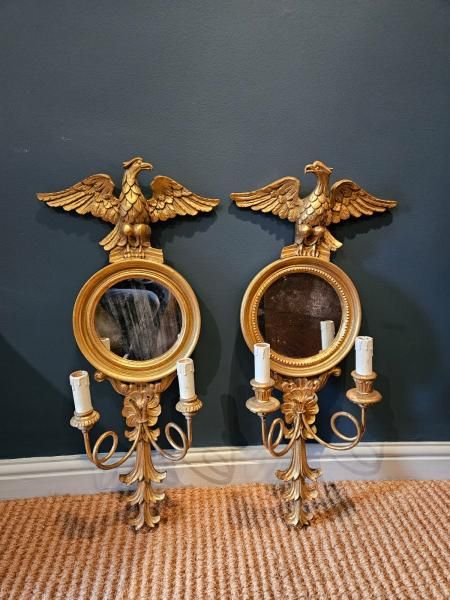
When searching for pair regency wall lights, collectors encounter twin lighting fixtures designed to mount directly onto vertical surfaces, often paired with mirror backs or girandole plates to amplify the glow. The forms span authentic 19th Century creations alongside later revivals from the Edwardian era up through the 1930s.
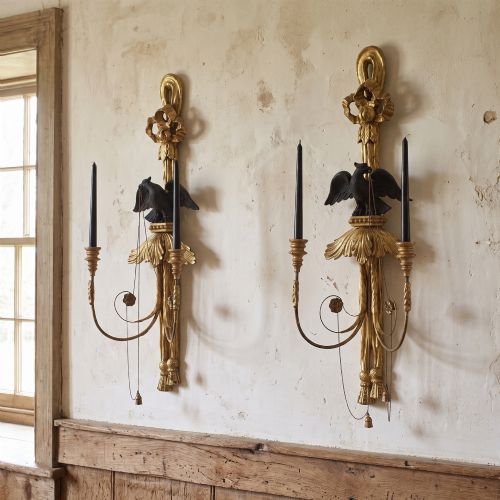
Stylistic influences range from Neoclassical and French Empire to George III style and Italian Regency. Pieces frequently incorporate candle branches, giltwood eagles, or crystal drops that reflect the candle or gaslight of their origins.
The selection includes English and French variants fashioned as wall lanterns, sconces, and twin-arm brackets. These objects provide both functional illumination and a distinct architectural accent for period interiors.
How they were made
Maker workshops utilised cast metals such as brass, bronze, and ormolu alongside carved timber like giltwood for the main structures. Gilding and patination techniques were applied to give surfaces a rich metallic sheen.
Glass and crystal elements, including cut crystal drops and mirror plates, were hand-cut and fitted into metal frames or wood backplates. Twin branch armatures and spike mounts required precise metalworking to support the weight of candles or early electrical fittings securely.
Listings feature items spanning the Victorian era, the Edwardian period, and the 19th Century, alongside 1920 and 1930 revivals.
What varies in quality
The distinction between standard domestic production and superior output rests upon the crispness of the metal casting and the depth of the hand-carving on giltwood components. Pieces displaying finely chiselled bronze or well-defined giltwood eagles command greater appreciation from connoisseurs.
Originality of the glass components and the integrity of the gilt or patinated surfaces also separate ordinary examples from exceptional ones. Heavier gauge metalwork and intact crystal tent drops indicate a higher standard of original craftsmanship.
Maison Baguès
The Pair Regency Wall Lights Glossary
- Girandole
- A branched wall light, often incorporating a mirror to reflect the light into the room. These fixtures combine reflective glass surfaces with candle arms.
- Ormolu
- Gilded bronze used extensively for decorative mounts and decorative hardware on period furnishings. This technique involves applying a gold amalgam to a bronze base.
- Giltwood
- Timber that has been coated with a thin layer of gold leaf or gold paint. It provides a bright, reflective golden finish for carved frames and sconces.
- Sconce
- A wall-mounted lighting fixture attached directly to a vertical surface. These fixtures historically held candles and later accommodated electrical fittings.
- Spike wall light
- A lighting form featuring protruding spikes or metal stems designed to hold candles securely. They often appear alongside mirror backs to enhance illumination.
Pair Regency Wall Lights: Frequently Asked Questions
What periods do these wall lights span?
The available pieces encompass items from the 19th Century, Victorian, and Edwardian periods, alongside early 20th Century revivals dating from 1900 through the 1930s.
Buyers will find both genuine antique items and revival pieces that replicate earlier Neoclassical and Regency aesthetics.
How were these lights originally used?
These fixtures served to illuminate hallways, drawing rooms, and formal chambers by holding candles or oil burners against reflective surfaces.
Many incorporated mirror backs or crystal drops to multiply the available light from a single flame within the room.
How do you install wall sconces safely?
Professional installation is recommended to ensure the heavy metal or timber fixtures are anchored securely to wall studs.
Wiring must be assessed to comply with modern electrical standards while preserving the antique or vintage housing of the fixture.
What materials predominate in these fixtures?
Construction materials primarily feature brass, bronze, gilt metal, and carved giltwood for the structural frames and decorative arms.
Cut crystal, glass panels, and mirrored plates are frequently integrated to catch and scatter the light.