

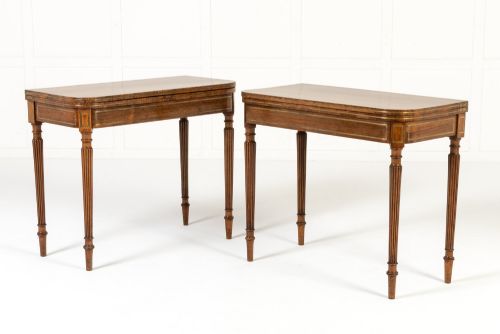
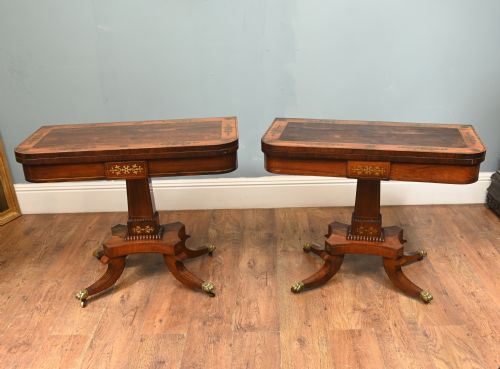


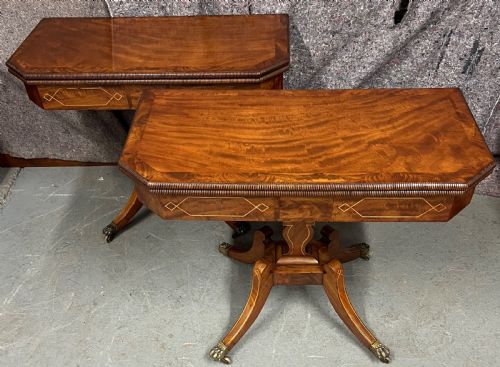


Pair Regency Tea Tables
Pair regency tea tables provide double the elegance for a formal room, combining clever folding tops with rich timber figured by masters.
Pair Regency Tea Tables
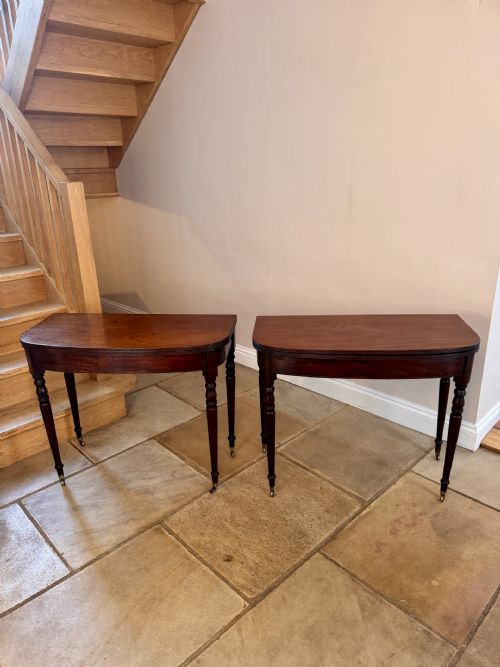
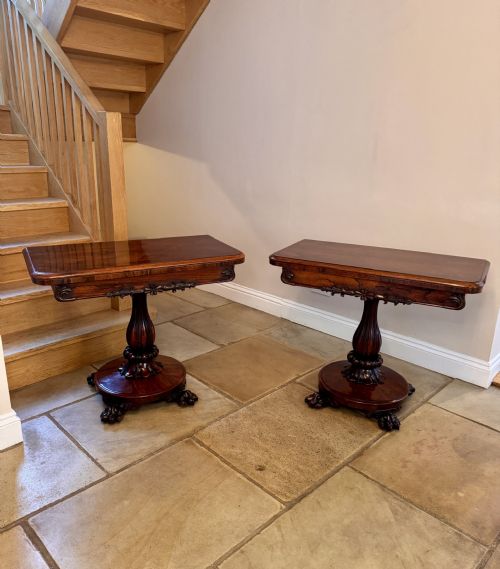
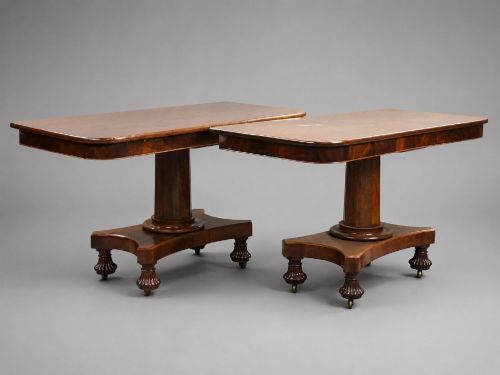
When you search for pair regency tea tables, you encounter dual pieces designed for entertaining, most frequently appearing as card tables, tea tables, and console tables from the Regency, George IV, and William IV periods.
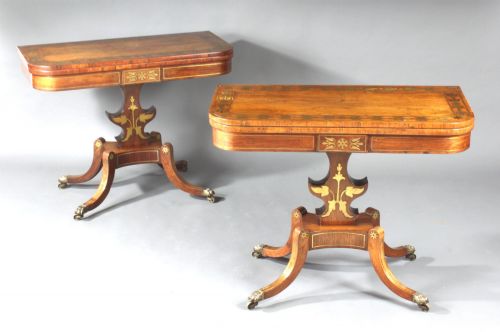
The selections span rich mahogany and rosewood woods, often featuring satinwood and boxwood details alongside brass inlay characteristic of the early nineteenth century.
While many examples function as foldover tables for games and tea, some broader listings include console tables and Sheraton Revival interpretations from the nineteen thirties.
Materials and Construction
Cabinet makers utilised dense, richly figured timbers like mahogany and rosewood as the primary structural bases, often enhancing the surfaces with delicate boxwood and satinwood stringing.
Brass inlay and mountings provide sharp contrast against the dark wood grains, applied carefully around the friezes and table edges of the folding mechanisms.
Pair Regency Tea Tables Retail Price Guide 2026
Typical asking prices for pair regency tea tables among the pieces listed under this phrase on Sellingantiques today, from the lower quarter to the upper quarter. They describe what is for sale here now, not the wider market.
Mahogany and rosewood dominate the material selections across the listings, frequently enhanced with brass inlay.
Judging Quality and Finish
Superior examples demonstrate exceptional depth in the timber grain, particularly in figured rosewood and polished mahogany surfaces that catch the light evenly across both matching halves.
The precision of the brass inlay and the seamless alignment of the foldover tops distinguish finer workshops from simpler commercial outputs.
George Oakley
The Pair Regency Tea Tables Glossary
- Foldover table
- A dual-surface table with a hinged top that opens to double its surface area for dining or card games. This clever mechanism allows the piece to sit flush against a wall when closed.
- Regency
- An English design period spanning the early nineteenth century noted for classical restraint and archaeological influence. Furniture from this era often incorporates brass inlay and sabre legs.
- Rosewood
- A heavy, dark timber featuring pronounced dark grain figuring prized for high-status furniture. It takes a high polish and dominated fashionable drawing rooms.
- Satinwood
- A luminous yellowish timber utilised for contrasting stringing and marquetry panels. Craftsmen deployed it to create bright geometric borders on darker mahogany carcases.
Pair Regency Tea Tables: Frequently Asked Questions
How were pair regency tea tables used?
These tables stood against drawing room walls holding decorative objects until guests arrived for tea or card games. The hinged top unfolded to reveal a baize-lined playing surface or a larger timber top.
By day they served as side furniture, adapting swiftly to social demands in formal nineteenth-century homes.
Are these tables always matching pairs?
The listings show matched sets created together to balance symmetrical interior schemes in large reception rooms. Each piece shares identical timber selection, inlay patterns, and structural proportions.
Finding two tables of the exact same period and wood species remains a significant advantage for interior decoration.
What woods dominate these tables?
Mahogany and rosewood form the vast majority of the surfaces, selected for their deep colour and strong grain patterns. Boxwood and satinwood appear as fine contrasting inlay details.
Brass elements integrate into the timber to highlight structural lines and geometric borders.
How do I spot a later revival piece?
Sheraton Revival examples appear from the nineteen thirties, utilising earlier stylistic cues with twentieth-century timber preparation and construction methods. Examining the secondary woods and interior framing reveals these later dates.
True Regency and Georgian pieces carry the specific wear patterns and construction quirks of nineteenth-century workshops.