





Pair Regency Pedestal Tables
Pair regency pedestal tables bring symmetry and refined proportion to a room, uniting functional support with architectural presence.
Pair Regency Pedestal Tables
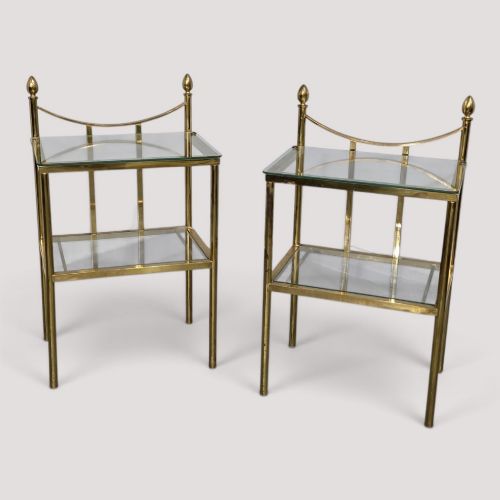
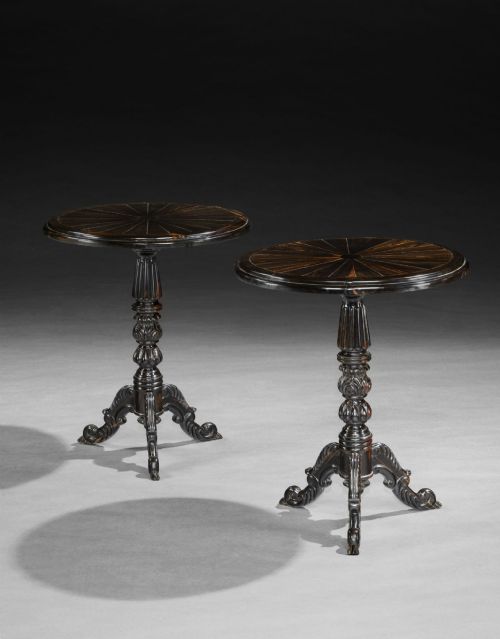
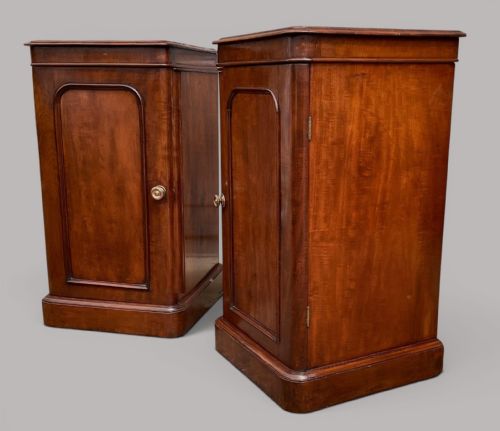
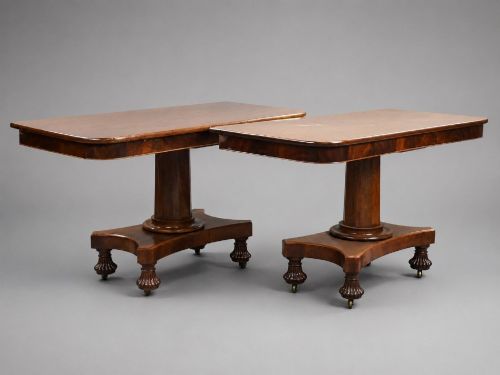
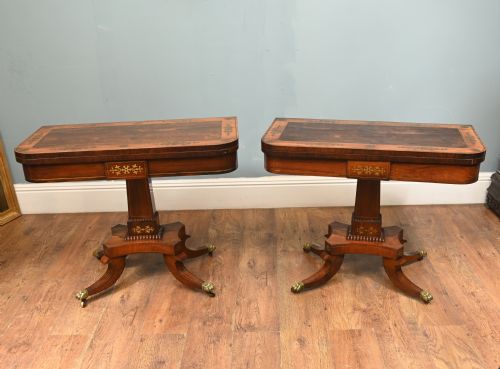
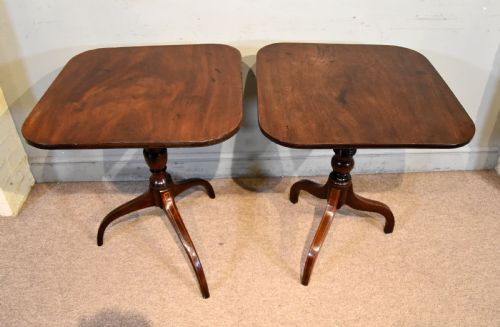
Pair regency pedestal tables encompass matched sets designed for diverse domestic uses, appearing frequently as card tables, bedside cupboards, and wine tables from the nineteenth century. These forms reflect the period preference for balanced furniture arrangements, often standing on central pillars supported by tripartite or quadrupartite bases.
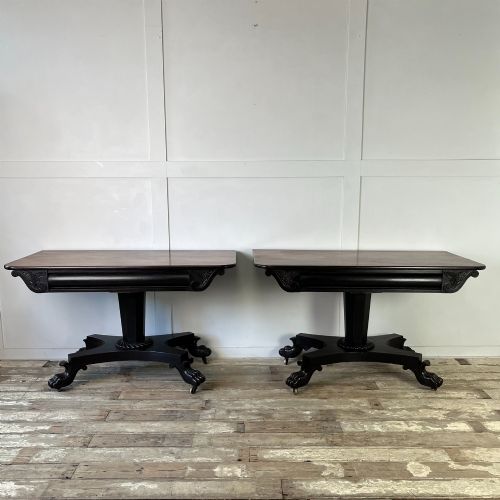
The selection extends from authentic period examples to later revivals from the twentieth century, encompassing styles such as William IV, George IV, and Hollywood Regency. Alongside traditional British mahogany and rosewood constructions, pieces surface in ebonised wood and exotic timbers like Ceylonese ebony.
Functional variety spans dining tables, console tables, and small lamp tables, demonstrating how makers adapted the pedestal format for multiple domestic rooms. Buyers encounter matched pairs alongside uniform originals, reflecting the practical difficulty of assembling twin pieces from the nineteenth century.
Materials and construction
Makers utilised solid mahogany, rosewood, and flame mahogany veneer, often enhanced by contrasting brass inlay and giltwood details. Structural integrity relied on turned central pedestals joined to robust timber bases, frequently fitted with leather inserts on games and writing surfaces.
Cabinetmakers employed precision joinery for pedestal joints and hinged foldover tops, ensuring stability across wine tables, card tables, and bedside cabinets. Surface finishes depended on hand-rubbed polishing to highlight the natural grain of figured mahogany and rosewood.
Listings feature mahogany, rosewood, and ebonised wood across nineteenth-century and twentieth-century revival periods.
Assessing craftsmanship and proportion
Quality rests in the selection of timber veneers and the crispness of brass inlay or carved details on the pedestal base. Superior examples display harmonious proportions where the central column balances the weight of the top and feet.
The integration of functional elements, such as smooth-turning card table mechanisms and well-fitted cabinet doors, separates standard production from exceptional workshop output. Original brass mountings and unaltered timber surfaces preserve the integrity of the piece.
Holland and Sons·James Mein of Kelso·Gillows
The Pair Regency Pedestal Tables Glossary
- Pedestal table
- A freestanding table supported by a single central column rather than four corner legs. This design maximises legroom and allows circular or shaped tops.
- Card table
- A folding table designed for games, typically featuring a baize-lined interior surface and a swivelling or hinged top supported by a rear gateleg.
- Flame mahogany veneer
- A decorative wood slicing technique that produces a distinctive flame-like pattern across the surface of cabinet doors and tabletops.
- Ebonised wood
- Timber treated with a dark stain or finish to imitate ebony, popular during the Regency and William IV periods for dramatic contrast.
- Tripod base
- A support structure featuring three legs radiating from a central pillar, commonly found on wine tables and small lamp tables.
Pair Regency Pedestal Tables: Frequently Asked Questions
How do I use them?
Pair regency pedestal tables suit symmetrical placement flanking a fireplace, sofa, or bed, providing balanced surface space and storage. Card tables function closed as side consoles or open for dining and games.
Smaller wine and lamp tables adapt easily beside seating, while taller cabinets serve bedside or hallway duty without overwhelming the floor plan.
Are matched pairs rare?
Finding exact pairs from the nineteenth century involves considerable difficulty, as furniture was frequently made individually or separated over generations. Dealers often assemble matched pairs based on matching timber, dimensions, and period.
Twentieth-century revivals appear more frequently as uniform pairs, offering the desired symmetry with modern durability.
How to tell periods apart?
Early nineteenth-century pieces display restrained classical lines, subtle brass inlay, and elegant proportions associated with the Regency style. Later William IV and George IV examples introduce heavier architectural forms, bolder carving, and denser mahogany veneers.
Twentieth-century revivals mimic these historical markers but generally exhibit lighter internal construction and cleaner modern hardware joints.
What woods were used?
Mahogany forms the primary structural wood across most listings, appearing in both solid form and as figured veneer. Rosewood and ebonised wood provide darker, highly decorative alternatives for high-status reception rooms.
Specialist pieces incorporate exotic timbers like Ceylonese ebony alongside brass and giltwood embellishments.