
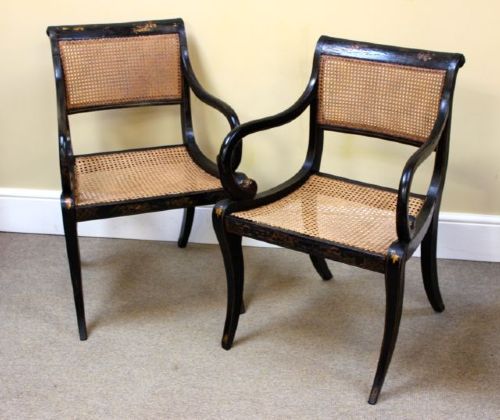
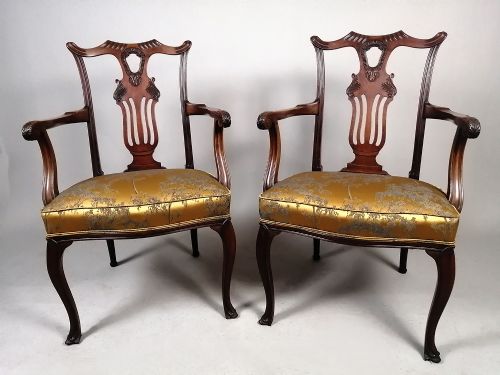
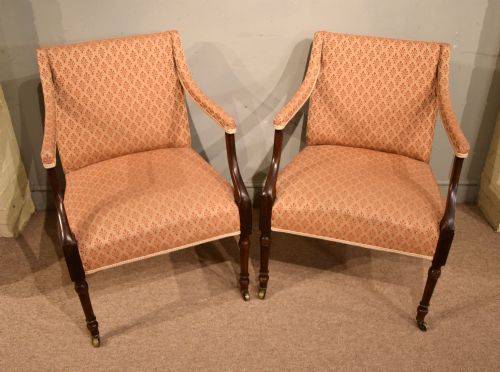
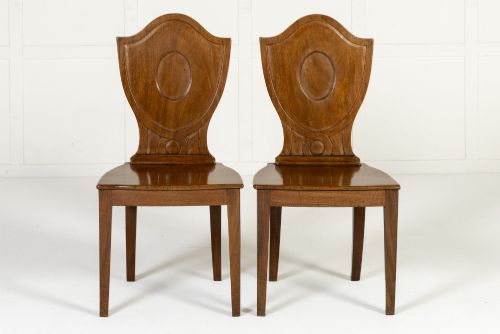
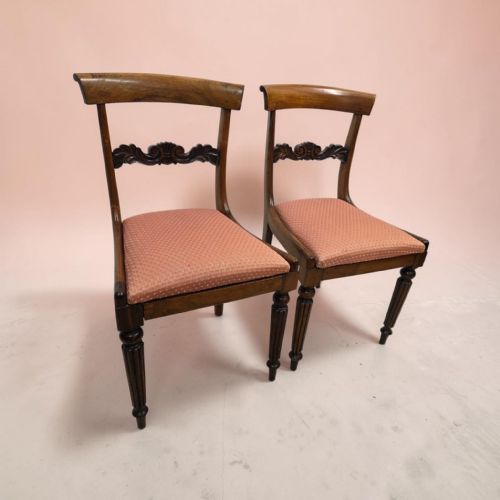
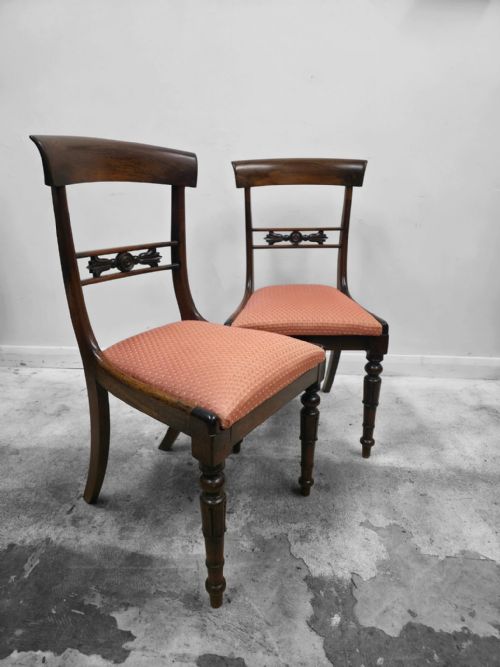
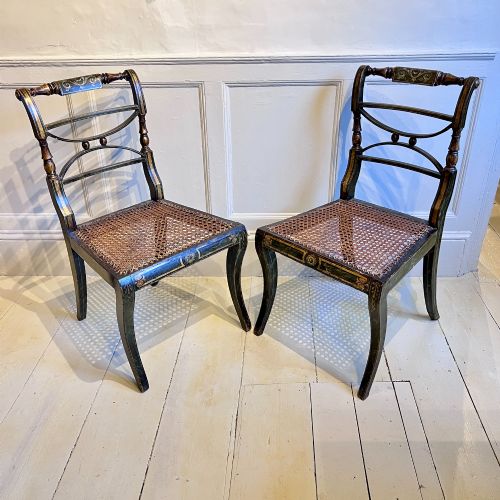
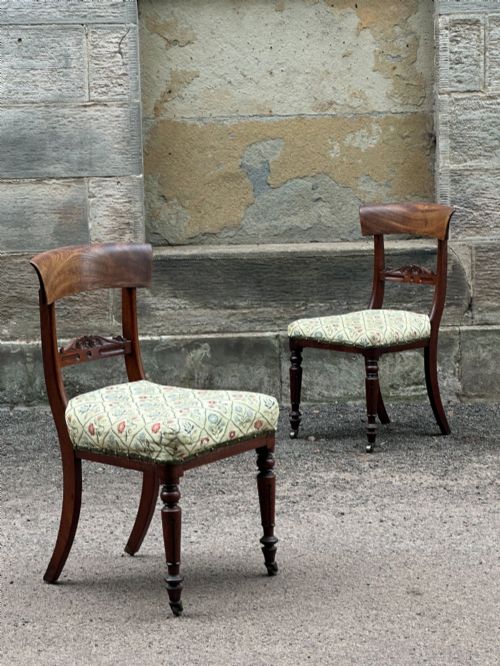
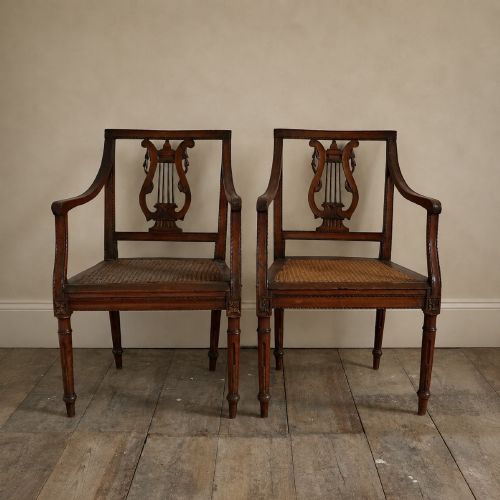
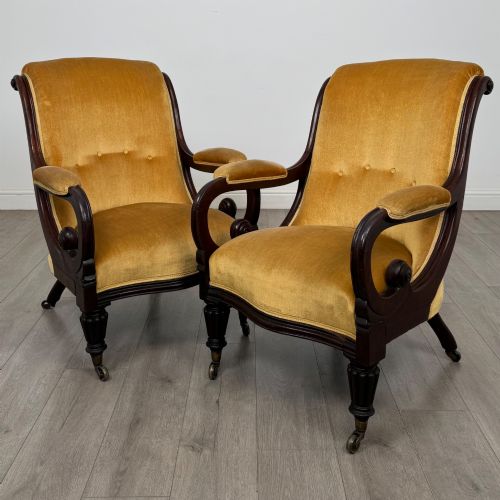
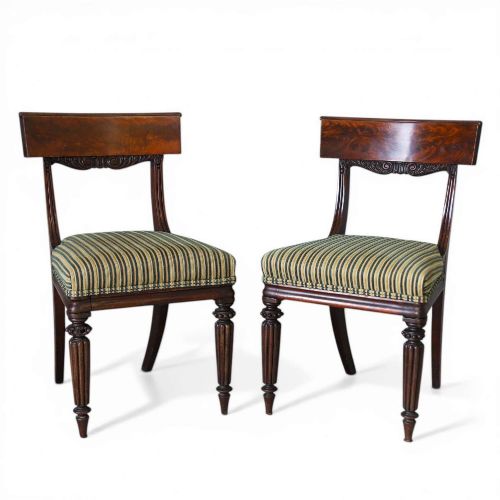
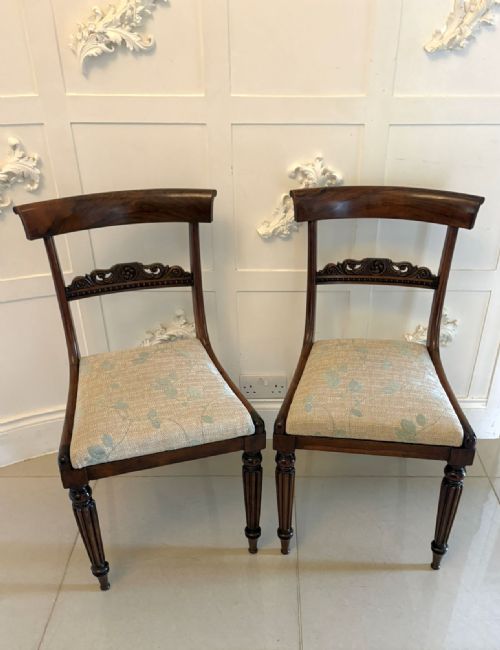
Pair Regency Chairs
Pair regency chairs are matched sets of nineteenth-century seating designed for dining rooms and halls, prized for their clean classical lines and proportion.
Identifying pair regency chairs
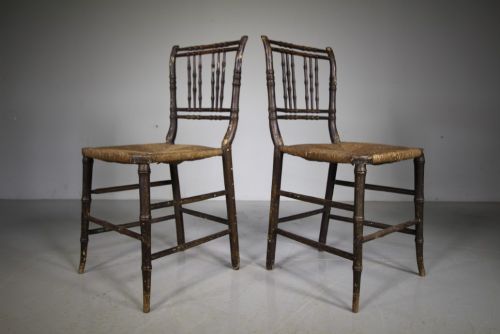
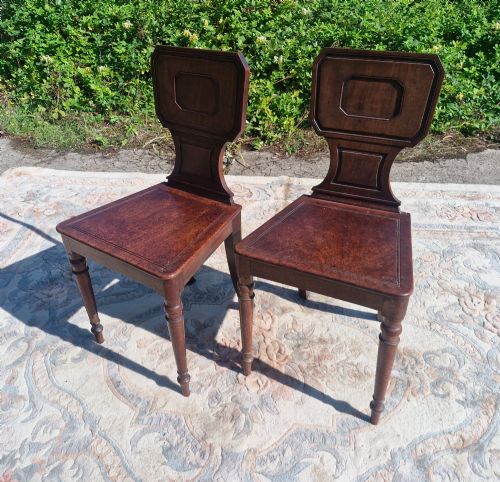
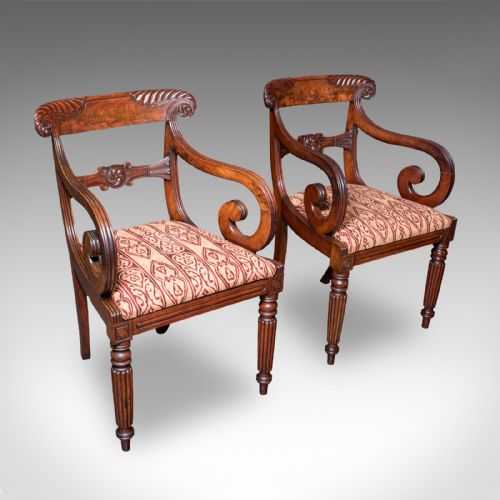
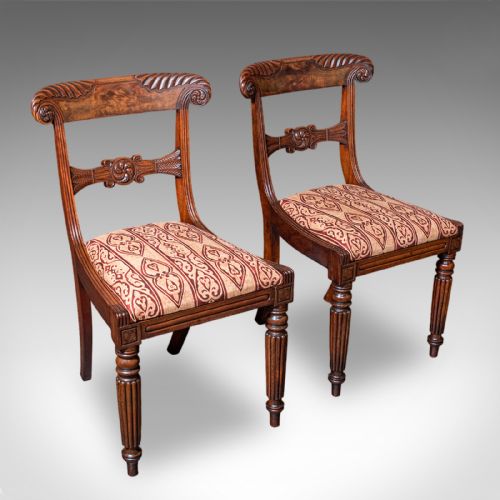
When you search for pair regency chairs, you are looking at matched duos originating from the early nineteenth century and the Regency period. The most common examples on this page are dining chairs and side chairs, often found in sets of two alongside occasional armchairs and hall chairs.
These items reflect the classical design influences of the era, drawing inspiration from ancient Greek and Roman forms such as the klismos. Surviving pieces frequently feature bar backs, cane seats, or upholstered pads designed for formal entertaining and domestic comfort.
Materials and construction
Cabinetmakers predominantly utilised mahogany, rosewood, and oak for structural frames, sometimes enhancing cheaper woods with paint, parcel gilt, or simulated rosewood and faux-bamboo finishes. Decorative enrichment included brass inlay, brass mounting, and carved figured mahogany details.
Seating surfaces combined traditional joinery with organic materials, employing woven cane, leather, and fabric upholstery. Support structures often incorporated turned legs, sabre legs, and stamped castors to aid movement.
Retail Price Guide 2026
Typical UK retail prices for pair regency chairs, calculated from the Sellingantiques database of over a million retail prices indexed since 2003. This retail price guide relies exclusively on Sellingantiques data; no external sources or auction records are used, so the figures do not describe the wider market.
Listings feature mahogany, rosewood, oak, and pine alongside fabric, leather, and cane materials.
Distinctions in craftsmanship
Superior examples separate themselves through the choice of timber and the crispness of carved or inlaid decoration. Figured mahogany and richly grained rosewood sit at the upper end, alongside pieces featuring elaborate brass inlay or original painted surfaces.
Structural integrity and the survival of original components dictate long-term standing. Chairs retaining original cane work, painted heraldic crests, or maker attributions command greater attention from collectors.
Gillows·J Kendell
The Pair Regency Chairs Glossary
- Klismos
- An ancient Greek chair shape characterised by curved, sweeping back rails and concave legs, revived during the Regency period. This form provides an ergonomic curve that supports the sitter's back.
- Sabre leg
- A leg that curves outwards in a concave sweep, typical of Regency seating design. It adds structural stability while maintaining a light, classical silhouette.
- Bar back
- A horizontal wooden slat across the upper back of a chair, often shaped or reeded. It serves as the primary support for the sitter's shoulders.
- Parcel gilt
- The practice of applying thin layers of gold leaf to specific raised portions of a painted or polished wooden surface. This technique highlights carved details and architectural motifs.
- Faux bamboo
- A decorative finish where wood is turned and painted to imitate natural bamboo stalks. This style reflects the period's fascination with Asian-influenced design.
Frequently Asked Questions
How do I identify genuine Regency chairs?
Look for classical proportions, typical timber choices like mahogany and rosewood, and construction methods consistent with the early nineteenth century. Sabre legs and bar backs are strong indicators of the period style.
Examine the joinery and check for secondary woods that match the era. Surviving pieces often show appropriate wear patterns and traditional fixings.
Were these chairs meant for dining?
Many examples served as dining chairs, particularly the mahogany and rosewood variants with upholstered or cane seats. Other forms functioned as hall chairs, bedroom chairs, or desk carvers.
Dining chairs were usually produced in larger sets that are now separated or sold in pairs to suit modern homes.
How should I care for cane seats?
Keep cane work clean by dusting gently with a soft brush and occasionally wiping with a damp cloth to prevent the natural fibres from drying out. Avoid placing them near direct heat sources.
If the cane sags, light moisture applied to the underside can sometimes help tighten the weave before seeking professional restoration.
Can I use them every day?
Most antique seating remains sturdy enough for regular domestic use provided the joints are stable and secure. Handle them with care and avoid excessive weight or rocking.
Checking the underframe periodically ensures that loose glue joints are addressed before structural damage occurs.