

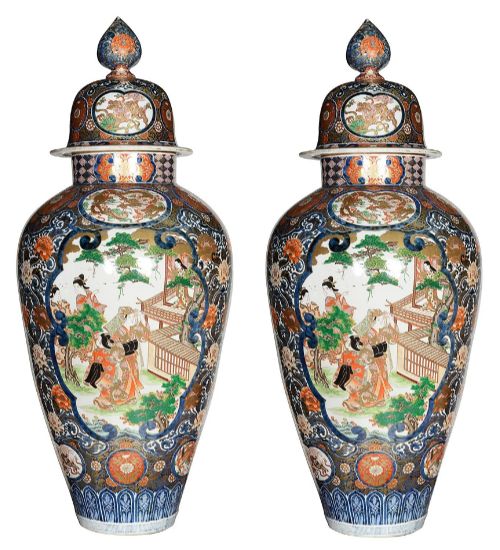
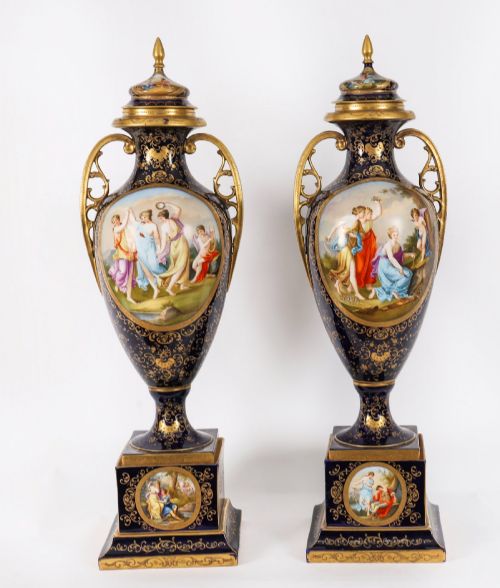
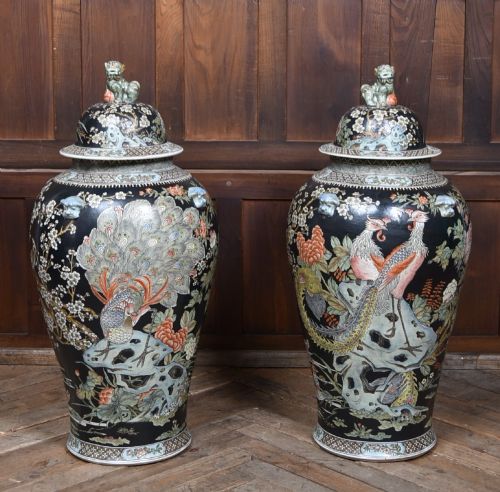
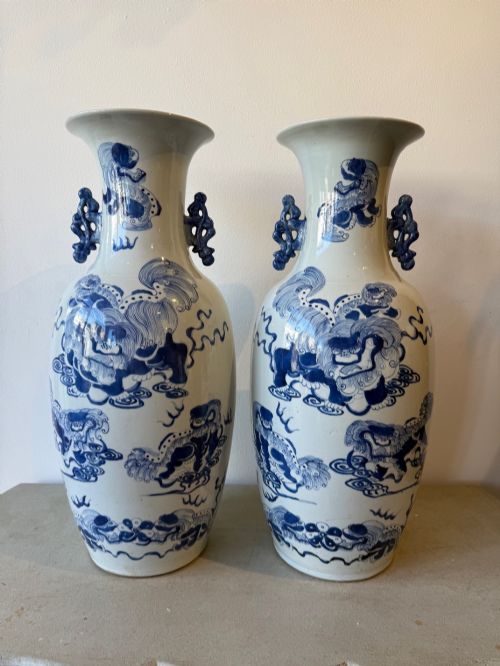





Pair Porcelain Floor Urns
These pair porcelain floor urns bring grand scale and intricate hand-painted detail to a room, drawing the eye instantly.
Pair Porcelain Floor Urns
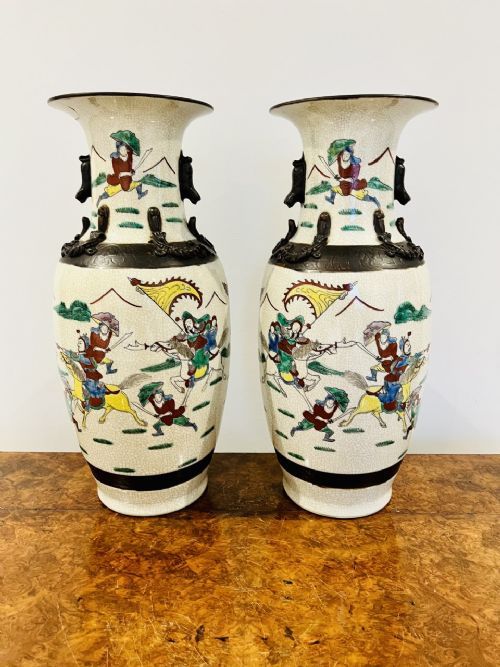
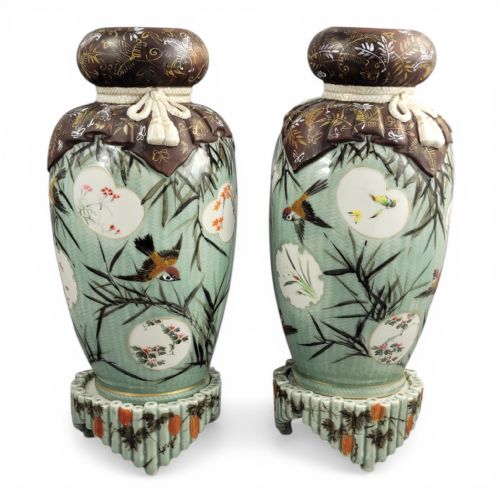
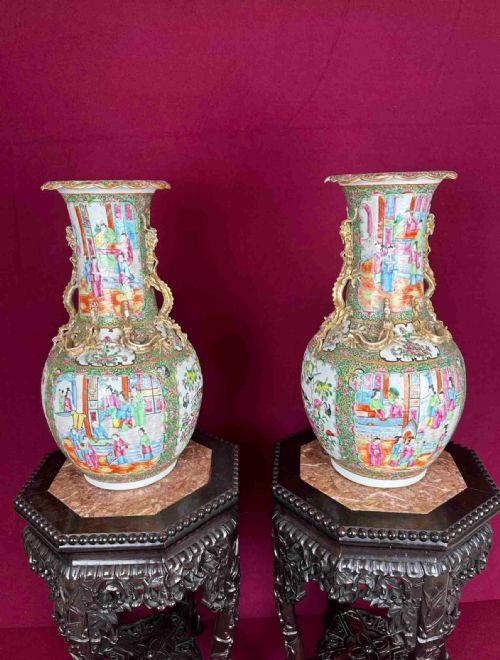
When you search for pair porcelain floor urns, you encounter large decorative vessels designed to stand directly on the floor rather than on furniture. These substantial pieces originate primarily from nineteenth-century China and Japan, taking the form of tall vases, palace jars, and baluster shapes.
The most common examples you meet on this page date from the nineteenth century, including Victorian imports and pieces from the Meiji period and Qing dynasty. They span distinct regional styles such as Chinese Canton, Rose Medallion, blue and white, and Japanese Imari, Satsuma, and Kutani.
How they were made
Potters shaped these large vessels from ceramic and porcelain, often utilising earthenware for specific bodies before firing them at high temperatures. Makers then applied enamel glazes, gold leaf, and gilt to build up intricate surface patterns.
Many items incorporate hand-painted details, lacquer panels, and wood elements such as matching stands. The sheer scale required expert kiln control to prevent warping during the firing of such large floor-standing forms.
Listings feature pieces spanning the nineteenth century, including Victorian imports alongside Meiji period and Qing dynasty items.
What varies in quality
The distinction between standard vessels and exceptional pieces lies in the precision of the hand-painting and the depth of the enamel glaze. Superior items display crisp pictorial scenes and rich gilding that remain sharp across large vertical surfaces.
Proportion and presence also define the tier of a piece, with monumental heights and matching original stands elevating certain examples. The complexity of decorative panels, such as detailed lacquer work or elaborate Famille Rose and Famille Verte palettes, marks out the finest work.
Kato Sanhei·Fukagawa
The Pair Porcelain Floor Urns Glossary
- Imari
- A style of Japanese export porcelain characterised by a palette of underglaze blue, iron red, and gold. This decorative scheme became immensely popular across Europe during the nineteenth century.
- Satsuma
- A type of Japanese earthenware featuring a crackle glaze and ornate polychrome and gilt enamel decoration. These pieces often depict traditional figures, floral motifs, and dense geometric patterns.
- Famille Rose
- A palette of opaque enamels dominated by pink or rose colours, introduced to Chinese porcelain during the Qing dynasty. It allowed artists to achieve subtle tonal gradations in floral and figural scenes.
- Baluster
- A vase form with a rounded body that tapers toward the base and swells outward before rising to a narrower neck. This classic shape provides stability and visual balance for large floor vessels.
- Kutani
- A style of Japanese porcelain known for bold, expressive colour schemes, particularly greens, blues, yellows, and purples combined with heavy gilding. It frequently ornaments large decorative vases and floor urns.
Pair Porcelain Floor Urns: Frequently Asked Questions
Where should I place a pair of floor urns?
These large vessels suit grand reception rooms, wide hallways, or empty corners where their height and colour can anchor the space.
Position them away from heavy foot traffic to protect the hand-painted surfaces and delicate lacquer panels from accidental knocks.
How do I distinguish Chinese and Japanese styles?
Chinese pieces often feature Rose Medallion palettes, intricate blue and white designs, or dense Canton floral motifs.
Japanese examples frequently display Imari palettes, Satsuma crackle glazes, or the bold coloured enamels characteristic of Kutani production.
Are original stands important?
Matching original porcelain or wood stands complete the intended silhouette of monumental nineteenth-century floor vases.
They elevate the height of the piece and provide stable footing on solid floors.
How do I clean porcelain floor urns?
Dust the surfaces gently with a soft, dry cloth to prevent the accumulation of dirt within the recessed enamel glaze.
Avoid liquid cleaners or chemical agents, which can damage delicate gold leaf and gilt detailing.