


Pair of Still Life Paintings
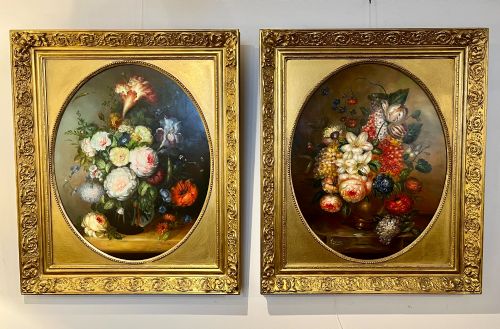
A pair of still life paintings brings balanced symmetry and rich colour to a room, offering enduring studies of fruit, flowers and domestic objects.
Pair of Still Life Paintings
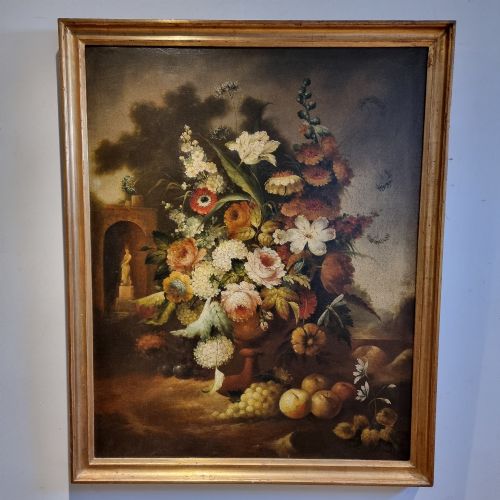
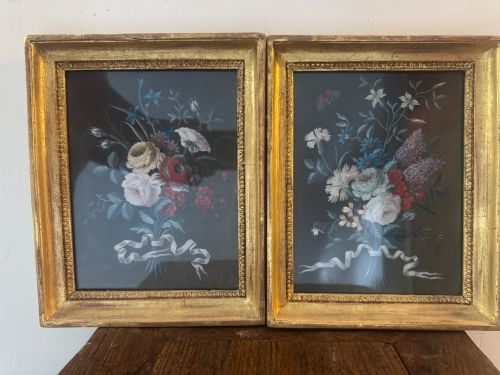
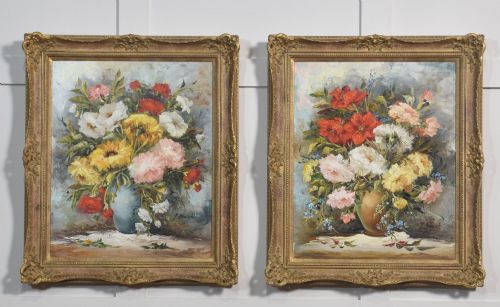
A pair of still life paintings comprises matching artworks depicting inanimate subjects such as floral arrangements, fruit compositions and tabletop objects, designed to be hung together as a symmetrical duo.
The selections available here span from the Victorian era and the nineteenth century through to early twentieth-century interpretations, covering styles from Dutch Golden Age revivals to French post-impressionist and Baroque influences.
Compositions appear in various formats including oil on canvas, oil on board, watercolours and gouache, often housed in period wooden or gilded frames.
What varies in quality
Quality rests in the precision of the brushwork, the naturalism of the tonal shading, and the balance of the composition between the two paired canvases or panels.
The condition of the original support materials and the execution of the accompanying gilt or wood frames also determine the overall standard of the pair.
The selection includes pieces spanning the Victorian era, the nineteenth century, and the early twentieth century up to the 1930s.
Oliver Clare·Henry Schouten·Cecil Kennedy·Edwin Steele·Manuela Bonati
The Pair of Still Life Paintings Glossary
- Oil paint
- A slow-drying medium consisting of pigments suspended in a drying oil, typically linseed, allowing for rich colour blending and textured application.
- Gesso
- A plaster-like mixture applied to wood panels or canvas as a smooth base for painting or moulded into decorative reliefs on frames.
- Gilded wood
- Timber coated with a thin layer of gold leaf or metallic powder, frequently utilised for ornate nineteenth-century and revival frames.
- Gouache
- An opaque water-based paint featuring larger pigment particles and a binding agent, producing flat, velvety colour fields.
- Board
- A rigid flat substrate, often wood or compressed material, used by artists as an alternative to stretched canvas.
Pair of Still Life Paintings: Frequently Asked Questions
How do I hang a pair of still life paintings?
Hang the two pieces at eye level with consistent spacing between them to maintain visual symmetry on the wall. Aligning the centre points ensures the balanced display intended for matched artworks.
Consider the surrounding light sources to reduce glare on glazed watercolours or varnished oil surfaces, allowing the details of the fruit and floral compositions to remain clearly visible.
What subjects do these paintings feature?
These works predominantly depict botanical arrangements, vases of flowers, and groupings of fruit set against dark or neutral backgrounds. Such subjects reflect traditional Dutch and Baroque compositional themes.
Artists also explored decorative tabletop scenes and informal floral studies, capturing seasonal blooms and ripe produce with careful attention to natural form.
How do I identify the period of the frame?
Examine the construction methods of the wood, the composition of the gesso mouldings, and the type of gilding applied to the corners. Period frames often show characteristic ageing and hand-carved details that match the era of the canvas.
Many nineteenth-century and early twentieth-century pieces retain their original frames, which provide helpful contextual clues regarding the date of the artwork.
Can I mix oil paintings and watercolours in a room?
Pairing oil paintings with watercolours depends on framing consistency, as matching frame styles help unify different mediums within the same decorative scheme. Watercolours typically require protective glass glazing.
Keep both mediums away from direct sunlight and excessive moisture fluctuations to protect the paper supports and oil pigments from fading or degradation over time.