


Pair of Rural Landscapes
These pair of rural landscapes offer the enduring charm of pastoral scenes, prized for their balanced compositions and ability to bring tranquil countryside views indoors.
Pair of Rural Landscapes
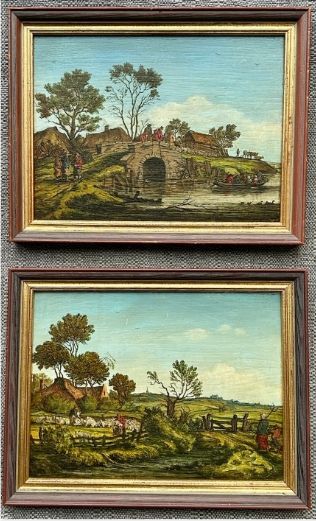
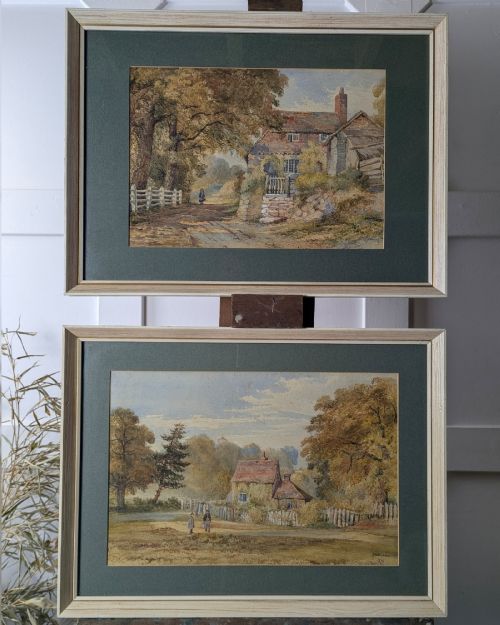
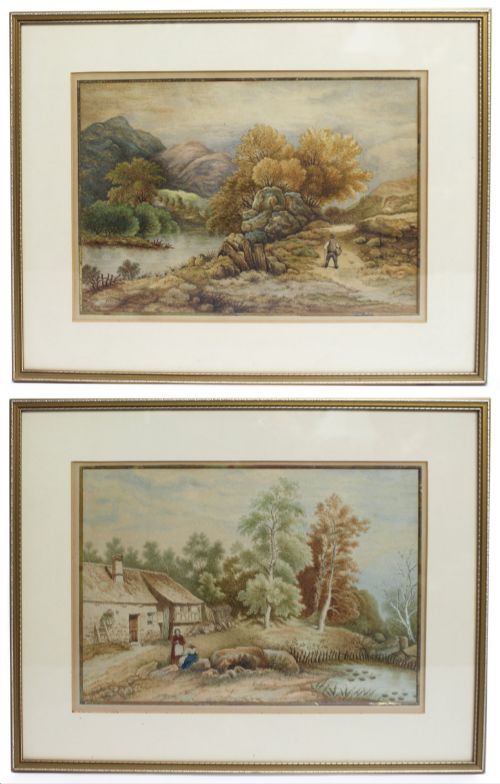
A pair of rural landscapes comprises matching framed artworks depicting pastoral scenes, cottage views, and agricultural life created during the nineteenth century.
The versions most frequently met on this page include nineteenth century watercolours on paper and oil paintings executed on wood panels or canvas.
These matched sets often reflect Victorian British and Flemish stylistic traditions, capturing the quiet rhythms of nineteenth century country life in balanced compositions.
How they were made
Artists worked with oil paint and watercolour, applying pigments to prepared canvas, wood panels, or heavyweight paper supports.
Finished works were typically housed behind glass for watercolours or set within protective wood frames, often enhanced with gilt wood and gold leaf detailing.
Geese and cattle frequently interrupt these quiet pastures, proving that nineteenth century livestock had an uncanny knack for photobombing.
What varies in quality
Quality rests upon the artist's handling of light, depth, and atmospheric perspective within the matched pair of scenes.
The refinement of the supporting wooden frames and the preservation of the original paper or canvas surfaces heavily influence the overall distinction of the pieces.
W Klombeck·Robert A Nottingham·Th Thibault·Frederick James Knowles·R Palnay·James H Hulse·Alfred Vickers Senior·Arthur Claude Strachan·Alfred Rimmer·George Augustus Williams·John Holland Snr·JS Cooper·John Moore Ipswich·Edward Williams
The Pair of Rural Landscapes Glossary
- Watercolour
- A painting method where fine pigment is suspended in a water-based, translucent solution applied to paper. It allows for delicate washes of light and colour.
- Oil paint
- A slow-drying medium composed of pigments suspended in a drying oil, typically linseed. This medium permits rich blending and textured impasto work.
- Gilt wood
- Wood carved and coated with a thin layer of gold leaf or metallic powder. It provides a reflective, decorative border to traditional frames.
- Wood panel
- A flat solid piece of timber used as a rigid painting support instead of canvas. It offers a smooth, stable surface for detailed brushwork.
- Pastoral school
- An artistic tradition focusing on idealized rural scenery and agricultural life. These works celebrate the perceived simplicity and beauty of the countryside.
Pair of Rural Landscapes: Frequently Asked Questions
How should I hang a pair of rural landscapes?
Keep both pieces at eye level and space them evenly so they read as a single visual unit on the wall.
Ensure they hang away from direct sunlight to protect the watercolours and oil pigments from fading over time.
Were these always sold together?
Artists often painted companion pieces with matching dimensions and complementary subject matter to be displayed side by side.
Over the decades, some pairs remain together because their shared palette and framing preserve their original visual harmony.
How do I date these nineteenth century paintings?
Examine the materials, such as the type of paper, wood panel, or canvas backing, along with any signatures or dates left by the artist.
The framing style and inscriptions on the reverse often provide additional clues to the exact decade of creation.
What is the difference between oil and watercolour pairs?
Oil paintings feature thicker pigment layers on canvas or board and typically sit inside heavier frames without glass.
Watercolour works are lighter in medium, executed on paper, and require glass protection to prevent moisture and dust damage.