


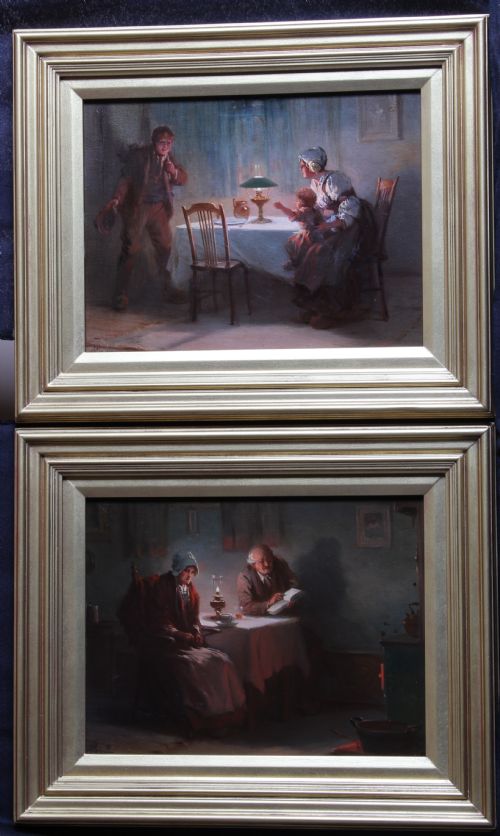

Victorian Oil Painting Pair
A victorian oil painting pair brings balanced symmetry and narrative depth to a room through two complementary canvases created during the nineteenth century.
Victorian Oil Painting Pair
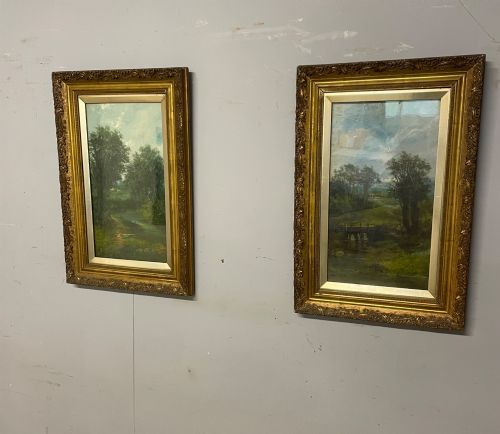
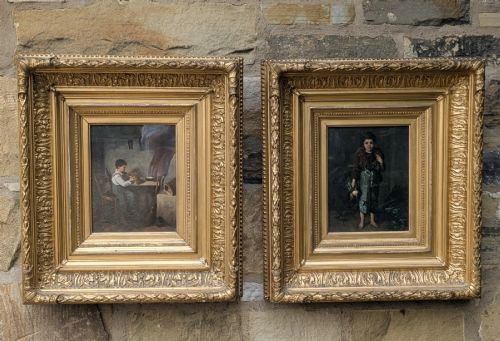
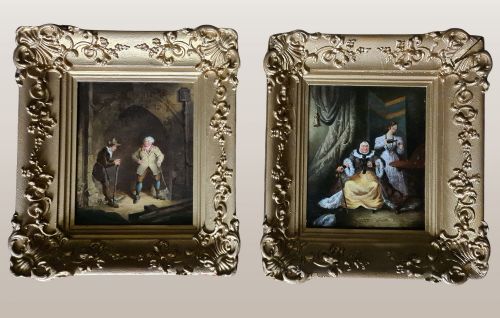
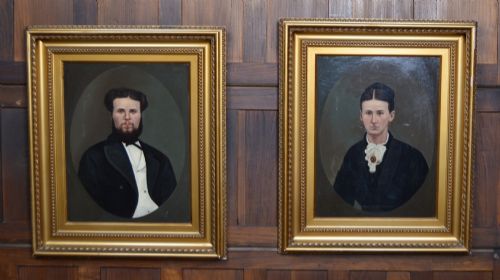
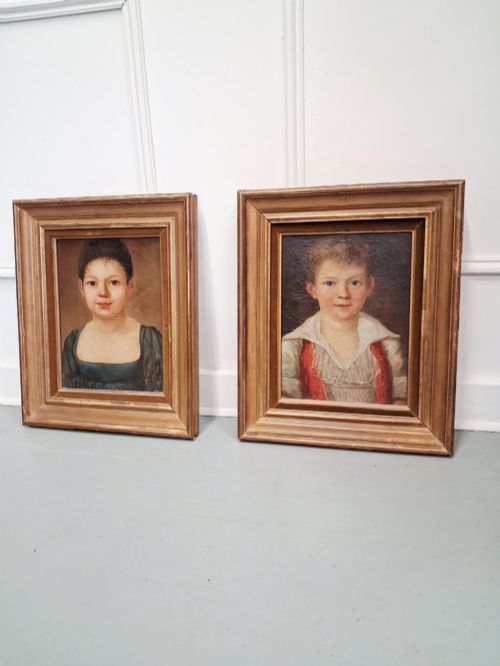
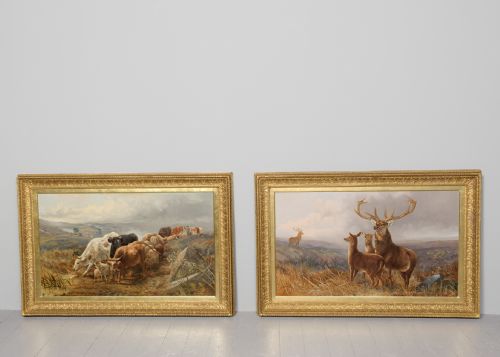
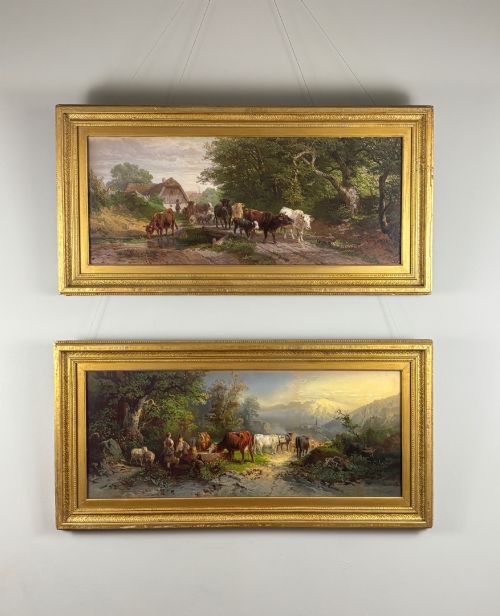
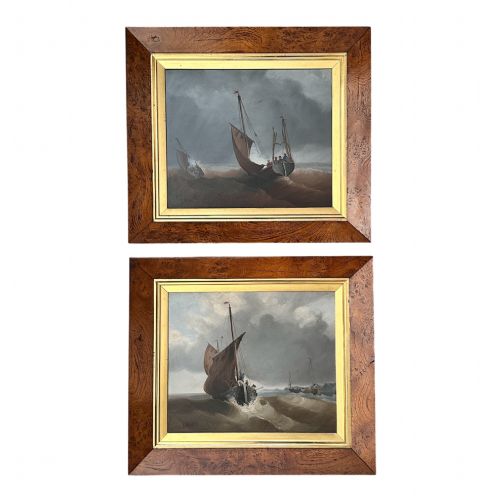
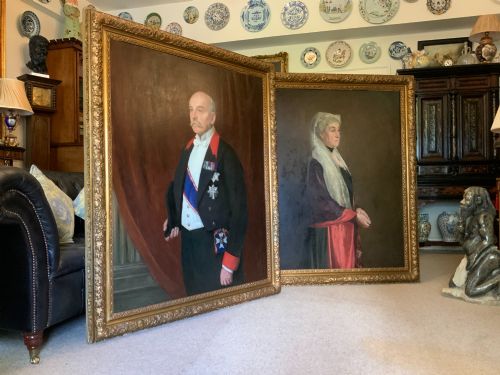
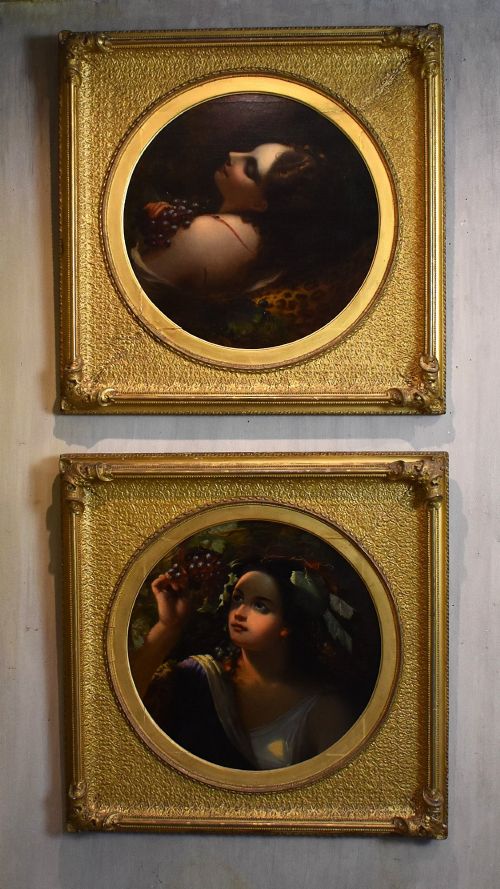
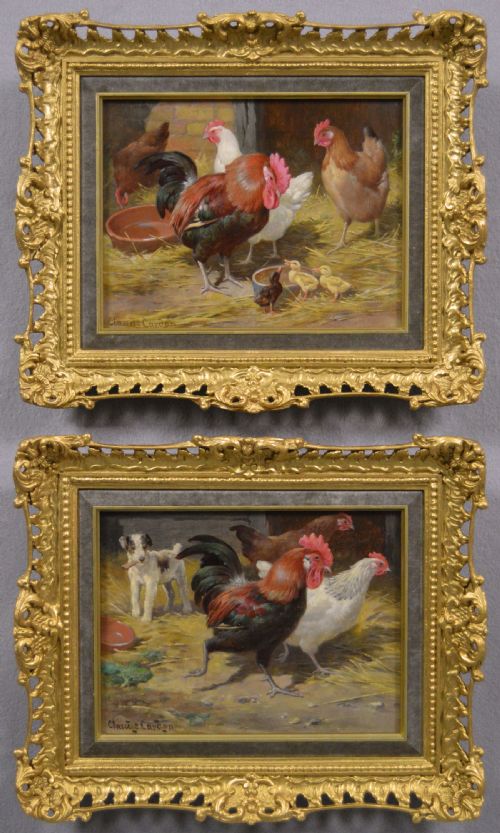
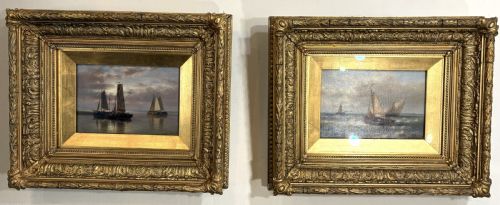
A victorian oil painting pair consists of two matching or complementary artworks created during the nineteenth century, frequently sharing a theme such as landscapes, portraits, or animal studies. These works were often designed to hang symmetrically on either side of a fireplace or architectural feature within a nineteenth-century interior.
The subjects span domestic scenes, Highland landscapes, maritime views, and portraits of people or animals, painted on canvas, wood panel, or artists' board. Many are housed in their original decorative giltwood and gesso frames, maintaining the paired presentation intended by the artist or early owner.
Materials and Construction
Artists painted primarily with oil-based pigments onto stretched canvas, prepared wood panels, or rigid board substrates using animal glue sizing and priming grounds. These materials provided the rich colour depth and blending capabilities characteristic of nineteenth-century fine art.
Surviving works are frequently presented in heavy wooden frames ornamented with moulded gesso and finished with layers of gold leaf or gilt, providing structural support and decorative emphasis.
Listings feature works rendered in oil on canvas, wood panel, and board, often retained within their period giltwood and gesso frames.
Quality and Execution
The ability of the artist to render anatomical accuracy, perspective, and natural light distinguishes finer works from more commercial studio productions. Skilled brushwork and careful handling of pigment create tonal harmony across both panels of a set.
The condition and originality of the matching frames significantly influence the integrity of the pair, as replacement frames or damaged gesso ornamentation alter the historic presentation.
Robert Cleminson·Johann Friedrich Voltz·John Moore of Ipswich·Theodore Jensen·Claude Cardon·Abraham Hulk I·Alexander Rosell·John Grenville Fennell·Evelyn Chester·Gustave De Bréanski·Franz van Severdonck·John Bell·John Frederick Herring Jnr·Clarence Henry Roe·Frederick James Knowles·Colin Graeme Roe·Hermann Armin Kern·Lewis J Wood·George Dodgson Callow·William Mellor·Karl Herrle·Sidney Pike·Ebeneezer Colls·Robert Watson·Daniel Sherrin
The Victorian Oil Painting Pair Glossary
- Oil on Canvas
- A painting technique where pigmented linseed or walnut oil is applied to a woven fabric support stretched over a wooden frame. This combination allows for rich textural impasto and subtle tonal gradations.
- Giltwood
- Wood carved and coated with a thin layer of gold leaf or gold paint. It provides a reflective, ornate border frequently found on nineteenth-century picture frames.
- Gesso
- A plaster-like mixture used as a base layer on wood or canvas to prepare the surface for painting, or moulded onto frames to create relief decoration. It creates a smooth, absorbent ground for subsequent layers.
- Tondo
- A Renaissance revival term describing a circular painting. These works offer a distinct compositional challenge compared to traditional rectangular formats.
Victorian Oil Painting Pair: Frequently Asked Questions
Why were oil paintings created in pairs?
Artists and patrons favoured dual compositions to achieve visual symmetry and balance when hanging art in domestic reception rooms. A matched pair allowed for storytelling through contrasting subjects, such as morning and evening scenes or land and sea views.
This approach provided a cohesive decorative scheme that filled larger wall spaces effectively during the nineteenth century.
How do I identify a nineteenth-century frame?
Nineteenth-century frames typically utilise heavy timber construction adorned with applied gesso ornaments rather than modern synthetic resins. Examination of the corner mitres and the reverse of the wood reveals age-related patina, tool marks, and traditional fixings.
Many retain their original gilding, though minor losses to the plaster-based surface are common due to the age of the materials.
What subjects are most common in these works?
The recorded examples feature a wide range of subjects including pastoral landscapes, Scottish Highland cattle, coastal shipping scenes, farmyard animals, and formal portraits. Artists frequently drew inspiration from British and European countryside and coastal environments.
Domestic interiors and sporting scenes involving dogs and horses also appear regularly across the surviving inventory.
How should I care for oil paintings on canvas?
These works require stable indoor environmental conditions away from direct sunlight, excessive moisture, and rapid temperature fluctuations. Maintaining consistent humidity prevents the canvas and wooden stretcher frames from warping or cracking.
Dusting should be performed gently with a dry, soft brush, avoiding any moisture or chemical cleaning agents on the painted surface.