

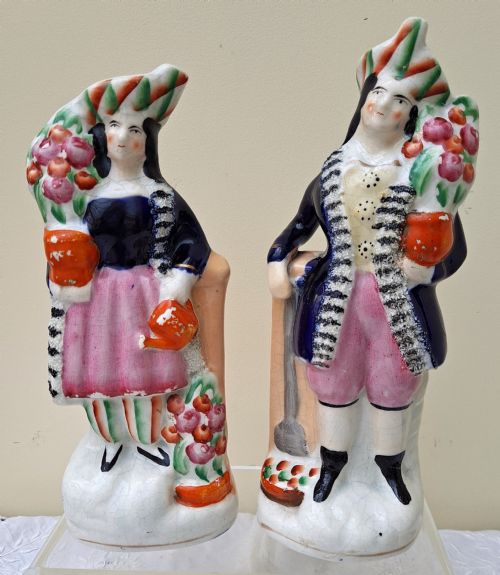

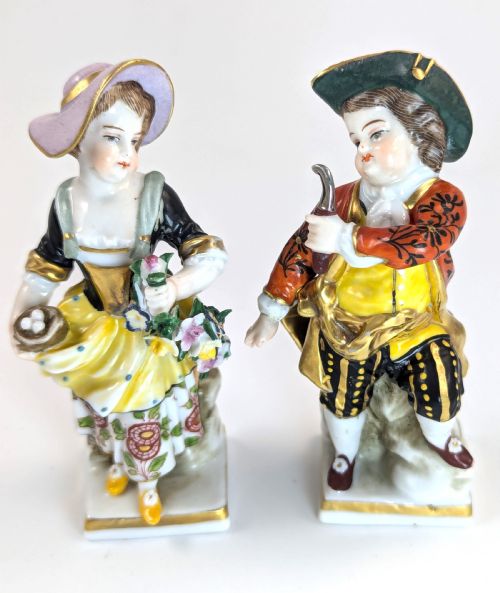


Pair of Gardeners Figure
These pair of gardeners figure items are charming ceramic depictions of horticultural life, prized by collectors for their historical detail and decorative character.
Pair of Gardeners Figure
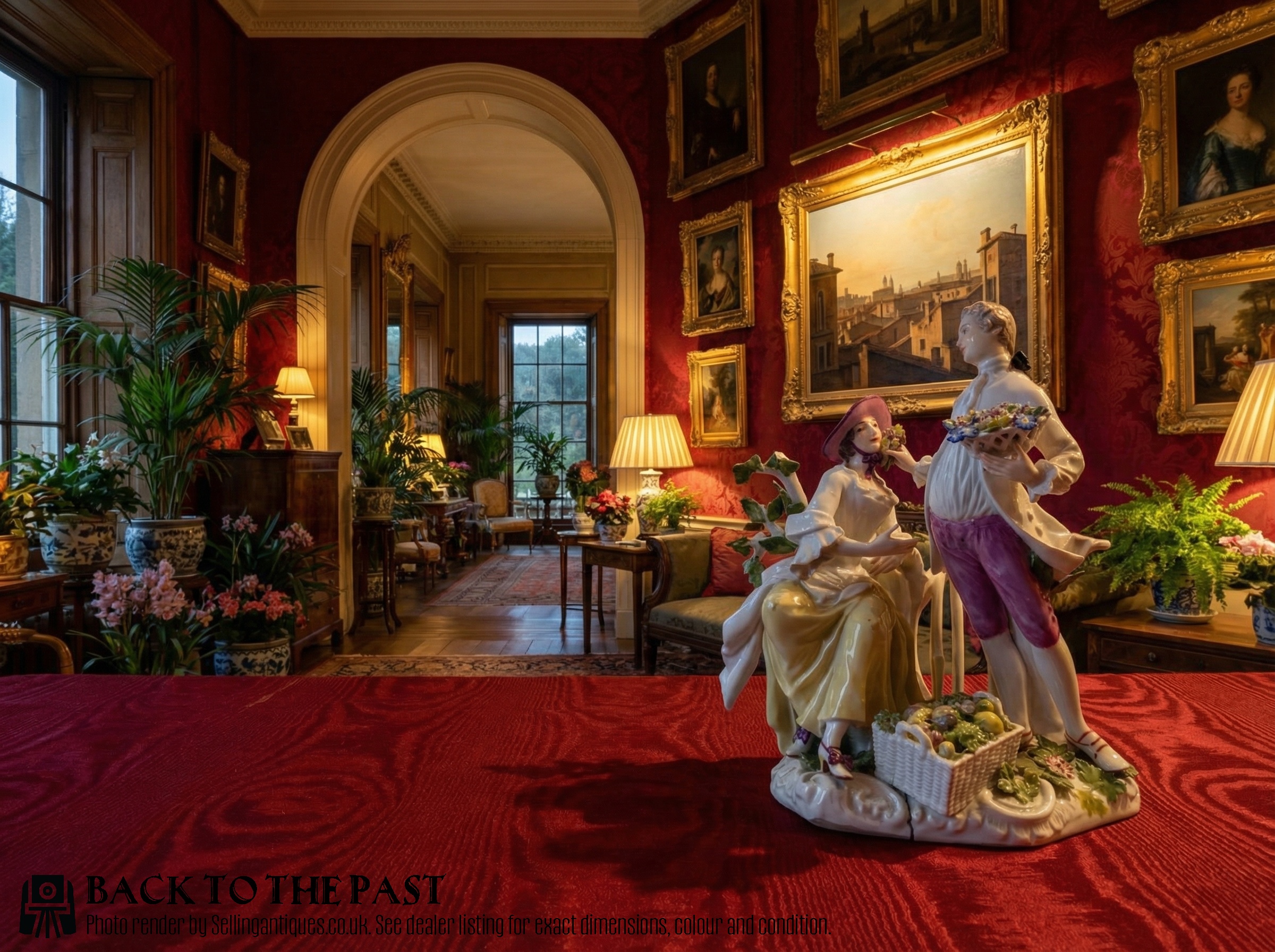
When you search for pair of gardeners figure, you encounter porcelain and earthenware figurines that portray men and women engaged in horticultural pursuits, often equipped with baskets, flowers, and garden tools. These decorative objects draw heavily on eighteenth-century pastoral aesthetics and nineteenth-century revival styles, capturing a romanticised view of rural labour.
The pieces you meet on this page span several distinct eras, stretching from eighteenth-century German and English factories through to late nineteenth-century Victorian productions. Staffordshire pottery and continental porcelain works dominate the selection, offering both earthenware figures and refined glazed porcelain.
Most entries take the form of matched pairs, balancing a male and female figure to create a symmetrical display suitable for a mantelpiece or side table. Alongside standard decorative figurines, the evidence includes porcelain figural candlesticks and biscuit porcelain compositions.
Materials and methods
Manufacturers relied upon hard-paste porcelain, earthenware, and parian biscuit porcelain to shape these figures, moulding the clay before applying intricate hand-painted details. Enamel colours, glaze, and occasional gold leaf accent the garments, floral bases, and accessories.
Potteries such as Meissen, Derby, and Sitzendorf utilised precise moulding techniques followed by high-temperature firing, ensuring the delicate fingers, baskets, and foliage survived the kiln. Biscuit porcelain pieces bypassed the glazing stage entirely, leaving a matte, marble-like finish characteristic of Victorian parianware.
Pair of Gardeners Figure Retail Price Guide 2026
Typical asking prices for pair of gardeners figure among the pieces listed under this phrase on Sellingantiques today, from the lower quarter to the upper quarter. They describe what is for sale here now, not the wider market.
Gardeners occasionally pose with remarkably pristine footwear while carrying heavy wicker baskets of impossibly large porcelain roses.
Judging quality and execution
The distinction between standard commercial output and superior work lies in the crispness of the moulding and the delicacy of the hand-painting on the garments and floral bases. Earlier eighteenth-century examples and productions from established factories show finer facial expressions and more intricately modelled botanical elements.
The preservation of fragile elements, such as applied porcelain flowers and thin basket handles, influences the integrity of each piece. Superior craftsmanship is also evident in the balanced posture of the matched figures and the skilful application of enamel and gold leaf.
Meissen Porcelain·Minton·Sitzendorf·Gotthelf Greiner·Derby
The Pair of Gardeners Figure Glossary
- Biscuit Porcelain
- Unglazed porcelain fired once to a matte, porous finish that resembles white marble. This material became popular during the nineteenth century for detailed figural sculpture.
- Earthenware
- Porous pottery fired at lower temperatures than porcelain, requiring a vitreous glaze to achieve impermeability. Staffordshire potteries frequently utilised this accessible body for domestic figures.
- Enamel
- Opaque vitreous composition fused to the surface of ceramics during a secondary firing to provide bright surface colour. Painters applied these pigments by hand over the glaze.
- Hard-Paste Porcelain
- A durable ceramic paste composed of kaolin and petuntse, fired at very high temperatures. European factories adopted this formula to produce crisp details and bright glazes.
- Parian Porcelain
- A fine-grained unglazed biscuit porcelain developed in Britain to imitate marble for Victorian decorative figures. Minton produced notable examples in this medium.
Pair of Gardeners Figure: Frequently Asked Questions
What are pair of gardeners figure pieces?
These items are ceramic sculptures depicting male and female gardeners, typically produced in matched pairs for decorative display.
They draw on pastoral themes from the eighteenth and nineteenth centuries, often incorporating floral bases and baskets.
How were these figures used originally?
Owners placed them on mantelpieces, dining tables, and sideboards as decorative ornaments to signal refinement and a taste for pastoral charm.
Some specialised variations served a dual purpose as figural candlesticks, holding tapers amid the modeled foliage.
How do I care for antique porcelain figures?
Keep them away from direct sunlight to preserve the hand-painted enamel colours and gold leaf accents.
Dust them gently with a soft, dry brush, avoiding harsh cleaning agents that could damage the unglazed biscuit or delicate applied flowers.
How can I tell eighteenth-century figures from Victorian ones?
Eighteenth-century pieces often feature hard-paste porcelain with Rococo scrollwork bases and hand-painted polychrome enamels specific to factories like Meissen or Derby.
Victorian items frequently include Staffordshire earthenware, Sitzendorf markings, or matte parian biscuit porcelain from British makers like Minton.