

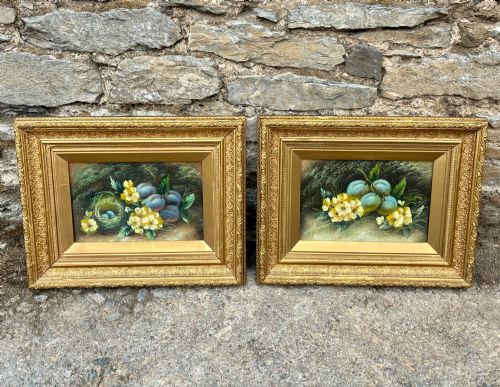
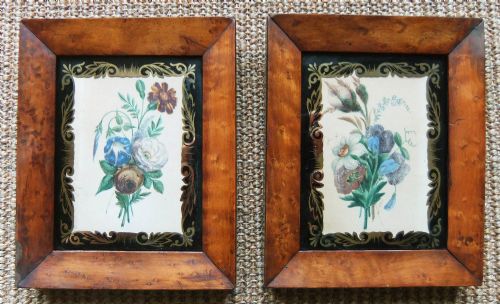
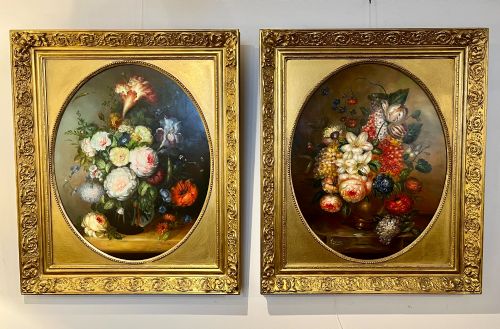
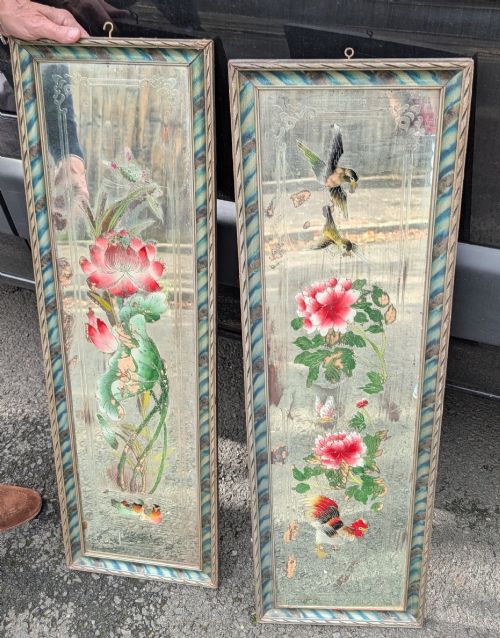


Pair of Floral Paintings
A pair of floral paintings brings symmetry and colour to a wall, offering balanced compositions of blooms across various historical periods.
Pair of Floral Paintings
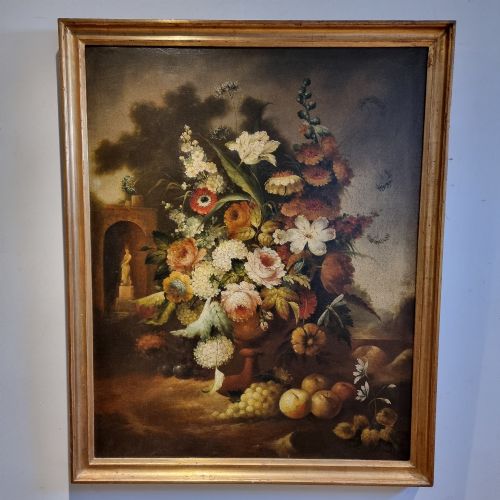
When you search for a pair of floral paintings, you encounter matched works depicting botanical studies, flower vases, and garden scenes. These pieces originate from periods spanning the eighteenth century through the twentieth century, reflecting shifting tastes in interior decoration.
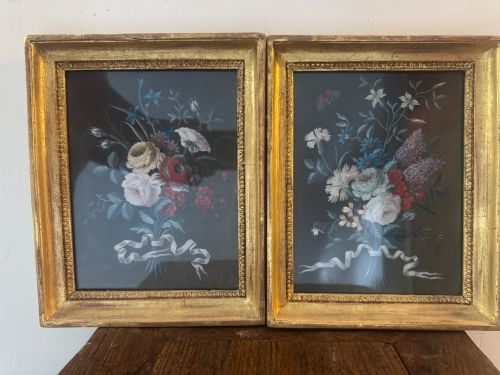
The selections on this page most commonly include oil on canvas or board, alongside gouache and watercolour examples. Styles range from Victorian and Baroque compositions to Dutch Golden Age revival works and French post-impressionist interpretations.
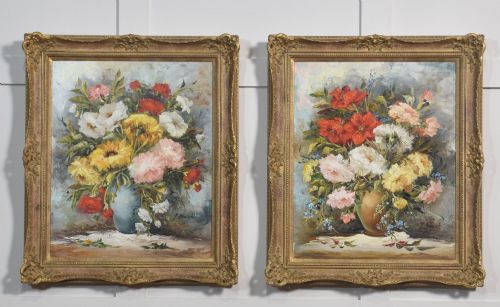
Matched sets frequently appear as mirror-image compositions or balanced cabinet pieces designed for symmetrical display. Subjects encompass detailed vase arrangements, garden views, and combinations of flowers and fruit.
Materials and technique
Artists painted these works primarily with oil paint on canvas, wood panels, or paper, occasionally employing gouache and watercolour for delicate botanical studies. Canvases and boards received priming layers before the application of pigments to build depth and luminosity within the floral subjects.
Frames utilise wood, gilded wood, and gold leaf, often incorporating glass for protection, particularly on paper or gouache works. Gilt and wooden mouldings define the borders, providing structural support and framing the painted surface.
Pair of Floral Paintings Retail Price Guide 2026
Typical asking prices for pair of floral paintings among the pieces listed under this phrase on Sellingantiques today, from the lower quarter to the upper quarter. They describe what is for sale here now, not the wider market.
Listings feature works executed in oil paint, gouache, and watercolour on canvas, paper, and wood.
Assessing quality
The distinction between standard works and exceptional examples lies in the finesse of brushwork and the naturalism of the botanical arrangement. Superior pieces display confident handling of light, shadow, and texture within petals and foliage.
The preservation of the pigment and the originality of the mounting contribute significantly to the standing of a pair. Intact period frames and stable paint surfaces elevate the character of the works.
Henry Schouten·Oliver Clare·Cecil Kennedy·Edgar Bundy
The Pair of Floral Paintings Glossary
- Oil on board
- A painting technique where pigments bound in oil are applied to a rigid wooden or composition panel rather than stretched canvas.
- Gouache
- An opaque water-based paint medium that dries to a matte finish, frequently used for detailed botanical and floral illustrations on paper.
- Baroque
- An artistic style characterised by dramatic lighting, rich detail, and exuberant composition, often seen in seventeenth and eighteenth-century still life works.
- Still life
- A genre of painting focusing on inanimate subject matter, predominantly everyday objects such as cut flowers, fruit, and vessels.
Pair of Floral Paintings: Frequently Asked Questions
How do I hang a pair of floral paintings?
Hang the two pieces at eye level with adequate spacing to maintain visual balance on the wall. Aligning the centre points ensures a harmonious arrangement within the room.
Consider the lighting in the space to protect the pigments from direct sunlight while highlighting the details of the canvas or board.
What periods do these paintings come from?
The available works span from the eighteenth century through the Victorian era and into the early twentieth century. Each period brings distinct framing styles and handling of botanical subjects.
Twentieth-century examples often show impressionistic tendencies, whereas eighteenth and nineteenth-century works lean towards classical or Dutch revival still life traditions.
How should I clean framed floral paintings?
Dust the frames gently with a soft, dry cloth and avoid using liquid cleaners or chemical agents on the gilded or wooden surfaces. Painted areas behind glass require only light dusting of the exterior.
Consult a professional conservator if the painted surface itself requires cleaning or attention to stabilise the medium.