




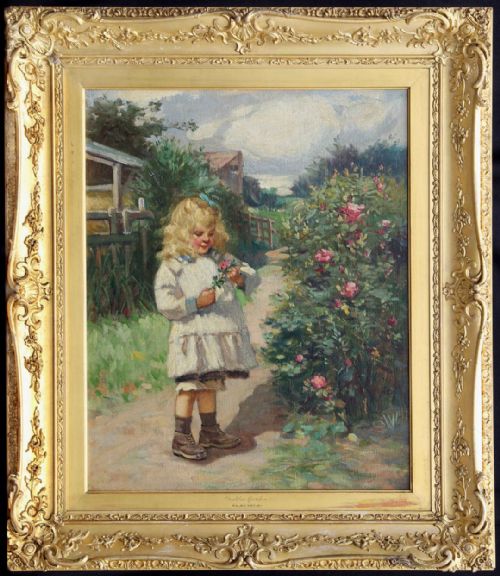


Ornate Framed Floral Art
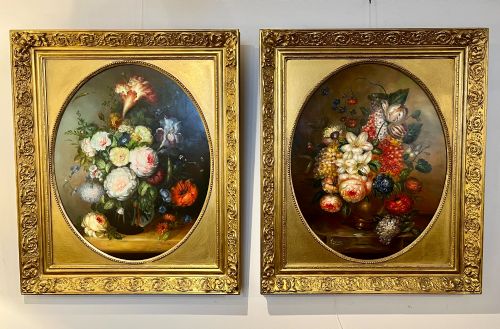
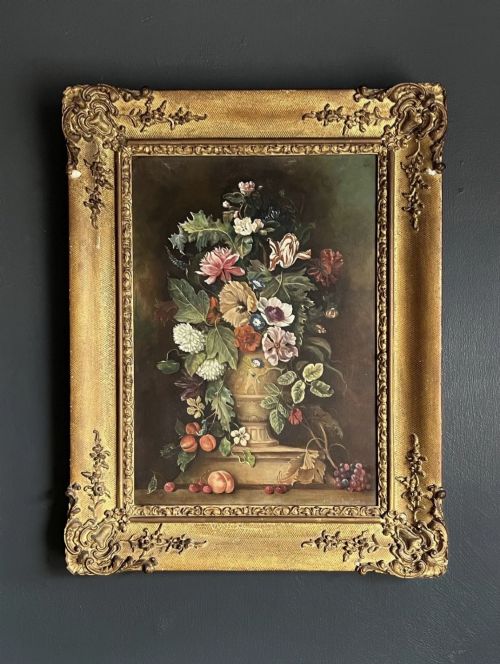
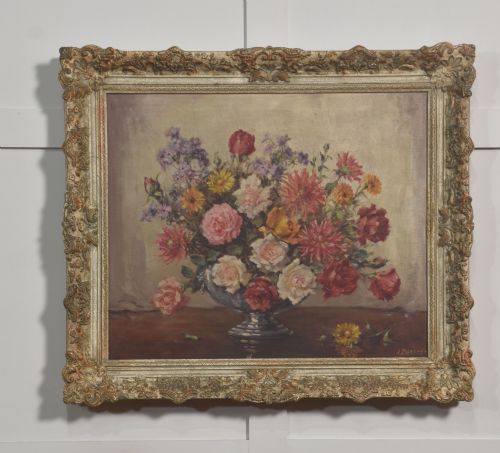
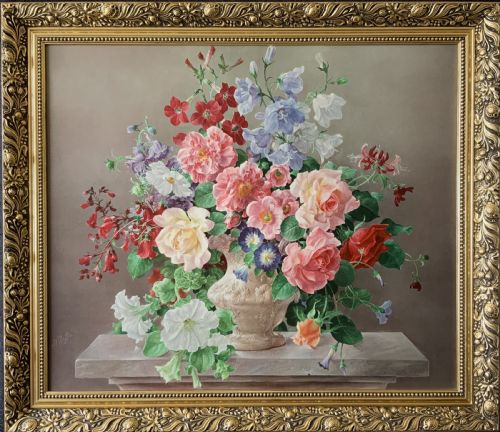
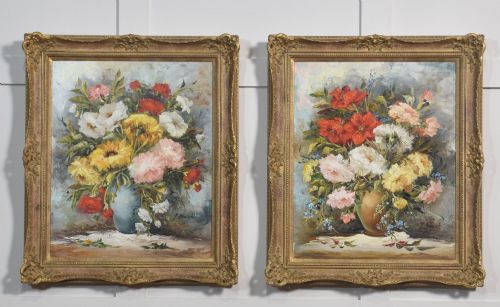
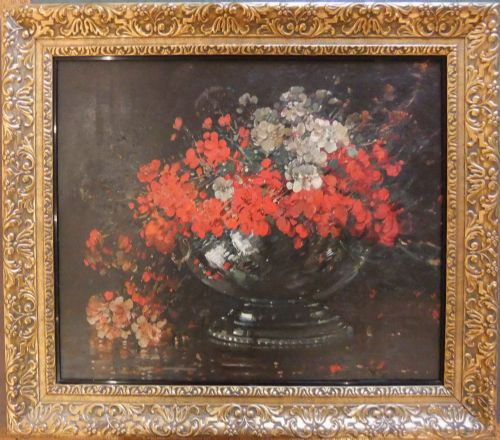
Ornate framed floral art brings vibrant garden blooms indoors through layered oils and heavily moulded gilt gesso surrounds.
Ornate Framed Floral Art
Ornate framed floral art encompasses traditional oil paintings and prints depicting botanical subjects, housed within decorative surrounds. These pieces capture floral arrangements, spring blossoms, and garden studies across various periods.
Framing forms an integral part of these works, frequently employing moulded gesso and gold leaf to complement the painted flora. Such pieces serve as focal points for interior wall display, reflecting historical botanical interests.
How they were made
Artists applied oil paint to prepared canvas, oak panels, or board, utilising rich pigments to render petals, leaves, and glass vases with texture and depth. Brushwork ranges from tight, classical botanical precision to looser Impressionist strokes.
Surrounding frames were constructed from wood and plaster, shaped into elaborate mouldings before receiving applications of gold leaf or gesso. This sculptural framing process required skilled hand-carving and gilding techniques typical of period workshops.
Ornate Framed Floral Art Retail Price Guide 2026
Typical asking prices for ornate framed floral art among the pieces listed under this phrase on Sellingantiques today, from the lower quarter to the upper quarter. They describe what is for sale here now, not the wider market.
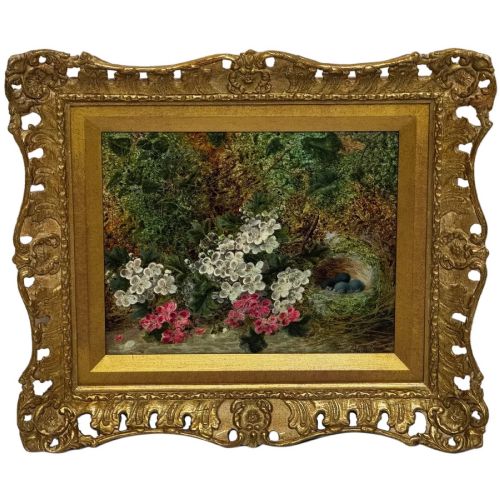
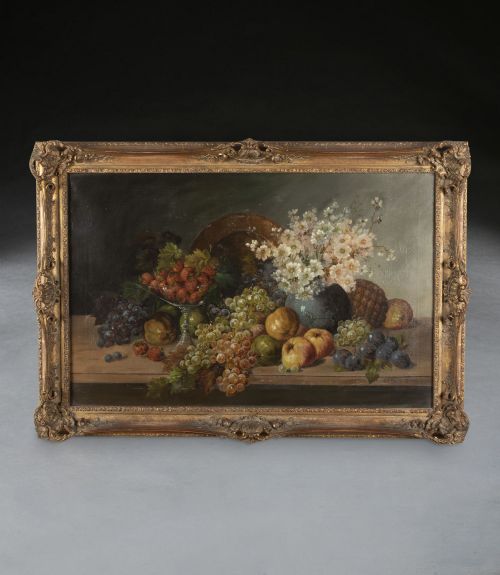
Nestled among the garden studies, bird nests and summer blooms peek out from nineteenth-century canvases framed in heavy gilt.
What varies in quality
Quality rests upon the skill of the brushwork and the harmony between the painting and its frame. Superior examples demonstrate confident handling of light and colour in the flora, paired with crisp, well-preserved gesso moulding.
The integrity of the canvas or panel and the original state of the gilding dictate the overall standing of a piece. Finer works maintain their original frames intact, showing careful preservation of both surface detail and structural support.
Oliver Clare·Sir George Reid·Kershaw Schofield·Ralph Hedley·Terence Loudon
The Ornate Framed Floral Art Glossary
- Gesso
- A plaster-like mixture applied to wood frames to create a smooth surface for gilding. It is often moulded into intricate relief patterns.
- Oleograph
- A type of chromolithograph print textured to imitate an oil painting on canvas. These emerged as popular decorative wall art in the vintage period.
- Gilt
- Covered thinly with gold leaf or gold paint. This finish enhances the decorative impact of period picture frames.
- Still life
- A work of art depicting mostly inanimate subject matter, typically commonplace objects or natural items such as flowers. In these listings, botanical studies predominate.
- Impressionism
- A style of painting emphasising light and its changing qualities rather than precise detail. British practitioners adapted this approach for garden and floral scenes.
Ornate Framed Floral Art: Frequently Asked Questions
How do I date a floral painting?
Dating relies on stylistic clues within the brushwork, the stretcher construction behind the canvas, and the materials of the frame. Victorian and Edwardian works often feature specific handling of botanical subjects distinct from later periods.
Examining the canvas preparation and any artist signatures or inscriptions provides further chronological markers. Comparison with dated works by known regional painters helps narrow the decade of creation.
Are the frames original to the art?
Many pieces retain their contemporary frames, particularly where the gilt gesso moulding matches the period of the canvas. Evaluating the fit and wear patterns helps determine if frame and painting have remained together.
Framing styles shifted from heavy Victorian ornamentation to lighter Edwardian designs, offering contextual clues that often align with the creation date of the artwork.
How should I hang heavy gilt frames?
Substantial wooden frames with plaster gesso require secure wall fixings distributed across appropriate load-bearing anchors. Using picture wire rated well above the weight of the piece ensures stability.
Placement should avoid direct sunlight and damp environments to protect both the oil pigments and the delicate composition of the gilt gesso moulding over time.
What is the difference between oil and oleograph?
An oil painting consists of hand-applied pigments mixed with drying oil, displaying raised brush texture and individual artist touch. An oleograph is a mechanical print designed to simulate the surface texture of painted canvas.
Inspection under magnification reveals the dot pattern or flat ink application of a print compared to the layered impasto of genuine oil on canvas or panel.