
Pair of Brass Urns
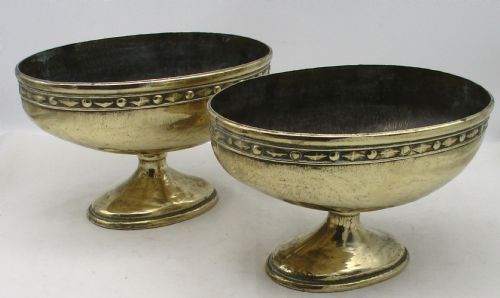
A pair of brass urns brings architectural symmetry and classical form to a mantelpiece, table or console.
Pair of Brass Urns
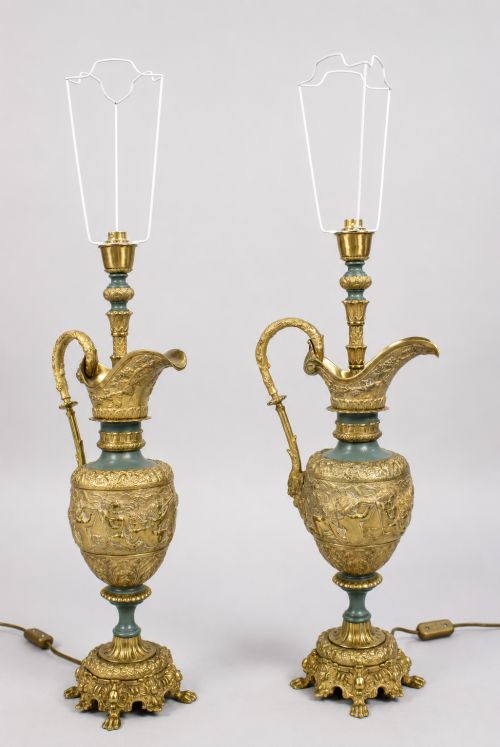
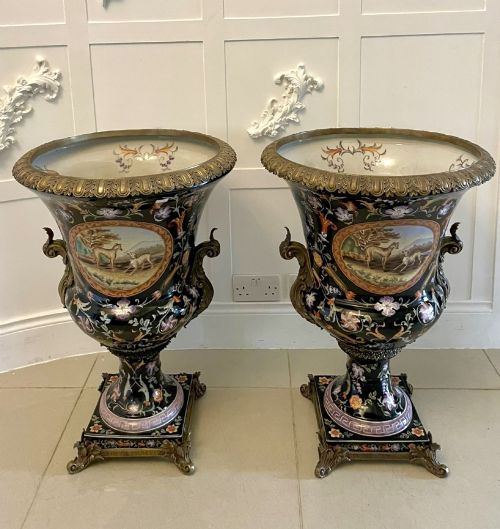
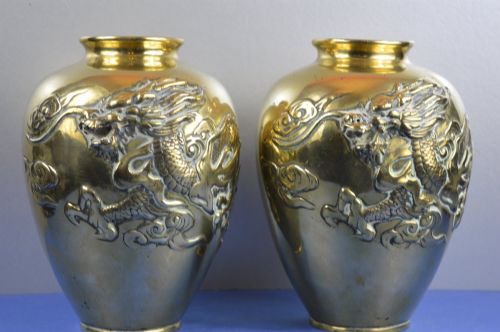
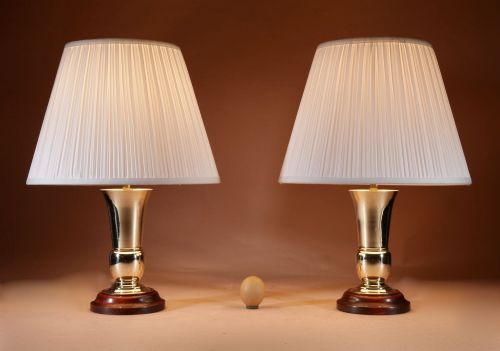
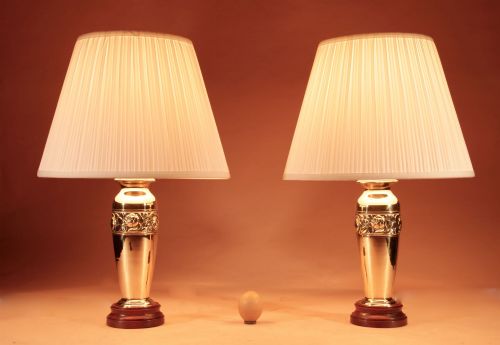
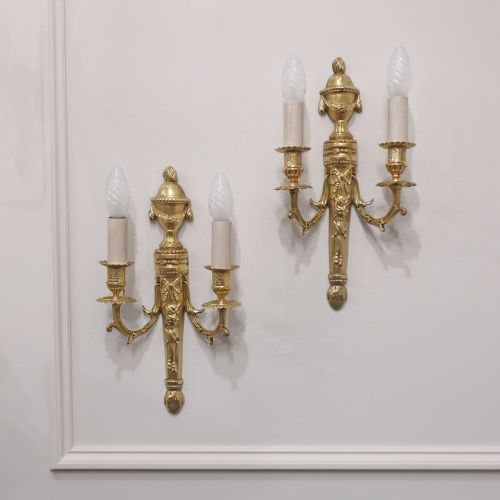
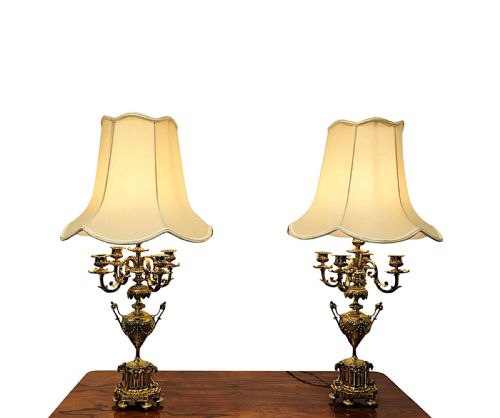
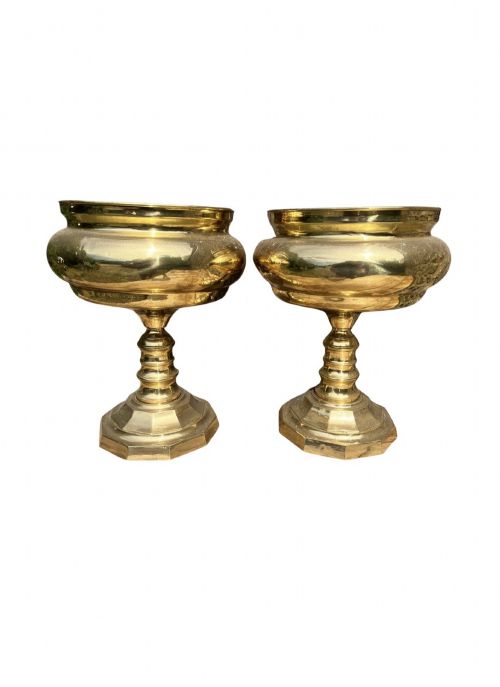
A pair of brass urns encompasses decorative vessels, lamps, and garnitures originating predominantly from the nineteenth century through to the Art Deco period. These symmetrical items appear in various forms, including table lamps, campana urns, jardinières, and candelabra, reflecting both English and continental European manufacturing traditions. You will frequently encounter French examples featuring neoclassical styling alongside heavy Victorian brassware.
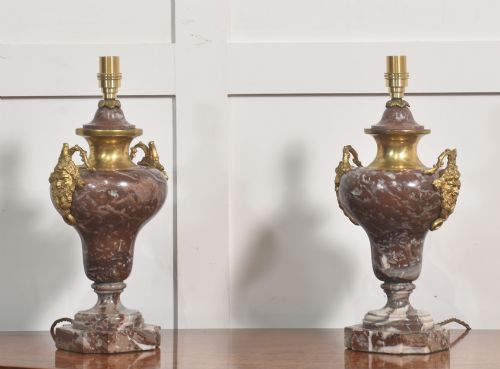
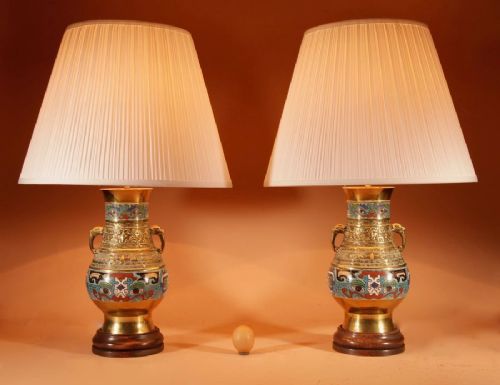
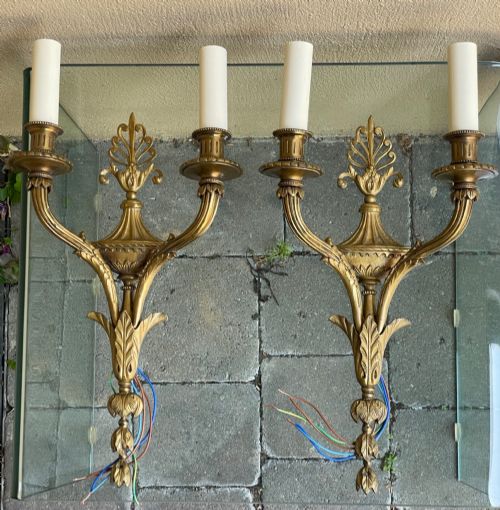
The material vocabulary extends beyond plain metal to incorporate combinations of brass with marble, onyx, porcelain, and glass. Many nineteenth-century specimens were later converted to electricity, transforming traditional decorative altar or mantel garnitures into functional lighting. Whether cast in heavy gilt bronze or constructed as pierced brass vases, these matched pairs provide balanced ornamentation.
How they were made
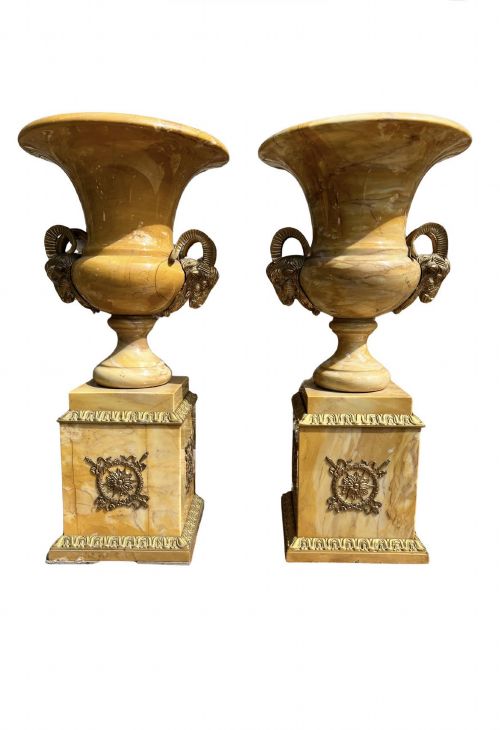
The construction of these pieces relies heavily on casting, chasing, and mounting techniques, where brass and bronze components are shaped and assembled with precision. Makers utilised mercury gilding, ormolu, and champlevé enamel to enrich the metal surfaces, often combining cast brass mounts with carved natural stones such as rouge marble, Sienna marble, and white onyx. Chased floral decoration and pierced metalwork demonstrate the high level of manual skill involved in nineteenth-century workshops.
Makers integrated mixed media by pairing spun or cast brass with glass, porcelain, and fabric elements to achieve distinctive textural contrast. Ormolu mounts were pinned or screwed to stone bodies, while candelabra and lamps required internal channel wiring during later electrical conversions. The combination of heavy patinated bronze with polished gilt metal remains a defining technical characteristic of French Empire and Victorian production.
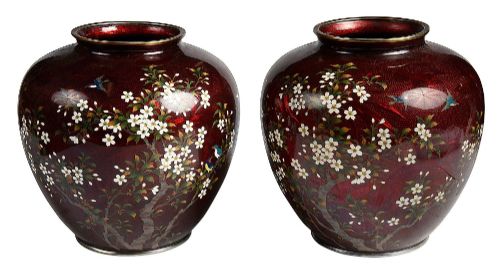
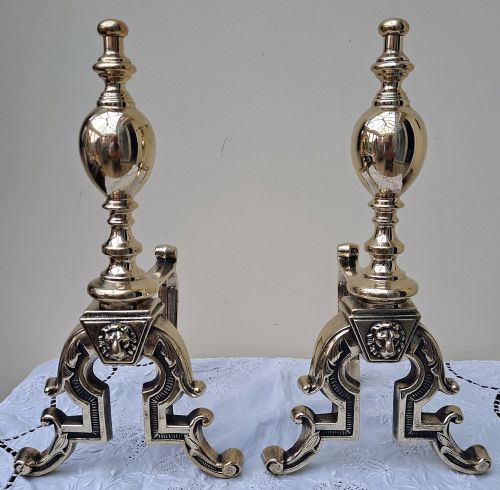
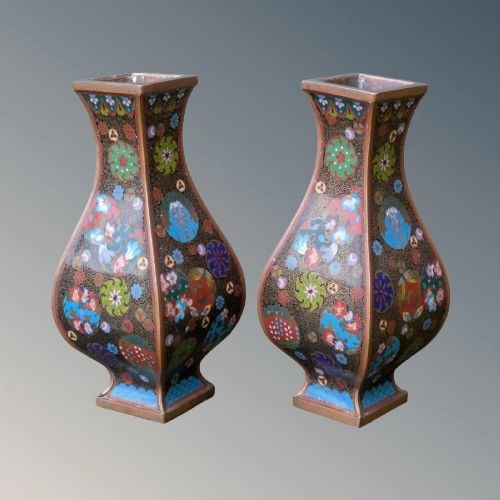
Listings demonstrate a strong representation of 19th Century French Neoclassical and Victorian brassware alongside Chinese cloisonné vases.
What varies in quality
Quality rests upon the crispness of the casting and the depth of the hand-chasing on the metal surface. Superior examples display sharply defined foliage, masks, and classical motifs without the soft edges typical of secondary recast copies. The weight of the metal and the purity of the underlying bronze or brass alloy dictate the tactile presence of the object.
The integration of secondary materials such as marble or enamel dictates the tier of craftsmanship. Finer pairs feature solid, well-selected natural stones with subtle veining, fitted precisely to heavy gilt bronze mounts rather than lightweight substitutes. The proportional balance between the vessel body and its handles, base, or pedestal defines the success of the design.
Casier
The Pair of Brass Urns Glossary
- Campana urn
- A bell-shaped vessel with a flared lip and a footed base, derived from classical antiquity. These forms were widely reproduced in bronze and brass during the nineteenth century.
- Ormolu
- Gilded bronze, where a layer of gold amalgam is applied to a bronze base through heat processing. This technique creates a rich golden surface finish on French decorative objects.
- Jardinière
- An ornamental receptacle designed to hold plants or flowers, frequently manufactured in brass, copper, or ceramic with metal mounts. They often form large matched pairs.
- Cloisonné
- An enamelwork technique where metal wire is soldered to a metal base to create compartments filled with enamel paste before firing. It appears on various nineteenth-century vases.
- Garniture
- A set of decorative objects, typically numbering three or more pieces such as urns and candelabra, designed to sit symmetrically on a mantelpiece or sideboard.
Pair of Brass Urns: Frequently Asked Questions
How were pair of brass urns originally used?
These vessels served primarily as decorative garnitures on mantelpieces, sideboards, and architectural pedestals during the eighteenth and nineteenth centuries. They demonstrated household refinement and frequently echoed classical archaeological discoveries.
Some iterations functioned as church altar ornaments, jardinières for indoor plants, or candleholders before later electrification into table lamps.
Can converted table lamps be restored?
Most conversions preserve the original body of the urn by running modern wiring through central apertures or existing candle arms without drilling destructive holes. Reversible wiring methods ensure the structural integrity of the antique remains intact.
Specialist electricians can update internal components while retaining the patinated brass housing and original switch mechanisms.
How do you distinguish French styles?
French Neoclassical and Empire pieces rely on strict symmetry, militaristic or classical motifs like ram's head masks, and fire-gilded bronze surfaces. Later Victorian revivals often introduce heavier proportions, mixed media such as onyx, and more ornate casting.
Examining the assembly pins, chasing quality, and mounting techniques helps clarify the specific regional workshop tradition.
How should brass urns be cleaned?
Regular dusting with a soft, dry cloth prevents particulate buildup on delicate chased surfaces and gilt mounts. Aggressive metal polishes strip away historical patination and can damage fragile ormolu or enamel layers.
Wax coatings are sometimes applied by conservators to protect raw brass from atmospheric oxidation without altering the natural colour.