

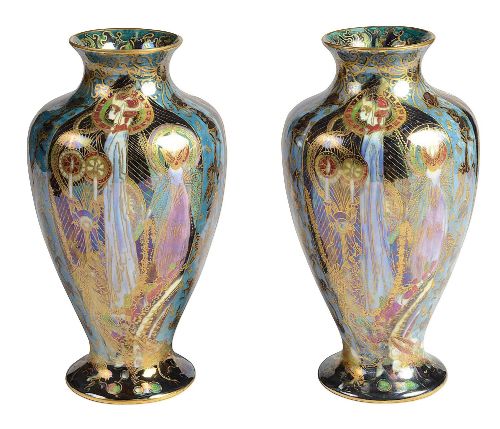
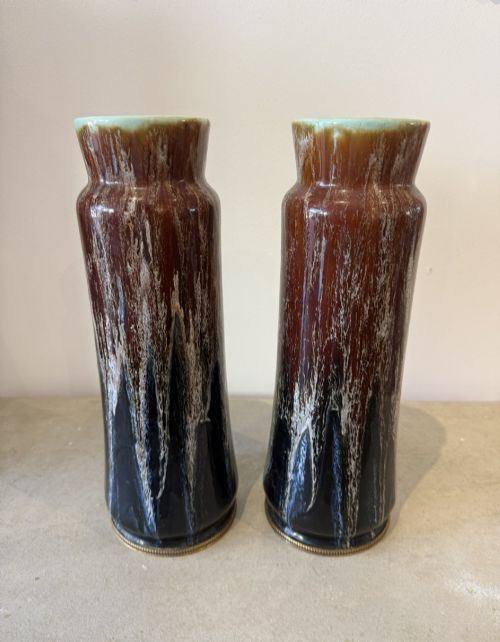
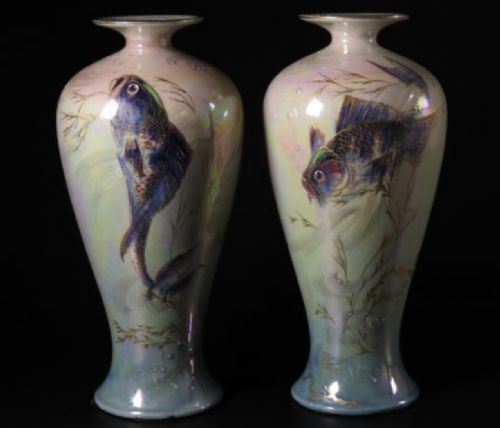


Pair of Art Deco Vases
These pair of art deco vases bring striking geometric symmetry and period character to a room, offering exceptional decorative presence.
Pair of Art Deco Vases
A pair of art deco vases represents symmetrical vessel sets produced primarily during the 1920s and 1930s, featuring characteristic modernist geometry and stylised ornamentation. When searching for a pair of art deco vases, buyers encounter various forms ranging from baluster profiles to tall slender columns and functional wine coolers.
The pieces appearing on this page span British, French, and Belgian manufactories, showing how diverse European workshops interpreted the new stylistic vocabulary. Earthenware, bone china, and glazed ceramic provide the canvas for vibrant lustre finishes and cobalt blues, while metalwork versions utilise chrome and brass.
Most examples date firmly to the interwar decades, capturing the rapid shift away from earlier floral excesses toward stylised motifs. Whether selecting glazed earthenware from established potteries or gleaming metal cylinders, collectors secure matched twins designed specifically for balanced interior display.
Materials and production methods
Ceramic bodies take shape through traditional throwing and moulding techniques before receiving complex surface treatments such as lustre glaze, gold leaf, or hand-painted enamel designs. Earthenware and bone china pieces require careful kiln firing to fix rich cobalt blue grounds and intricate figurative or abstract patterns.
Metal vessels utilise spun or cast construction in brass, silver plate, and chrome, often combined with applied decorative bands or geometric cut-outs. Glassware production employs moulding, amber staining, and uranium glass composition to achieve the translucent coloured effects favoured during the period.
Makers applied specialised finishing processes, including pewter overlay and specialised chemical plating, to enhance the industrial sheen characteristic of the interwar aesthetic.
Pair of Art Deco Vases Retail Price Guide 2026
Typical asking prices for pair of art deco vases among the pieces listed under this phrase on Sellingantiques today, from the lower quarter to the upper quarter. They describe what is for sale here now, not the wider market.
Judging quality and craftsmanship
Quality rests upon the precision of the form and the depth of the finish, whether examining the crispness of a moulded chrome edge or the rich iridescence of a lustre glaze. Superior ceramic examples display flawless enamel application and careful hand-painting by named designers or skilled studio artists.
In metalwork and glass, the weight of the material and the integrity of the joins distinguish finer workshop output from mass-market production. Matched pairs must demonstrate genuine consistency in height, colour saturation, and decorative detail, confirming they were created and glazed together.
Wedgwood·Boch Freres·Shelley·Carlton Ware·WMF·Pilkingtons Royal Lancastrian·Beldray Ltd·Charlotte Rhead·Royal Doulton·Karl Palda·George Davidson·Pinon Heuze·Royal Worcester·Empire Ware
The Pair of Art Deco Vases Glossary
- Lustre glaze
- A metallic ceramic finish that creates an iridescent, shimmering surface effect under changing light. This technique was mastered by specialised potteries during the 1920s.
- Baluster
- A vertical architectural form featuring a rounded body that tapers toward the neck. This shape provides stability and visual balance for display vessels.
- Uranium glass
- Glass containing trace amounts of uranium dioxide, which glows brightly under ultraviolet light. It appears in transparent green or amber shades across interwar pieces.
- Bone china
- A type of porcelain incorporating animal bone ash for strength and translucency. It allowed makers to produce thinner, more refined vessel walls.
- Chinoiserie
- A decorative style reflecting European interpretations of East Asian artistic traditions. It appears on ceramic pieces through stylized landscapes and motifs.
Pair of Art Deco Vases: Frequently Asked Questions
How do I display a pair of art deco vases?
Place them symmetrically on a mantelpiece, sideboard, or dedicated console table to create a balanced focal point in a room. Their strong geometric lines work best when given adequate surrounding space to showcase their form.
Ensure the lighting highlights the surface finish, whether catching the metallic sheen of chrome or the iridescent glow of lustre glazes.
Are these metal vases suitable for fresh flowers?
Many metal examples, particularly those finished in chrome or silver plate, function primarily as decorative objects or champagne coolers rather than water-holding vessels. It is wise to inspect the interior lining or use a hidden glass insert to protect antique metal surfaces from moisture damage.
Ceramic and glass versions handle water safely, provided the glaze or glass body remains free from interior hairline fractures.
How do I distinguish 1920s pieces from later reproductions?
Examine the base for period-appropriate maker marks, registry numbers, and production stamps associated with interwar potteries and metalworkers. The weight, glaze chemistry, and hand-finished details on genuine items reflect period manufacturing standards that modern replicas rarely replicate accurately.
Consulting recorded pattern numbers and artist signatures helps confirm the exact decade of manufacture.
What maintenance do glazed ceramic vases need?
Clean ceramic and glass surfaces gently using a soft, dry cloth to remove dust without disturbing delicate lustre or enamel decoration. Avoid using chemical cleaners or immersing antique metalwork in water, as harsh substances can strip original plating or damage fragile glazes.
Keep pieces away from direct, prolonged sunlight to prevent fading on hand-painted enamel and coloured glass.