

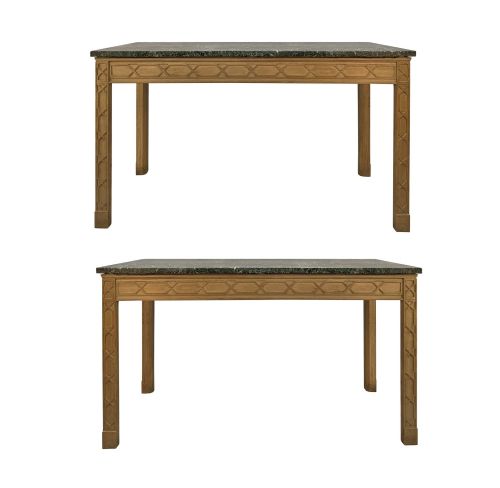
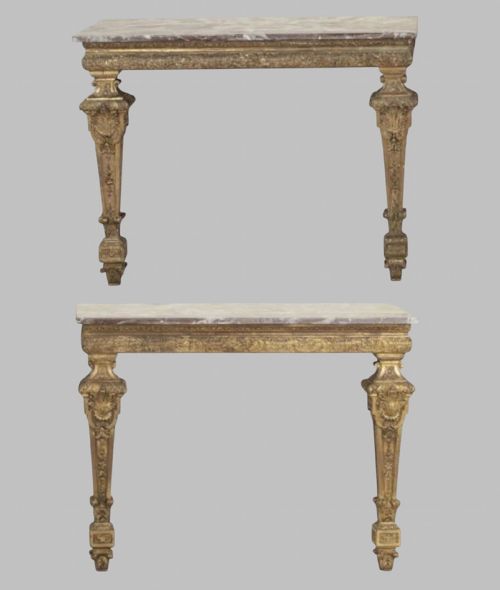
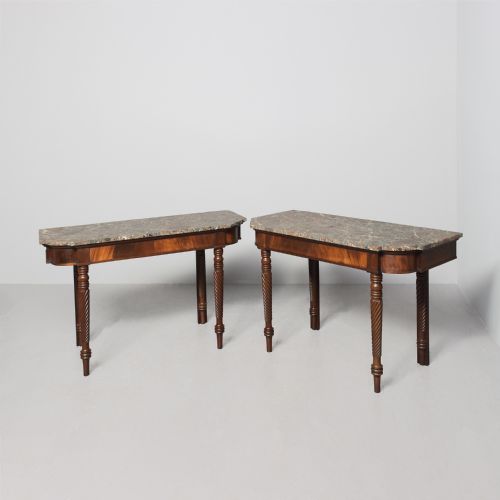
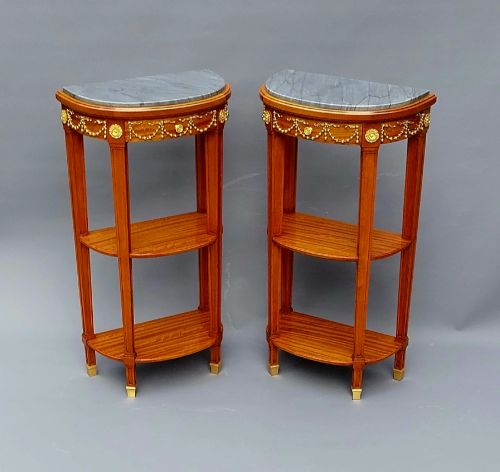




Pair Marble Top Consoles
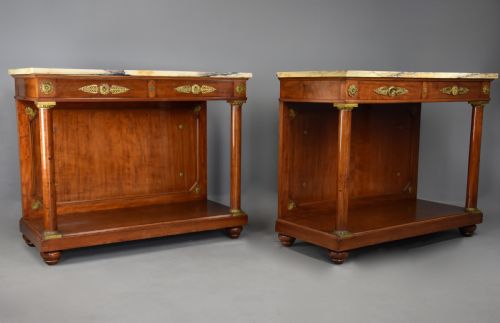
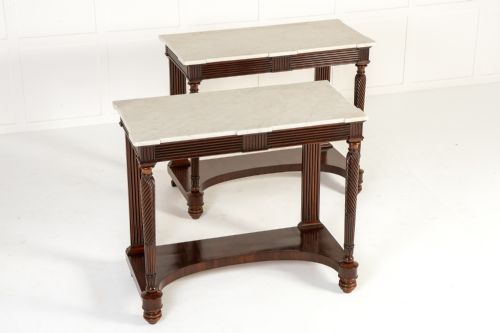
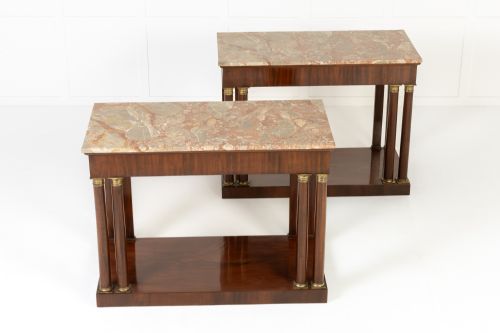
These pair marble top consoles bring architectural weight and striking stone surfaces to a room, spanning styles from Regency to Italian Baroque Revival.
Pair Marble Top Consoles
When you search for pair marble top consoles, you encounter matched sets of tables designed to stand against a wall, frequently topped with polished stone. These pieces range from substantial 18th century giltwood designs to later 19th century mahogany and walnut examples.
The selections on this page heavily feature 19th century and 1900 origins, alongside Regency and 18th century specimens. Console tables dominate the offerings, accompanied by side tables and wall brackets.
Makers and workshops across France, Italy and Britain produced these items, employing regional aesthetic movements such as Rococo Revival, French Empire and Italian Neoclassical.
Materials and construction methods
The construction relies on timber frames built from mahogany, walnut, rosewood or carved wood, frequently enhanced by gesso, parcel gilt, or paint finishes. Giltwood and ormolu add ornamental lustre to French and Italian Baroque Revival pieces.
The defining element is the stone surface, utilising marble, specimen marble, or breccia marble cut to fit the table profile. Stonemasonry and timber carving require specialist joinery to support the heavy tops securely.
Pair Marble Top Consoles Retail Price Guide 2026
Typical asking prices for pair marble top consoles among the pieces listed under this phrase on Sellingantiques today, from the lower quarter to the upper quarter. They describe what is for sale here now, not the wider market.
Listings feature woods including mahogany, walnut, rosewood, and giltwood, paired with standard and specimen marble.
Assessing quality in the collection
Quality reveals itself in the crispness of the wood carving, the depth of the gilding, and the natural figuring within the marble top. Substantial proportions and well-executed details such as lion's paw supports distinguish superior examples.
Attribution to documented makers or specific stylistic periods elevates certain items above standard production. The integrity of the original stone surface relative to the timber base remains central to the standing of each pair.
Krieger Paris·Jean Joseph Chapuis·Gillows
The Pair Marble Top Consoles Glossary
- Console table
- A table supported by wall brackets or legs, designed to stand flat against a wall rather than free in a room. They often feature elaborate underframes to balance the heavy stone tops.
- Breccia marble
- A composite stone made of broken fragments of minerals embedded in a fine-grained matrix. It creates a variegated, multicoloured surface highly prized in Italian Baroque Revival pieces.
- Giltwood
- Wood that has been coated with a thin layer of gold leaf or powder. This finish reflects candlelight and daylight in formal reception rooms.
- Ormolu
- Gilded bronze or brass applied as mounts and decorative trim on furniture. It gained widespread use during the French Empire and revival periods.
- Specimen marble
- A decorative surface composed of various coloured marbles arranged in geometric patterns or mosaic panels. It demonstrates advanced stonemasonry skills.
Pair Marble Top Consoles: Frequently Asked Questions
How do I style pair marble top consoles?
These tables naturally anchor a hallway, dining room, or drawing room when positioned against a flat wall. Placing matching lamps, bronze ornaments, or mirrors above them completes the symmetrical arrangement.
Because the stone tops provide a cool, hard surface, pairing them with softer textiles nearby balances the room's textures effectively.
Were these tables always meant to be used in pairs?
Many grand houses commissioned matched tables to flank a fireplace, doorway, or large window to preserve strict symmetry in formal interiors. Surviving pairs remain desirable because keeping two identical large pieces together through centuries is uncommon.
Single consoles were also built, but matched pairs represent the pinnacle of formal interior design from the 18th and 19th centuries.
How do I care for the marble tops?
Marble is a porous stone that reacts to acids, so wipe spills promptly with a damp cloth and mild soap. Avoid harsh chemical cleaners that can dull the polished finish over time.
Applying a specialist stone wax periodically helps protect the surface from moisture and everyday wear.
How can I tell the period of a console?
Examine the timber species, joinery techniques, and stylistic vocabulary, such as the heavy proportions of Regency pieces or the ornate carving of Rococo Revival works. Tool marks on the underside of the wood and the type of marble finishing offer further clues to the date of manufacture.
Comparing the decorative motifs against documented regional furniture styles helps narrow down the decade or century of origin.