

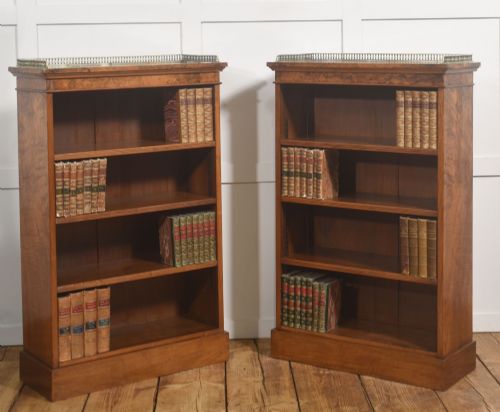
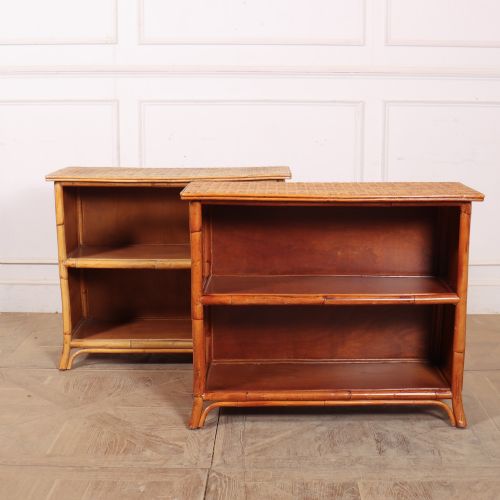
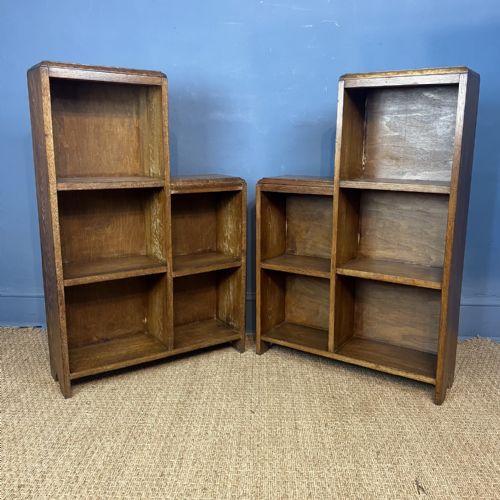
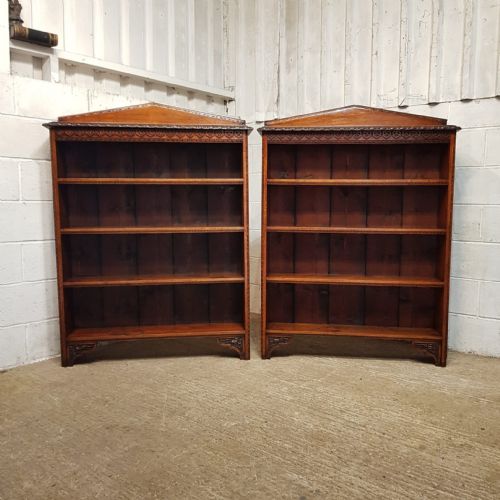


Pair Low Bookshelves
Pair low bookshelves offer balanced storage for rooms with limited height, combining practical open shelving with proportioned twin furniture.
Pair Low Bookshelves
Pair low bookshelves are matched sets of open bookcases designed to sit below eye level, providing accessible shelving across a room. These twin items appear frequently from the nineteenth century, Victorian, Edwardian, and Art Deco periods, spanning styles from Regency to Sheraton revival and French Riviera aesthetics.
How they were made
Makers constructed these bookcases using robust timber foundations such as mahogany, oak, walnut, rosewood, and teak, frequently selecting figured veneers for visual depth. Structural integrity relies on traditional joinery that supports open shelves without dominating smaller interior spaces.
Decorative detailing on these pieces incorporates applied brass and ormolu mounts, alongside natural woven elements like bamboo, rattan, and cane. These materials work together to define distinct period styles, from the clean lines of Art Deco to the classical curves of Regency revival.
Pair Low Bookshelves Retail Price Guide 2026
Typical asking prices for pair low bookshelves among the pieces listed under this phrase on Sellingantiques today, from the lower quarter to the upper quarter. They describe what is for sale here now, not the wider market.
What varies in quality
Quality in pair low bookshelves rests primarily on the choice of timber and the precision of its figure, with richly grained rosewood and figured mahogany marking the higher end of the range. The refinement of secondary details, such as crisp ormolu mounts and balanced proportions, distinguishes standard workshop output from exceptional cabinet work.
The integrity of the open shelving structure and the uniformity between both halves of the pair also dictate the standing of a piece. Matched sets that retain consistent timber tones and original surface patination demonstrate superior preservation and craftsmanship.
Heals
The Pair Low Bookshelves Glossary
- Waterfall bookcase
- A shelving unit where each successive shelf steps back from the one below it, creating a cascading profile. This form gained popularity during the nineteenth century.
- Breakfront
- A cabinet design where the central section projects forward from the flanking wings. It adds architectural depth to low bookcase configurations.
- Ormolu
- Gilded bronze used for decorative mounts and accents on furniture. It appears on finer nineteenth-century pieces to highlight structural corners and cornices.
- Sheraton revival
- A late nineteenth-century design movement inspired by the neoclassical furniture of Thomas Sheraton. Pieces in this style often use lighter timbers and refined classical motifs.
- Bow front
- A convex, curved front facade that softens the linear geometry of a room. This shape is frequently paired with open shelving.
Pair Low Bookshelves: Frequently Asked Questions
Where should I place pair low bookshelves?
These low twin units suit rooms where full-height shelving would overwhelm the wall space, such as living areas or studies. Their modest height allows the surfaces above them to hold lamps, art, or decorative objects.
Placing them symmetrically on either side of a fireplace or window creates a balanced focal point in a traditional interior.
How do I care for antique open bookshelves?
Maintenance involves dusting the open shelves regularly with a dry, soft cloth to prevent particulate buildup on the timber. Avoid placing the items in direct sunlight or near heat sources to protect the polished wood surfaces.
Occasional application of a suitable wax helps preserve the natural sheen of mahogany, rosewood, and walnut.
What is the difference between Regency and Regency revival?
Original Regency pieces date from the early nineteenth century and reflect the classical influences of that specific period. They utilise timbers and construction methods characteristic of Regency workshops.
Regency revival pieces are later copies or interpretations, often produced around the Edwardian era or the early twentieth century, echoing the same aesthetic using contemporary techniques.
Are these bookshelves suitable for heavy books?
Most open bookcases from the nineteenth and early twentieth centuries handle standard volumes easily on their fixed or adjustable shelves. The solid timber construction of woods like oak and mahogany provides reliable structural support.
Very heavy or oversized folios require careful placement to avoid long-term shelf sag across wider spans.