





Pair Italian Pier Tables
Pair Italian pier tables are architectural console tables designed to sit flush against a wall, bringing grand classical presence into a room.
Pair Italian Pier Tables
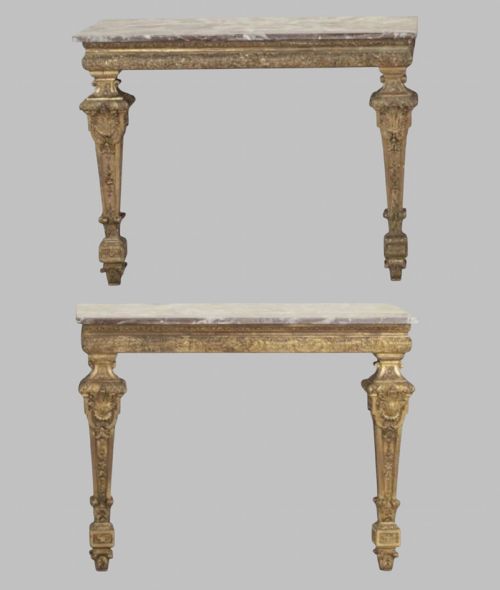
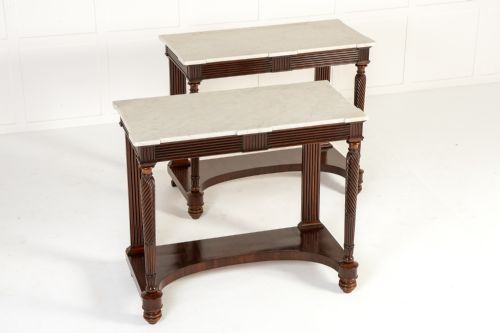
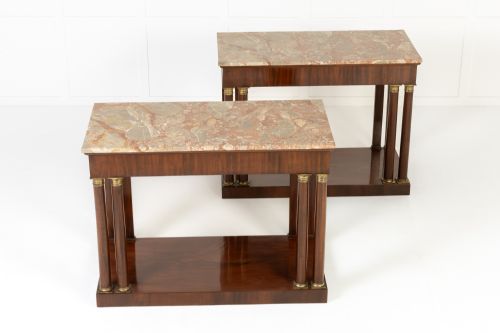
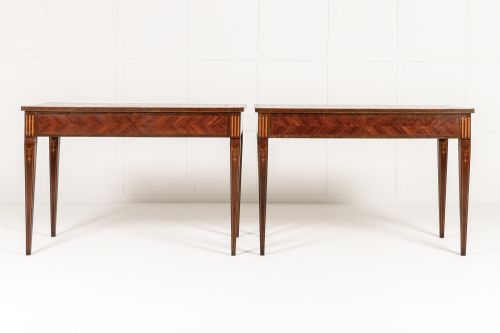
The pieces on this page span from the eighteenth century through to the early twentieth century, taking the form of console tables. They reflect varied aesthetic movements including Neoclassical, Baroque, Baroque Revival, and Rococo styles.
You will find examples featuring demi-lune shapes and rectangular formats, grounded by materials such as walnut, mahogany, and gilded gesso. Many examples incorporate heavy stone surfaces, notably breccia and specimen marble tops.
How they were made
The construction of these pieces relies heavily on dense cabinet timbers like walnut, mahogany, and kingwood, carved to form robust structural frames and intricate supports. Craftsmen frequently applied gesso over timber before layering gold leaf to create luminous gilded surfaces.
Heavy stone tops, including breccia and specimen marble, were meticulously shaped and polished to sit atop the wooden bases. Certain examples also feature hand-painted decorative finishes applied directly to the wooden framework.
Listings feature items spanning the eighteenth, nineteenth, and early twentieth centuries, constructed from walnut, mahogany, kingwood, and giltwood.
What varies in quality
Quality in these items is determined by the depth and crispness of the carving, particularly on complex elements like giltwood scrolls and lion's paw supports. Superior examples display masterful handling of timber and gesso that retains sharp definition.
The choice of upper surface also dictates the tier of the piece, with breccia and specimen marble tops representing a higher standard of material selection. Finer workmanship is further evidenced in the sophistication of hand-painted details and the architectural proportion of the console bases.
The Pair Italian Pier Tables Glossary
- Console table
- A table designed to be fixed against a wall, frequently supported by ornamental brackets or legs rather than four independent vertical posts.
- Demi-lune
- Half-moon shape used for the top and frame of tables designed to sit flat against a wall.
- Giltwood
- Timber that has been coated with thin sheets of gold leaf over a prepared gesso ground.
- Breccia marble
- A composite stone formed of angular rock fragments embedded in a fine-grained matrix, creating a variegated surface pattern.
- Specimen marble
- A decorative surface composed of numerous small pieces of different coloured marbles arranged in geometric or pictorial patterns.
Pair Italian Pier Tables: Frequently Asked Questions
Where should I place these tables?
These consoles sit flush against a wall, making them well suited for entrance halls, drawing rooms, or dining spaces. They often occupy the architectural pier space situated between two windows.
Because they arrive in matching pairs, positioning them symmetrically creates a formal focal point within a room. Their narrow profile ensures they occupy minimal floor space while displaying decorative objects on top.
How do I identify the style?
Stylistic periods are recognised through specific decorative motifs and structural silhouettes. Baroque and Rococo pieces show exuberant curves and rich carving, while Neoclassical examples favor restrained architectural lines.
Later nineteenth-century revivals often draw heavily on these earlier vocabularies, combining rich gilding with substantial marble tops.
What woods were commonly used?
Cabinetmakers primarily utilised dense hardwoods such as walnut and mahogany for the structural frames of these consoles. Kingwood also appears in select eighteenth-century examples as a decorative veneer.
In many instances, the underlying timber is concealed beneath layers of gesso and gold leaf or painted decoration rather than left exposed.
How do marble tops differ?
Table surfaces range from plain unfigured stone to complex breccia and multicolored specimen marble arrangements. Breccia displays natural angular stone fragments embedded within the matrix, offering varied coloration.
Specimen tops involve meticulous assembly of distinct marble types arranged to form decorative patterns across the surface.