

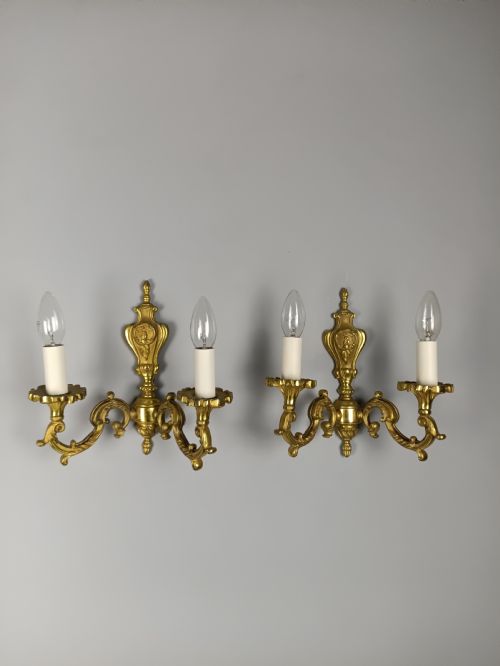
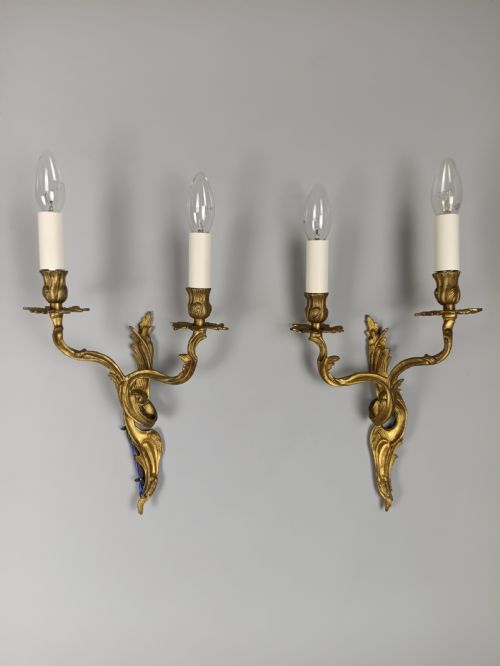
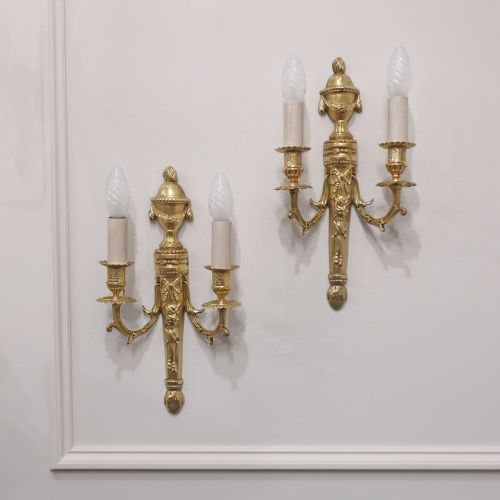
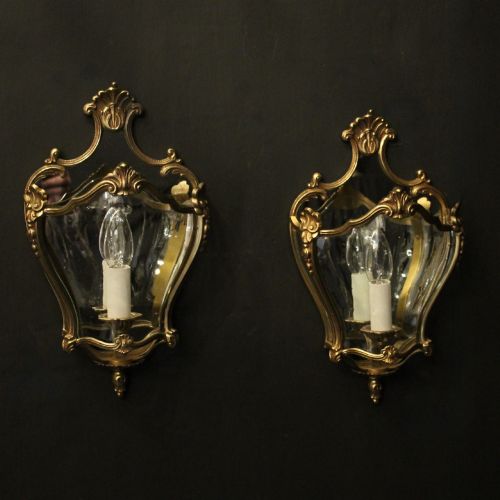
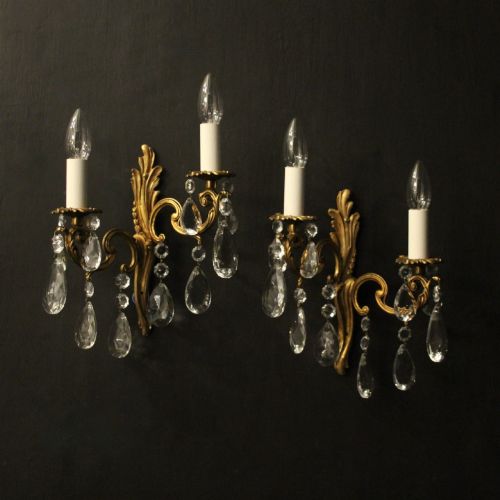
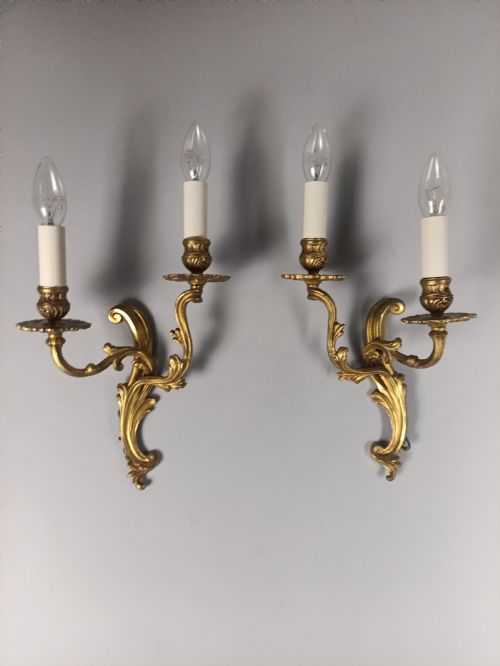
Pair Gilt Bronze Sconces
These pair gilt bronze sconces bring warmth and decorative structure to interior walls through varied historical styles.
Pair Gilt Bronze Sconces
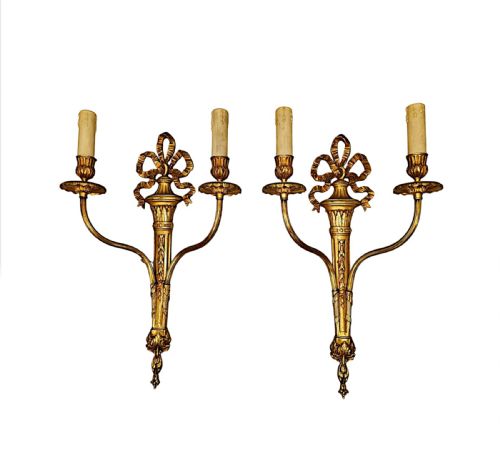
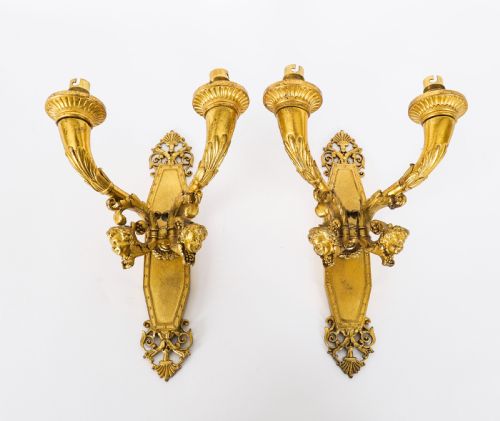
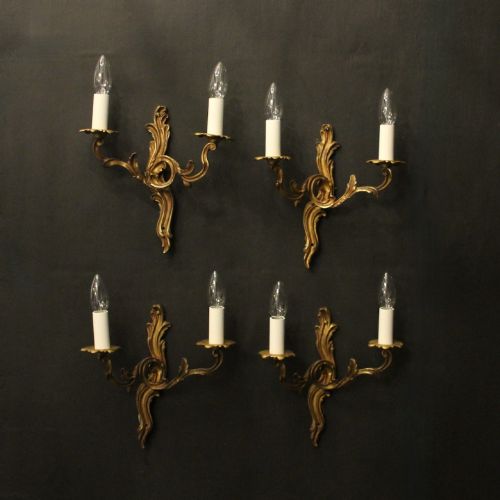
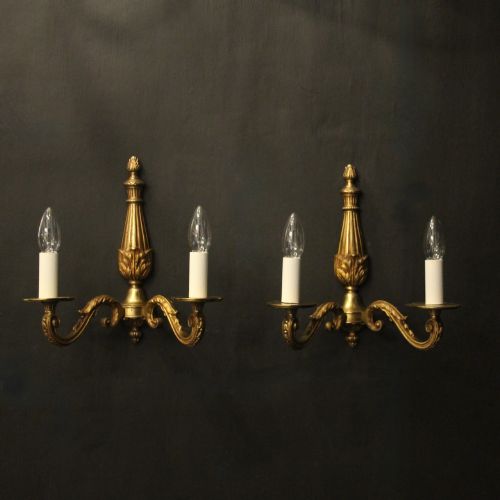
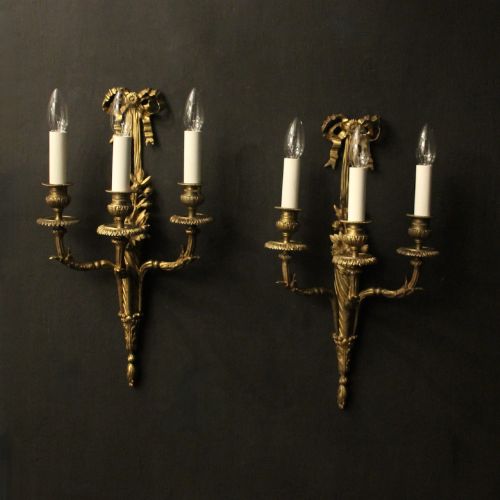
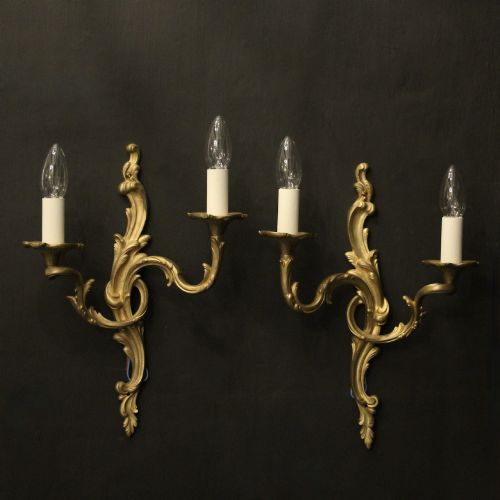
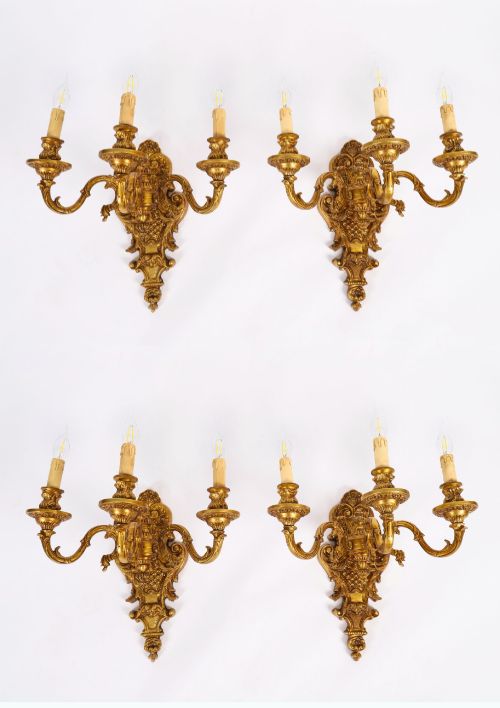
When searching for pair gilt bronze sconces, buyers encounter wall-mounted lighting fixtures designed to hold candles or electric bulbs, predominantly originating from French workshops. The selection frequently includes multi-armed wall lights configured with twin or triple branches, alongside half lanterns and candelabras.
These fixtures span the nineteenth and early twentieth centuries, capturing periods from the 1800s up through the 1930s. Styles range from French Rococo and Baroque to Neoclassical and Louis XVI revivals, displaying ornate casting and structural symmetry.
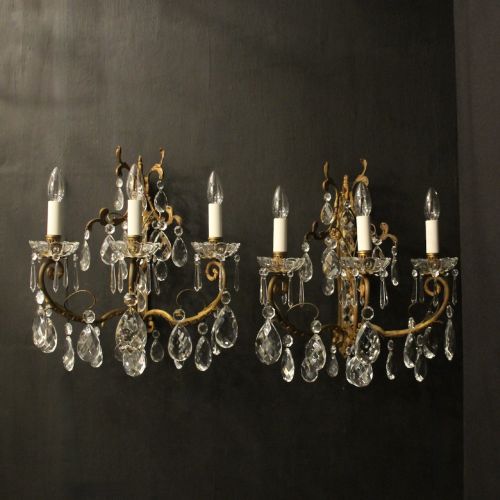
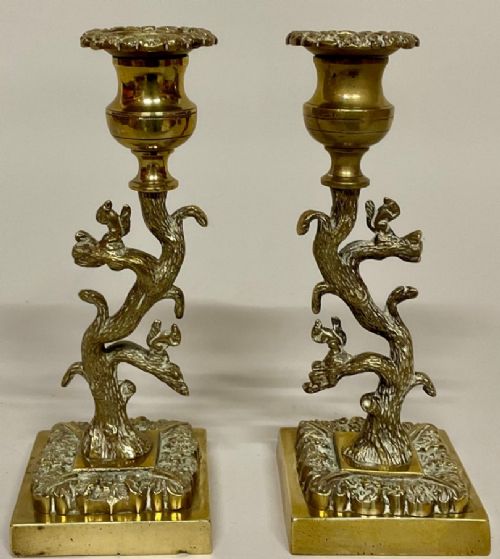
Beyond standard wall sconces, the category encompasses related forms such as sculptural candlesticks cast with figures, trees, or architectural motifs. Many examples integrate structural elements with crystal drops, porcelain flowers, or marble bases to enhance the decorative scheme.
Materials and construction methods
The primary construction relies on bronze, brass, and metal alloys finished with gilding, creating the distinctive golden sheen characteristic of ormolu. Artisans utilised sand casting and lost-wax methods to produce intricate relief work, scrolls, and figural details.
Many items incorporate secondary materials including cut crystal pendants, glass elements, white marble, onyx, and porcelain floral accents. These components were assembled mechanically using pins and screws, allowing for complex multi-tiered structures.
Wiring for electricity represents a modern adaptation applied to older frames, converting pieces originally engineered for candles or oil into functional wall illumination.
Squirrels scamper eternally among bronze tree branches on Regency candlesticks, guarding their metal acorns from the glow.
Distinctions in execution and design
The richness of the fire-gilding or applied surface finish determines the depth and durability of the golden tone across the bronze or brass substrate. Integration of high-grade auxiliary components, such as hand-cut crystal drops and polished marble plinths, elevates the overall execution.
Casier·Dugourc
The Pair Gilt Bronze Sconces Glossary
- Ormolu
- Gilded bronze produced by applying a mercury and gold amalgam to a bronze object and heating it until the mercury vaporised. This historic technique yields a warm, durable metallic finish.
- Applique
- A wall-mounted light fixture designed to be fixed directly to vertical surfaces. The term is frequently used interchangeably with wall sconce.
- Rococo Revival
- A nineteenth-century design movement characterised by asymmetrical scrolls, C-curves, and naturalistic motifs inspired by earlier eighteenth-century French aesthetics. It dominates many nineteenth-century wall light designs.
- Caryatid
- A sculpted female figure serving as an architectural support. These appear on Neoclassical candlesticks and sconces holding up the lighting branches.
Pair Gilt Bronze Sconces: Frequently Asked Questions
How do I install antique wall sconces?
Most antique wall sconces require professional electrical installation to secure the mounting plate to standard wall junction boxes. Many pieces arrive rewired to modern safety standards while retaining their original aesthetic components.
Positioning height depends on room proportions, though mounting them at eye level or slightly above typically ensures balanced illumination and visual symmetry along a hallway or living space.
Were these lights originally for candles?
A large proportion of these fixtures were cast and assembled during the nineteenth and early twentieth centuries to hold candles before being adapted for electricity. Candle holders, or drip pans, often remain integrated into the sconce arms.
Converting them for modern electrical use generally involves routing internal wiring through the hollow cast bronze arms without altering the exterior decorative appearance.
What is the difference between ormolu and gilt bronze?
Ormolu technically refers to high-grade mercury gilding applied to a bronze base, a practice common in historical French metalwork. Gilt bronze is a broader descriptive term covering various methods of applying gold leaf or chemical finishes to a bronze substrate.
Both materials yield the characteristic golden surface seen across nineteenth-century appliques and wall lights.
How do I identify the period of a sconce?
Dating relies on stylistic indicators such as the symmetry of Louis XVI Neoclassical designs versus the fluid, asymmetrical curves of Rococo Revival pieces. Material analysis, including the type of fasteners and casting seams on the reverse, also aids in establishing age.
Comparing the decorative motifs against documented historical revivals helps narrow down the production era to the nineteenth or early twentieth century.