

Pair Georgian Candlesticks
Pair georgian candlesticks illuminate dining tables and mantelpieces with period proportion and symmetrical lighting.
Pair Georgian Candlesticks
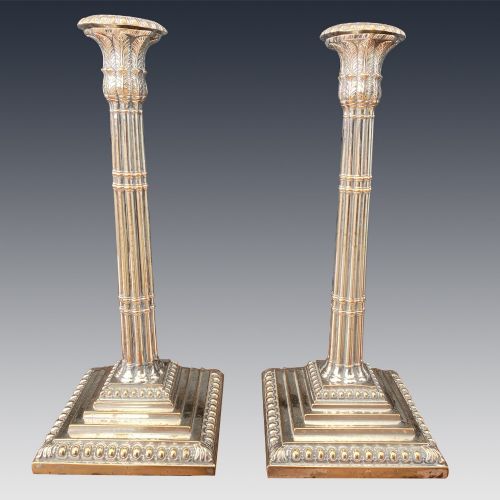
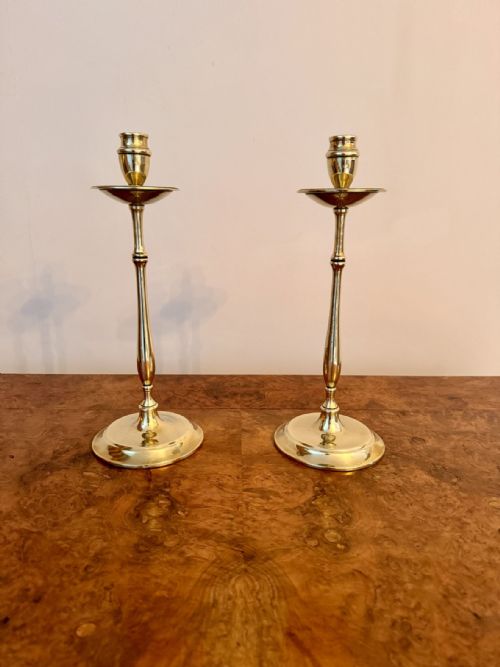
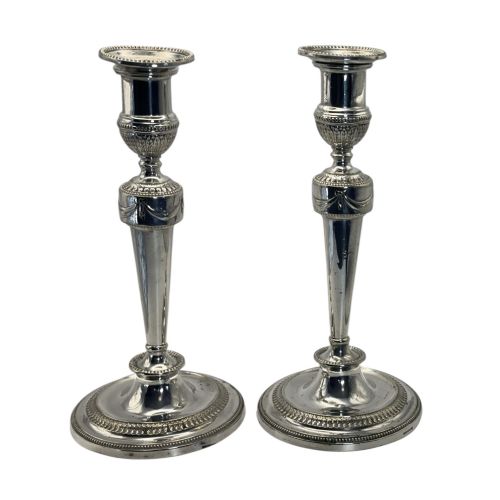
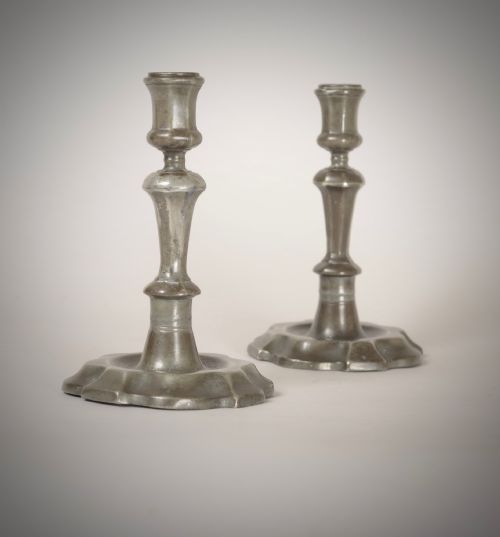
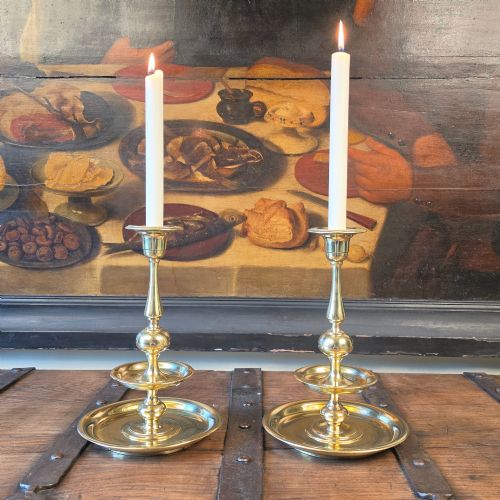
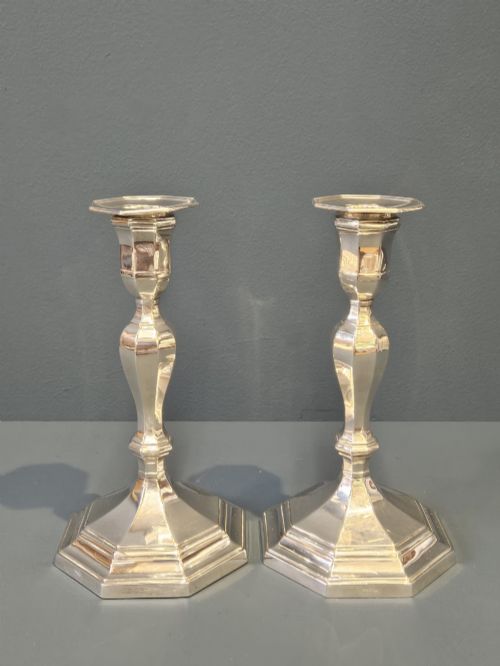
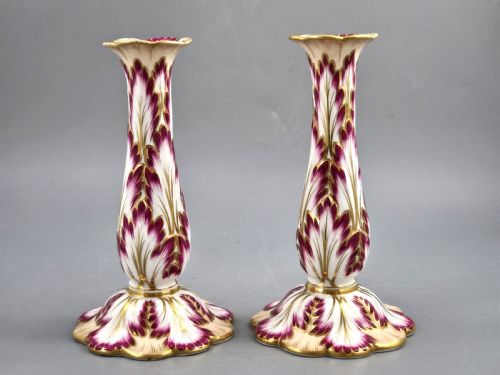
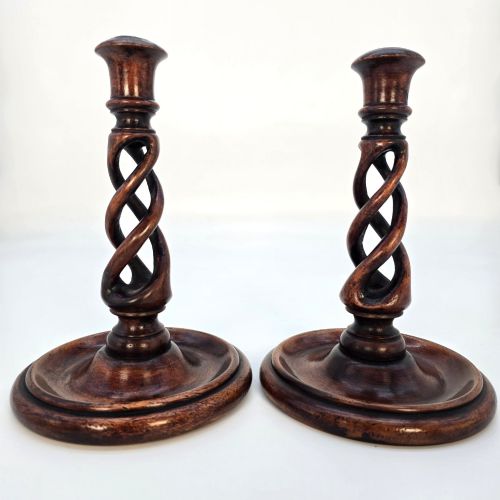
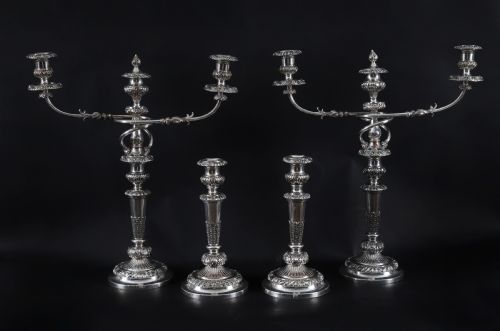
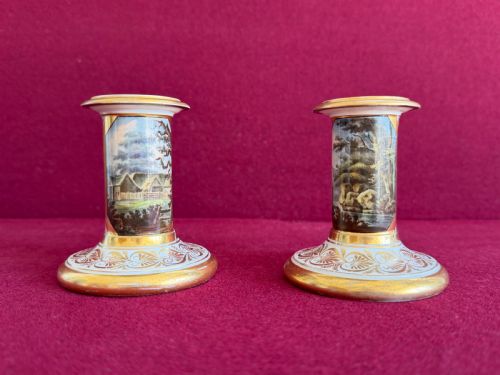
A pair georgian candlesticks brings symmetrical balance to a mantelpiece or dining table, utilising forms from the eighteenth and early nineteenth centuries. These items appear primarily in brass, alongside examples in sterling silver, old sheffield plate, porcelain, and timber.
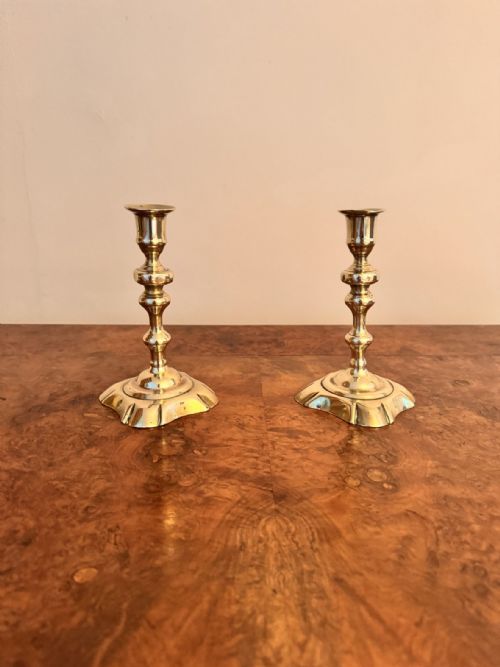
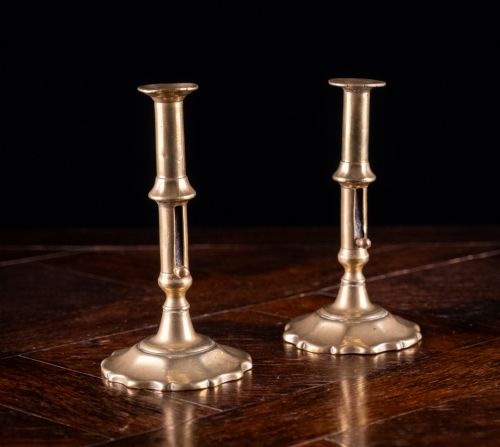
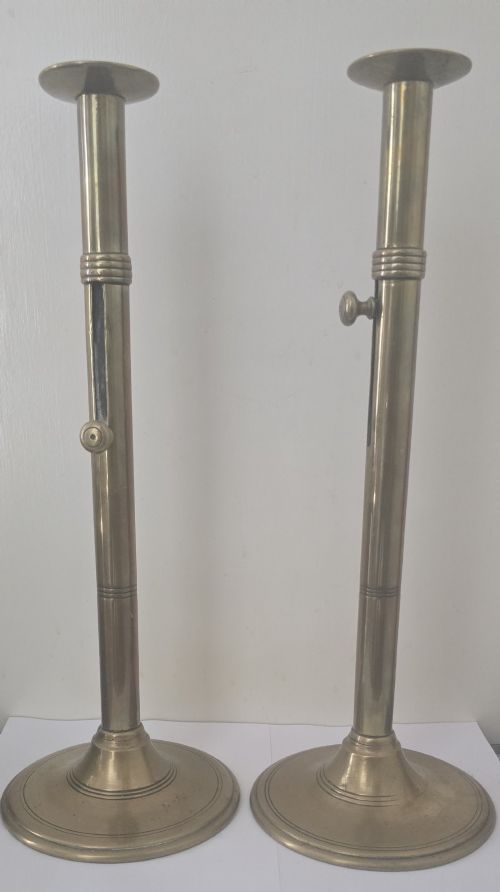
Most examples encountered in daily searching take the form of cast brass table sticks with petal, square, or dished bases, often incorporating columns or ejector mechanisms. Alongside standard single-light holders, larger formats emerge as three-light or four-light candelabra suites.
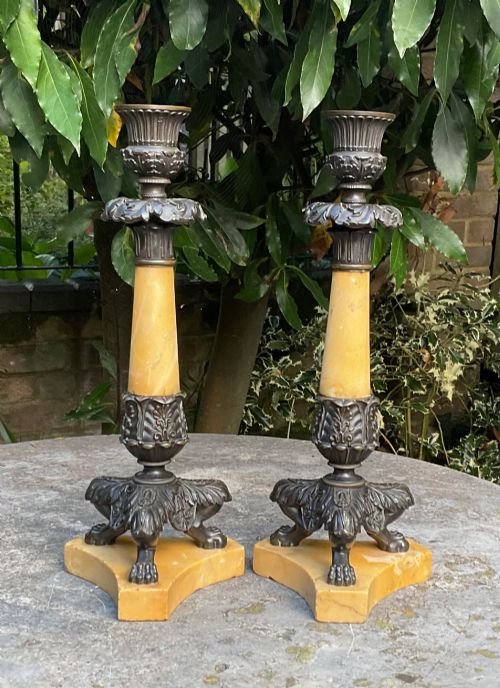
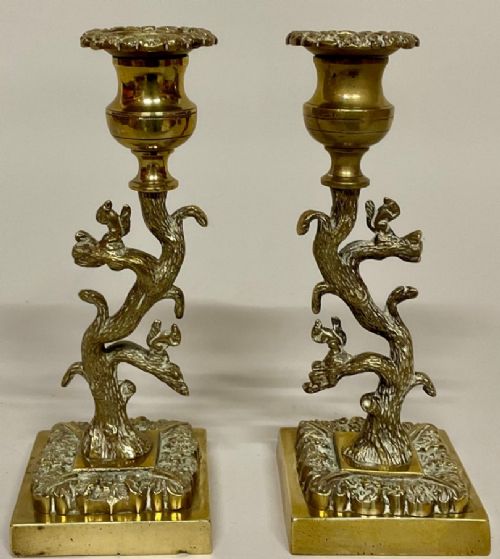
Makers and workshops of the period produced works spanning simple domestic brass utilities up to elaborate neoclassical silver and porcelain figures. Regency variants introduce bronze, marble, and sculptural motifs such as trees and animals.
Assessing Quality and Execution
The distinction between ordinary and superior examples rests in the crispness of the cast ornamentation, the weight of the metal, and the integrity of the original components. Heavy cast brass with sharp petal or square bases indicates careful workshop production.
Purity of material and attribution to recorded makers elevate specific silver and porcelain specimens above standard domestic output. The presence of matching hallmarks, original nozzles, and working telescopic or side-ejector mechanisms separates utilitarian survivals from fine collector pieces.
Squirrels occasionally scamper up bronze tree branches while holding nuts beneath campana sconces.
Mappin & Webb·Ridgway·Barr Flight And Barr·Matthew Boulton·J.T. & Co·John Cafe·J. Miller·Edward Kendrick·William Hutton & Sons
The Pair Georgian Candlesticks Glossary
- Ejector
- A concealed internal rod or side lever designed to push the spent candle stub out of the socket. This mechanical inclusion is frequently found on mid-eighteenth-century brass examples.
- Old Sheffield Plate
- An early fused plating technique where a sheet of sterling silver is united with a heavy copper base. Edges often reveal the underlying copper seam under magnification.
- Campana
- A cup-shaped socket resembling a classical bell or urn, commonly observed on Regency and neoclassical lighting. This profile supports the candle above the stem.
- Bocage
- An applied background of ceramic foliage, leaves, and flowers surrounding porcelain figures. This decorative element appears on Derby porcelain candlestick figures.
- Pricket
- A sharp metal spike set in the drip pan to impale a candle rather than a socket holding it. These medieval-derived forms reappear in later revival periods for ecclesiastical settings.
Pair Georgian Candlesticks: Frequently Asked Questions
What is an ejector candlestick?
An ejector candlestick contains a mechanical slide or internal push-rod operated by a thumbpiece on the stem. This device lifts the residual candle stub upward for easy removal.
Such mechanisms were particularly popular during the eighteenth century on brass variants used daily in domestic interiors.
How do I spot old sheffield plate?
Old sheffield plate involves fusing silver to a copper ingot before rolling them into sheets together. Close inspection of the edges often reveals a thin line of exposed copper beneath the silver.
This technique predates nineteenth-century electroplating methods and possesses a characteristic soft lustre.
Are these items always brass?
While brass forms dominate the surviving record, makers utilised a diverse array of materials. Examples appear in sterling silver, old sheffield plate, porcelain, bronze, and turned timbers like mahogany and fruitwood.
Choice of material generally reflects the domestic status of the original owner and the prevailing neoclassical or rococo style of the decade.
What are telescopic candlesticks?
Telescopic candlesticks feature sliding tubular shafts that allow the overall height of the column to expand or contract. This adjustable design was patented and produced by makers during the Georgian era.
Users adjusted the height depending on whether the holder stood on a dining table or a low sideboard.