
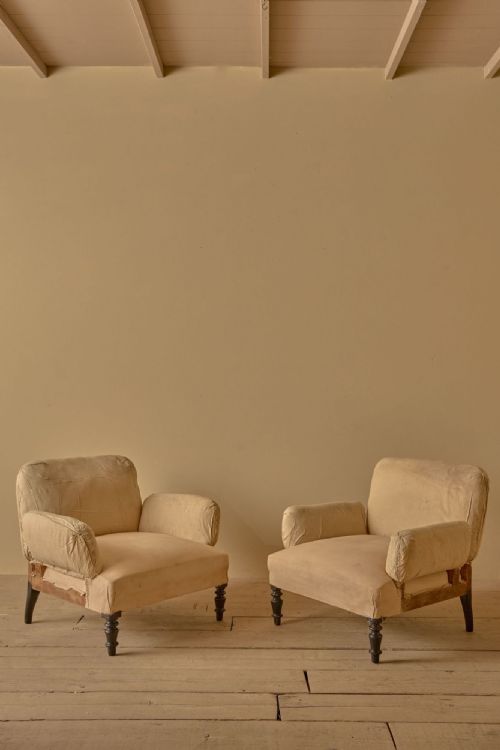
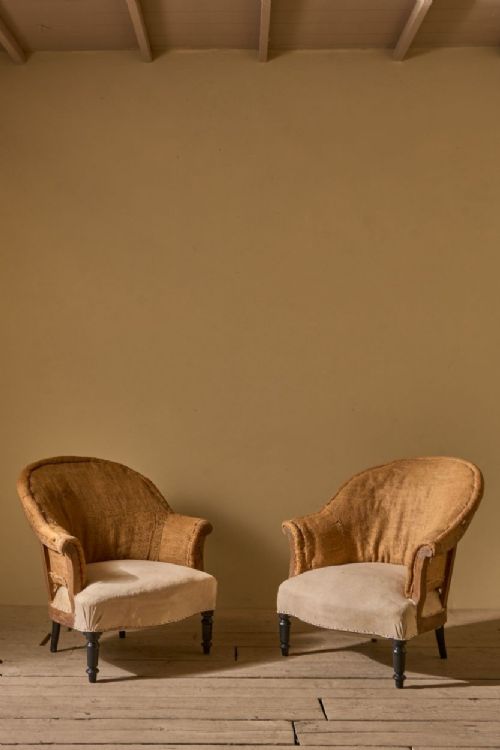
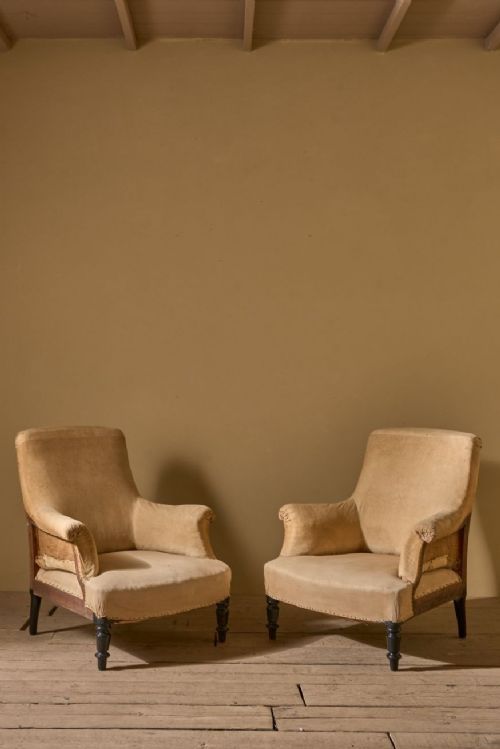
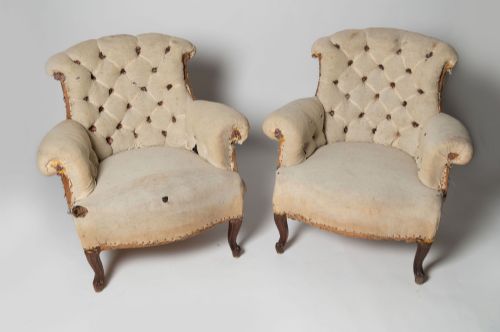


Pair French Boudoir Chairs
These pair french boudoir chairs bring intimate scale and decorative presence to a room, spanning styles from Napoleon III to French Empire.
Pair French Boudoir Chairs
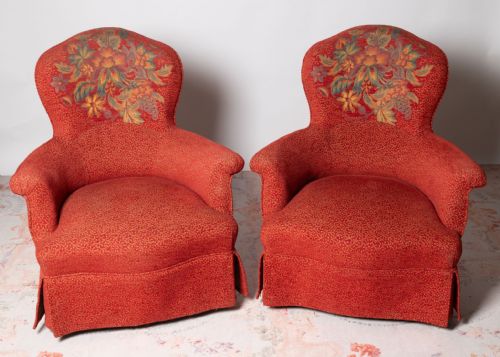
When you search for pair french boudoir chairs, you encounter seating designed for private chambers, drawing rooms and salons across the nineteenth and early twentieth centuries. The selection includes Napoleon III plain square back armchairs, tub chairs, and vintage examples dating from eighteen thirty up to nineteen thirty.
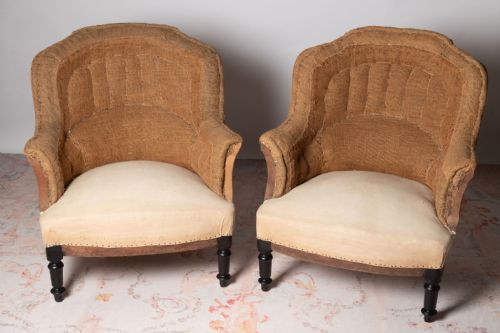
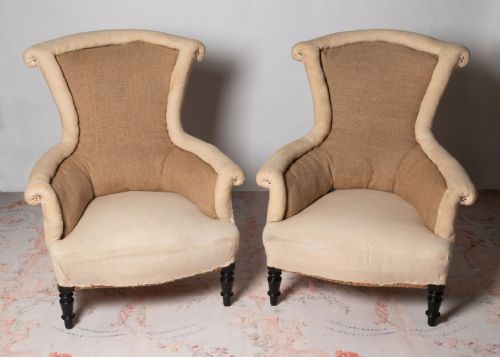
The most common forms on this page are nineteenth century armchairs and side chairs reflecting French Chateau, Napoleon III, French Empire, and French Rococo Revival styles. You also find pairs offered in bare hessian or calico specifically intended for re-upholstery.
Origins trace directly to French workshops using timber frames such as beech, fruitwood, and ebonised wood. These pieces span compact salon seating up to defined armchairs built for intimate spaces.
How they were made
Frames rely upon traditional timber construction using woods like beech, fruitwood, and ebonised wood to provide structural integrity for upholstered forms. Metal components appear internally or as decorative accents on specific nineteenth century chairs.
Upholstery relies upon traditional stuffing and foundation materials such as hessian, calico, cotton, and linen. Many examples survive in their original foundational webbing or await new textile application.
Materials recorded across these pairs include beech, fruitwood, ebonised wood, cotton, hessian, calico, linen, and metal.
What varies in quality
The distinction between standard and superior pieces rests in the integrity of the wooden frame and the precision of carved or painted details. Examples featuring gilt-wood, painted surfaces, or distinct stylistic traits such as Napoleon III or French Empire lines demonstrate higher design ambition.
Condition of the underlying structure dictates longevity, with tight joints and sound timber separating robust examples from those requiring extensive stabilization. Original finish preservation also plays a significant role in defining the character of each pair.
The Pair French Boudoir Chairs Glossary
- Napoleon III
- A nineteenth century French design style characterised by eclectic revivals of earlier court aesthetics, comfortable proportions, and often ebonised or gilt finishes. This period produced many of the tub chairs and square back armchairs found in this category.
- Boudoir chair
- A small, intimate armchair or side chair historically designed for a private dressing room or sitting room. Their compact dimensions distinguish them from larger drawing room armchairs.
- Hessian
- A coarse woven fabric made from jute or hemp fibres, used widely as a foundational upholstery layer in nineteenth century seating. Many antique pairs retain this raw material beneath later decorative textiles.
- French Empire
- A neoclassical design style emerging from early nineteenth century France, defined by classical restraint and formal symmetry. Pieces from this aesthetic display structured lines distinct from later rococo revival curves.
- Fruitwood
- A dense timber harvested from fruit-bearing trees such as pear, cherry, or apple, utilised by French cabinetmakers for structural frames and decorative turned elements.
Pair French Boudoir Chairs: Frequently Asked Questions
Where were pair french boudoir chairs used?
These chairs were designed primarily for private reception rooms, bedrooms, and intimate sitting spaces within nineteenth century French homes. Their smaller scale allowed them to fit comfortably into private chambers where large armchairs would overwhelm the room.
Over time, collectors have placed them in modern living rooms, dressing areas, and hallways as accent seating. Their decorative backs and compact frames make them versatile additions to contemporary interiors.
What does upholstery ready mean for antique chairs?
Chairs sold for upholstery retain their original wooden frames and internal webbing while lacking a final decorative outer fabric. This allows buyers to select their own textiles to match specific interior colour schemes.
Inspecting the underlying beech or fruitwood frame ensures the structure is sound before investing in new cotton, linen, or velvet coverings. Bare hessian surfaces reveal the authentic nineteenth century construction methods clearly.
How do I care for antique wood and fabric?
Preserving these chairs requires maintaining stable indoor humidity to protect nineteenth century timber frames from drying out or splitting. Gentle dusting keeps carved details and painted or gilt surfaces clean without abrasive chemicals.
For upholstered sections, regular light vacuuming with a soft brush attachment prevents dust accumulation in natural fibres like cotton and linen. Professional cleaning is recommended for delicate antique textiles.