


Pair Fireside Dogs
These pair fireside dogs bring character to a hearth, combining practical fire tending with decorative presence in cast iron, brass, and glazed ceramic.
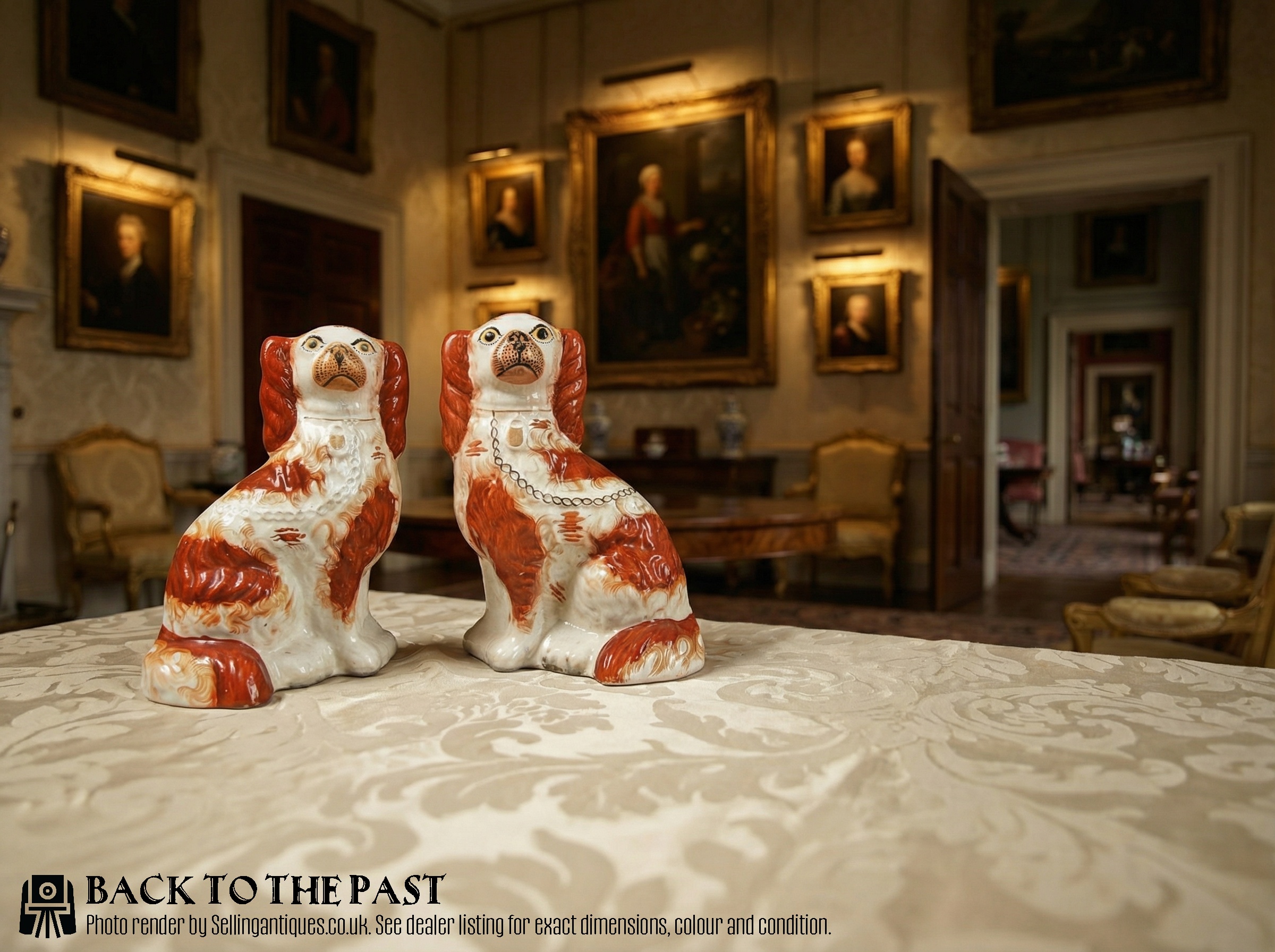
Pair Fireside Dogs
When you search for pair fireside dogs, you encounter a dual tradition encompassing both heavy metal andirons for supporting logs and ceramic figures designed to sit upon the mantelpiece or hearth. The ceramic form is most commonly represented on this page by Staffordshire spaniels and poodles originating from the nineteenth century. These spaniels, frequently referred to as comforter spaniels, sit in pairs facing one another with painted or gilt details.
Alongside ceramic figures, the listings include functional metal examples such as French brass and bronze chenets, cast iron fire dogs, and wrought iron tool rests. These metal pieces often date from the Georgian and Victorian eras, reflecting styles from French Rococo and Neoclassical to the Aesthetic Movement and Art Nouveau. Whether ceramic figures or heavy metal fire dogs, these pairs divide into hearth furniture and decorative pottery.
How they were made
Metal items rely on casting and forging techniques, employing brass, bronze, cast iron, and wrought iron to create durable andirons and tool rests. French examples often feature ormolu or gilt bronze cast in rococo or neoclassical forms, while British iron pieces utilise heavy casting to withstand daily hearth use.
Poodles appear alongside the more common spaniels, occasionally sporting separate front feet and gilt collars.
What varies in quality
In metal andirons and tool rests, quality emerges from the weight of the casting and the precision of the chased or forged ornamentation. Brass and bronze chenets demonstrate superior craftsmanship through sharp relief work and secure joins in adjustable fender forms.
The Pair Fireside Dogs Glossary
- Andirons
- Supports for logs in an open fireplace, typically made of iron, brass, or bronze and often featuring decorative front standards. They stand on the hearth to hold wood above the ash.
- Chenet
- The French term for a firedog or andiron, frequently associated with decorative brass, bronze, or ormolu forms from the Georgian and Victorian periods. These pieces often match fender surrounds.
- Earthenware
- Porous pottery fired at lower temperatures, commonly used for nineteenth-century Staffordshire figures. It requires a glaze to become impermeable.
- Ormolu
- Gilding technique using finely ground gold-mercury amalgam on bronze, seen on decorative French fireside pieces. It provides a rich metallic lustre.
- Staffordshire
- Pottery manufactured in the Staffordshire region of England, famously including symmetrical pairs of spaniels and poodles placed by hearths. These ceramic figures often feature painted highlights and gilt chains.
Pair Fireside Dogs: Frequently Asked Questions
What is the difference between fire dogs and Staffordshire dogs?
Fire dogs are metal supports used inside the fireplace to hold logs above the hearth.
Staffordshire dogs are ceramic figures placed on the mantelpiece or hearth for decoration rather than practical wood burning.
Were brass fire dogs used for burning wood?
Brass and bronze fire dogs served both an ornamental purpose and a functional role in supporting fuel within the hearth.
Heavier cast iron versions handled the weight of burning logs, while brass and ormolu pairs often graced formal fireplace surrounds.
How should I display pair fireside dogs on a hearth?
Ceramic spaniels and poodles traditionally sit facing one another at either end of the mantelpiece or directly on the hearth floor flanking the fireplace.
Metal andirons and tool rests occupy the hearth floor itself to frame the opening and hold fireside implements.