


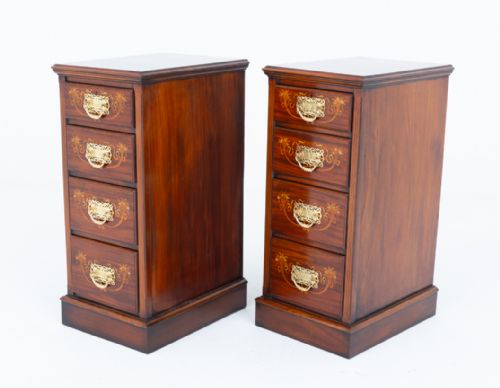


Pair Edwardian Chests
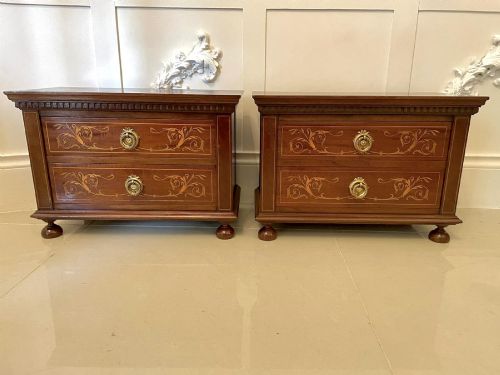
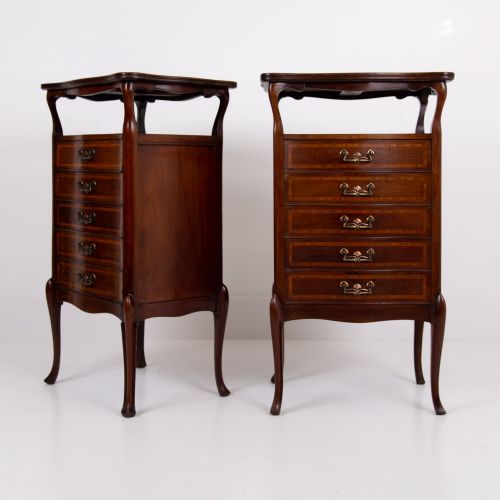
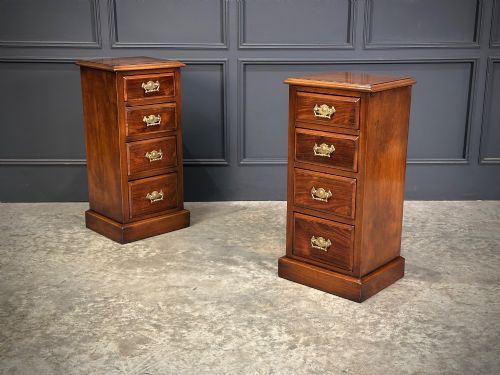
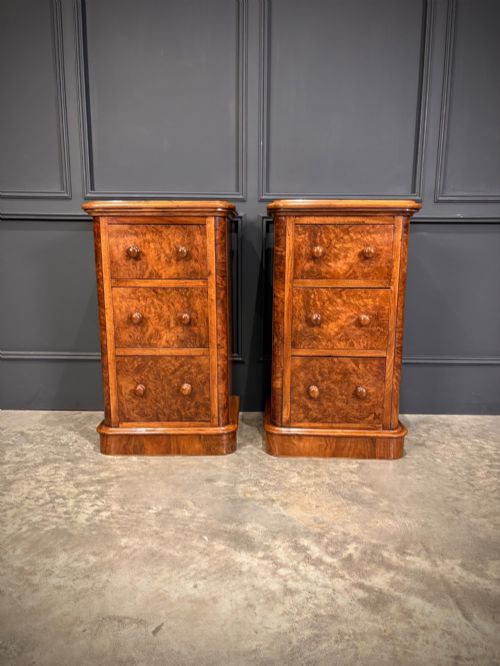
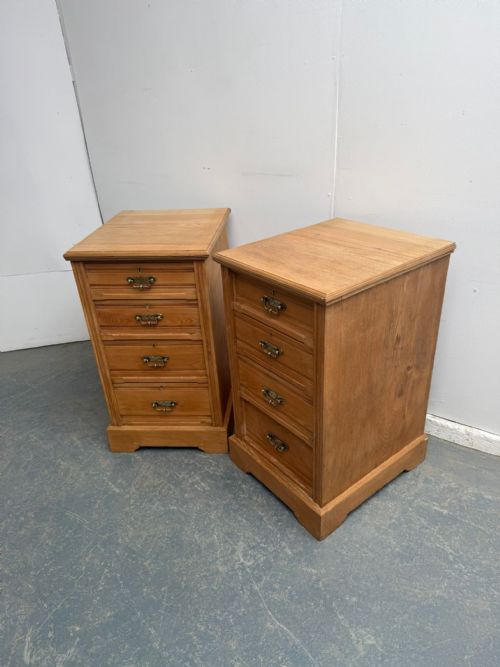
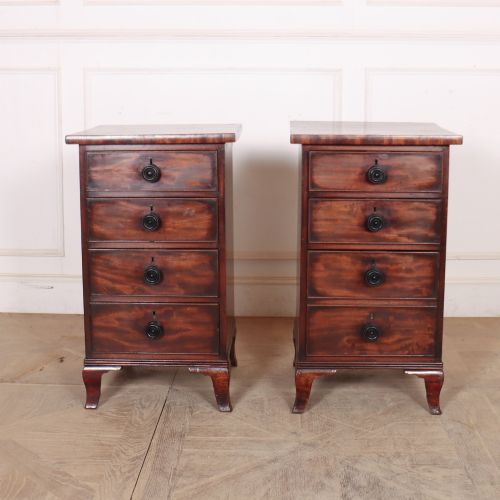
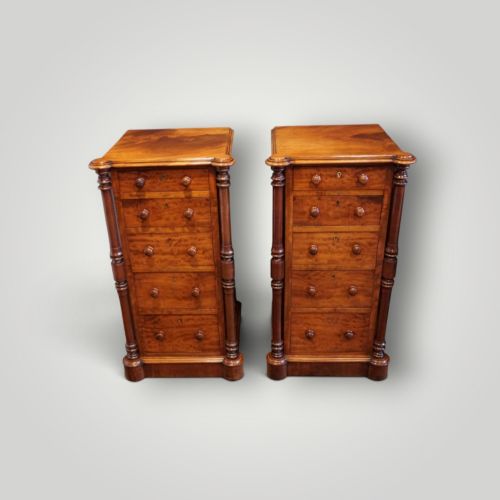
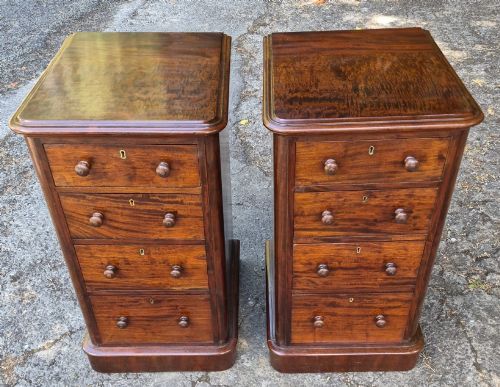
Pair edwardian chests provide matching bedside storage in mahogany, walnut, and satinwood, offering balance and period character to a bedroom.
Pair Edwardian Chests
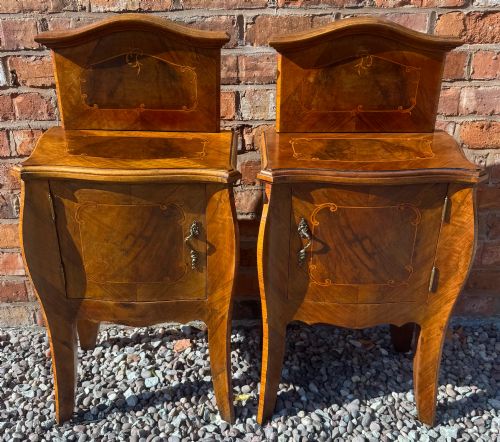
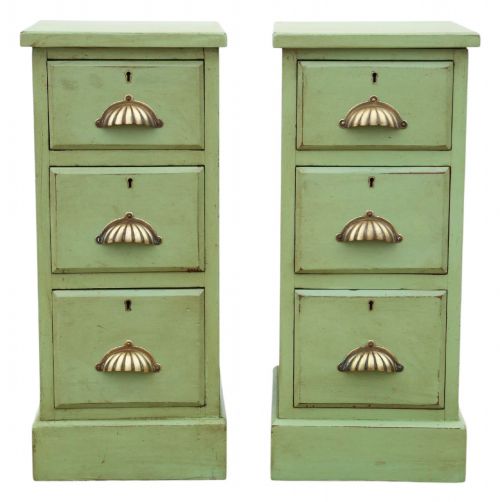
Pair edwardian chests primarily comprise matching sets of bedside tables, cabinets, and small drawer units designed to stand on either side of a bed. These domestic pieces emerge frequently in walnut and mahogany, reflecting the predominant timber choices of the early twentieth century.
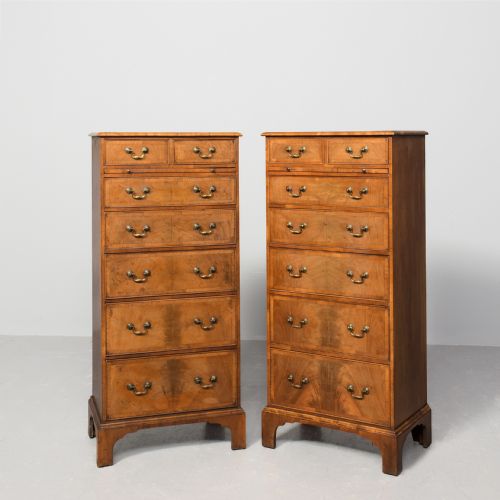
The selection also encompasses larger chest of drawers forms and specialised storage pieces such as cellerettes and collectors cabinets. Buyers encounter both compact nightstands and wider drawer configurations dating from around nineteen hundred to nineteen ten.
How they were made
Cabinet makers utilised solid hardwoods like mahogany, walnut, and ash alongside decorative veneers including burr walnut and parquetry. Selected timber sheets were applied to structural carcases to create figured grain patterns across drawer fronts and top surfaces.
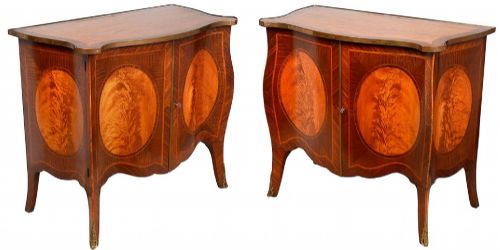
Inlay work such as satinwood stringing and marquetry ornamentation appears on finer examples, requiring precise hand-cutting of contrasting woods. Brass hardware, including drop handles and escutcheons, completed the construction of these storage pieces.
Some cabinets feature hidden compartments designed for storing nightcaps discreetly out of sight.
What varies in quality
The distinction between standard commercial output and superior craftsmanship lies in the selection of figured timbers and the crispness of inlay work. Examples bearing maker stamps or attribution to notable workshops demonstrate higher standards of internal drawer construction and timber matching.
Proportion and symmetry define the better items, particularly when matching grain across both halves of a dual set. Finer pieces maintain original hardware and undamaged veneer surfaces without excessive restoration.
Warings Liverpool·Edwards and Roberts·Whytock and Reid
The Pair Edwardian Chests Glossary
- Marquetry
- Decorative patterns formed by inserting small pieces of wood, shell, or ivory into a veneered surface. This technique creates pictorial or geometric designs on cabinet fronts.
- Parquetry
- Geometric mosaic woodwork used for flooring or cabinet surfaces. Small triangular or rectangular wood blocks form repeating patterns.
- Cellerette
- A lockable cabinet or chest designed for holding bottles of wine or spirits. These storage pieces often feature fitted interiors.
- Serpentine
- A furniture front or top shaped with a convex centre flanked by concave curves. This undulating line adds movement to case pieces.
Pair Edwardian Chests: Frequently Asked Questions
How do I match bedside chests?
Matching a pair involves looking at timber species, height dimensions, and leg styles. Slight variations in grain pattern are normal for natural wood furniture from this era.
Positioning the pieces symmetrically helps unify bedroom decor even if minor differences in handle design exist between individual cabinets.
Are these chests suitable for modern beds?
Many period bedside units accommodate standard mattress heights, though contemporary beds often sit higher than early twentieth century designs. Checking surface dimensions ensures proper proportion against modern bedroom furniture.
Compact drawer formats provide practical storage for small reading lamps and bedside essentials without overwhelming limited floor space.
How do I care for walnut veneer?
Polishing walnut furniture requires silicone free wax to preserve the aged timber surface and prevent moisture damage. Direct sunlight causes fading on antique veneers over extended periods.
Placing felt pads beneath lamps or decorative items protects the top surface from scratches and ring marks.
What is the difference between Edwardian and Victorian chests?
Edwardian furniture generally exhibits lighter proportions, simpler lines, and brighter wood tones compared to earlier nineteenth century production. Inlay and satinwood accents became more widespread during the later period.
Victorian pieces tend to feature heavier timbers like dark mahogany and more robust structural forms with minimal surface ornamentation.