


Pair Decorative Pottery Vases
These pair decorative pottery vases bring balanced symmetry and rich surface colour to a room, spanning Victorian works to Art Deco designs.
Pair Decorative Pottery Vases
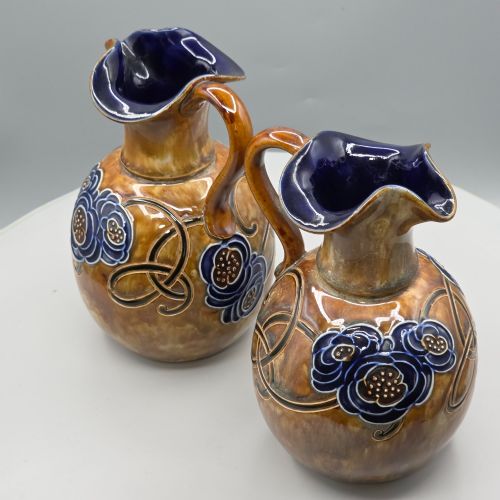
Forms range from baluster shapes and moon flasks to ewers and table lamps, utilising earthenware, porcelain, and stoneware. These objects function as twin display pieces designed to anchor a mantelpiece or sideboard.
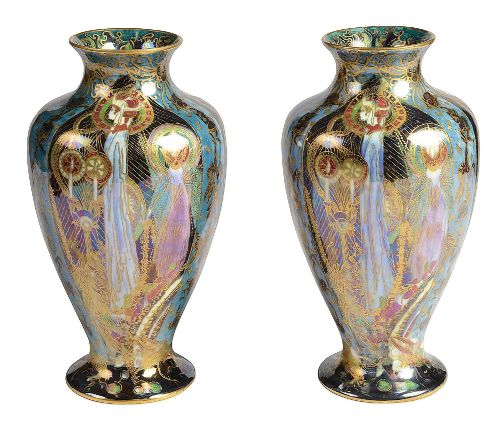
Origins stretch from English potteries to French faience workshops, German kilns, and Japanese Meiji period studios. Each pair reflects the distinct decorative ambitions of its specific decade, from Art Nouveau curves to intricate hand-painted landscape panels.
How they were made
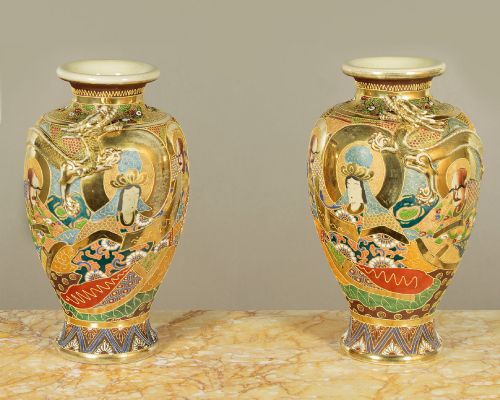
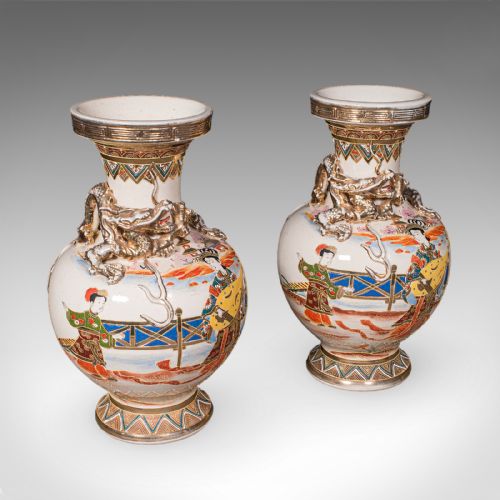
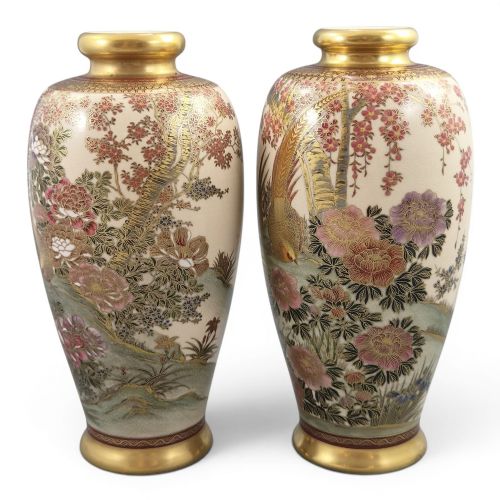
Potters shaped these vessels using earthenware, stoneware, and porcelain bodies, applying glazes, enamels, and sometimes gold leaf to the surfaces. Japanese Satsuma production relied heavily on crackle-glaze ceramic bodies painted with detailed scenes and raised moriage decoration.
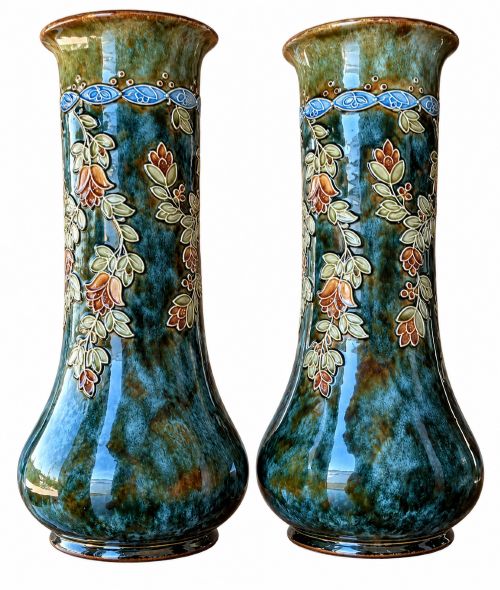
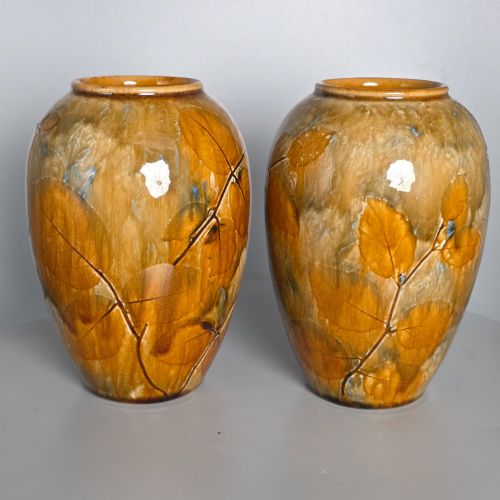
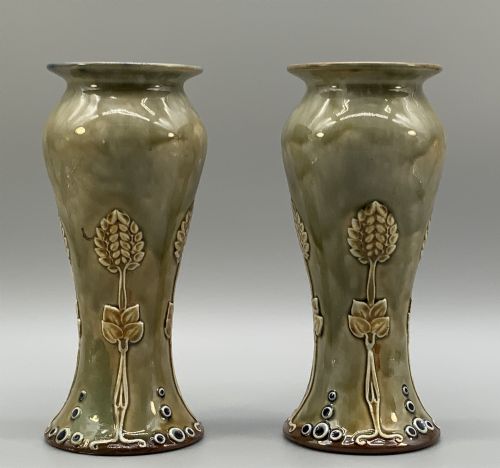
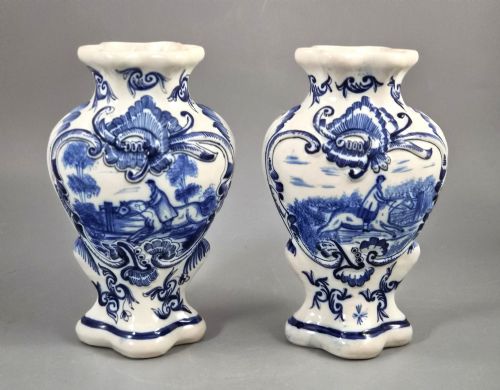
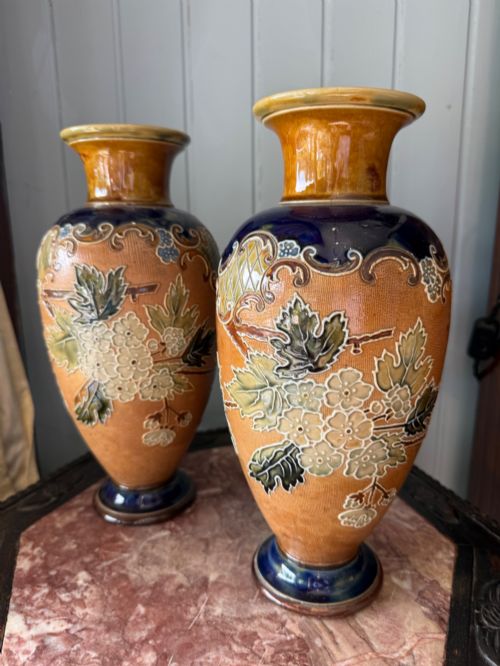
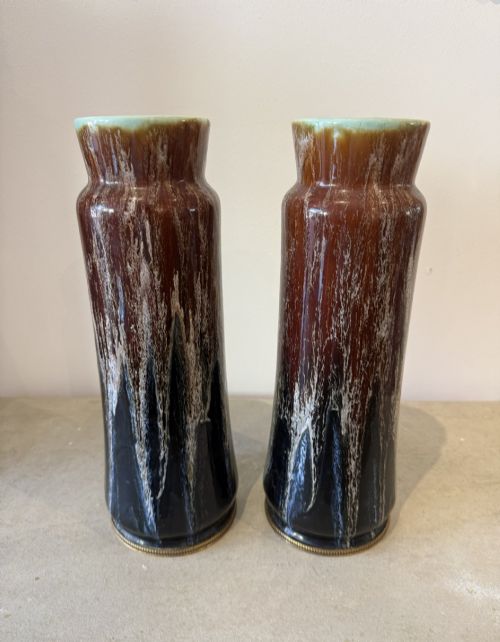
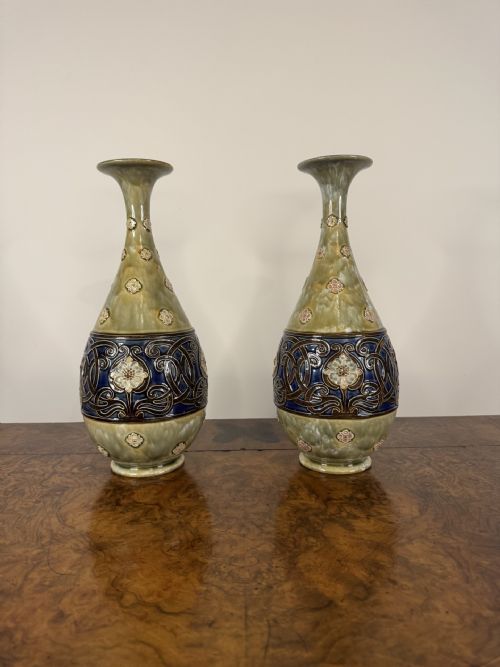
British pieces from Doulton Lambeth and similar potteries utilised salt-glazed stoneware and specialised earthenware, often enhanced with autumnal leaf patterns or stylized Art Nouveau incisions. European works incorporated faience techniques and cobalt blue porcelain glazes to achieve durable, colourful finishes.
Decoration involved a combination of hand-painting, transfer printing, and relief moulding, depending on whether the workshop prioritized traditional Japanese pictorial scenes or Western industrial ceramic arts.
Some Satsuma vases feature secret miniature deities hiding behind gilded temple doors.
What varies in quality
Quality separates ordinary production runs from exhibition pieces through the precision of the hand-painted detailing and the richness of the gilding. Works by named artists or major Kyoto studios exhibit superior control over complex pictorial panels and raised relief work.
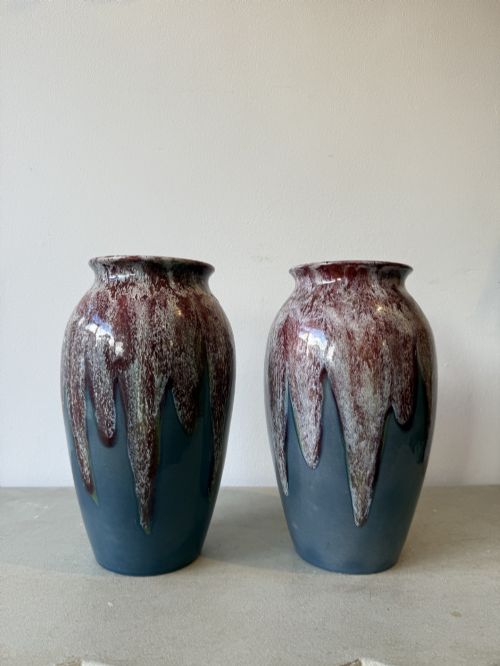
The crispness of the moulded or incised lines in stoneware and earthenware dictates the upper tier of the range, where crisp botanical or abstract motifs remain sharp. Lesser examples show blurred transfers or heavier, less refined glaze pooling that obscures the underlying form.
Royal Doulton·Fourmaintraux Courquin·Boch Freres·Mettlach Pottery·Carlton Ware
The Pair Decorative Pottery Vases Glossary
- Baluster
- A tall ceramic form shaped with a rounded lower body that tapers upward to a narrow neck. This shape provides a stable base for detailed surface painting and relief decoration.
- Moriage
- A Japanese ceramic technique using slip trailed from a pastry-bag-like tool to build up raised decorative dots and lines. It creates a heavily textured surface often highlighted with gold.
- Stoneware
- A robust, vitrified ceramic fired at high temperatures until semi-vitreous and impermeable to liquids. It accepts salt glazes and deep incised carving exceptionally well.
- Faience
- Tin-glazed earthenware produced in European workshops, offering a fine white opaque surface suitable for painted ornamentation. It forms the basis of many decorative continental jugs and ewers.
- Moon Flask
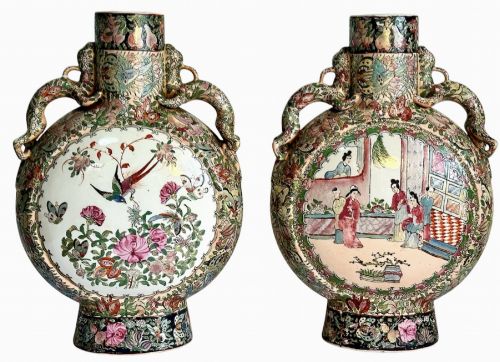
- A flattened circular ceramic vessel supported by a small foot and fitted with a short neck and side handles. This traditional form offers two large circular panels ideal for landscape or floral painting.
Pair Decorative Pottery Vases: Frequently Asked Questions
How do I style pair decorative pottery vases?
Place matching vessels symmetrically on a mantelpiece, sideboard, or large table to anchor the visual weight of the space.
Allow enough surrounding room for the contrasting colours and glazed finishes to catch the light without competing with nearby objects.
Were these vases used for flowers?
Many examples served purely as decorative ornaments rather than functional containers for water and stems.
Heavily gilt Satsuma pieces and intricate stoneware displays were designed to showcase ceramic artistry in formal drawing rooms.
How do I tell Japanese Satsuma from European pottery?
Examine the body for a characteristic fine crackle glaze combined with dense hand-painted enamel figures and heavy gilding.
European wares typically rely on salt-glazed stoneware, tin-glazed faience, or transfer-printed motifs rather than traditional Japanese pictorial panels.
What is the difference between stoneware and earthenware?
Stoneware is fired at higher temperatures until it becomes vitrified and non-porous, making it exceptionally durable for heavy vessels.
Earthenware is fired at lower heats, yielding a more porous body that requires a complete surface glaze to hold liquid.