
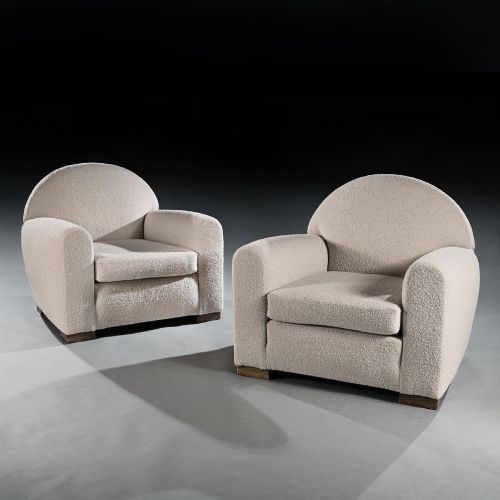
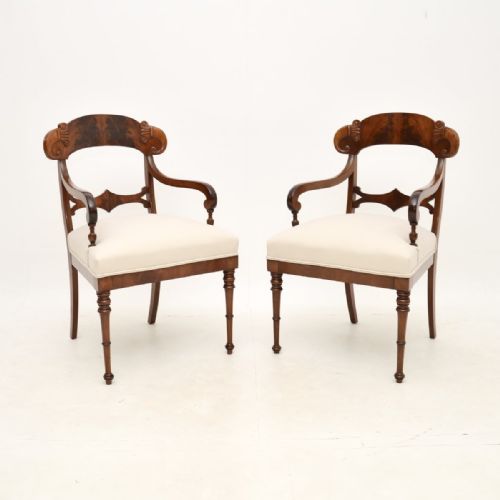
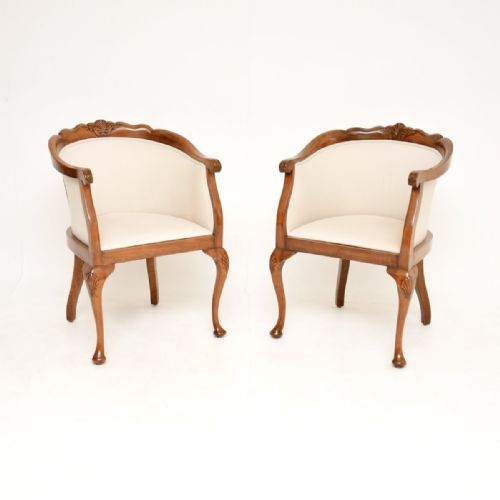


Pair Curved Back Armchairs
These pair curved back armchairs bring distinct period character and enveloping seating to a room.
Pair Curved Back Armchairs
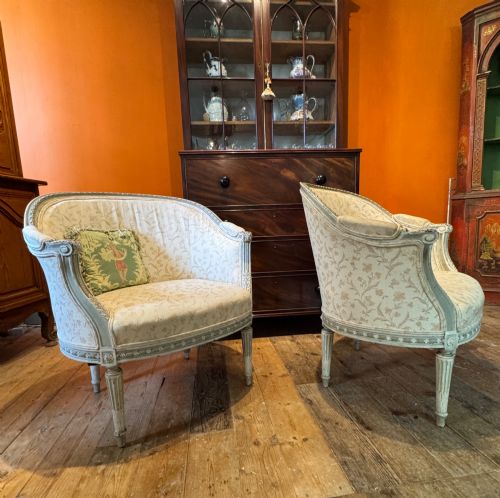
When searching for pair curved back armchairs, you encounter matching seating spanning the Regency period, the nineteenth century, and the twentieth century. These pieces encompass various forms including tub chairs, horseshoe-back armchairs, club chairs, and corner chairs.
The selection ranges from French Napoleon III and Louis XVI styles to Art Deco designs, Chinese hardwood and pickled elm pieces, and English Regency or Edwardian works. You are most likely to meet French tub chairs, Art Deco lounge seats, or Chinese horseshoe-back timber armchairs on this page.
How they were made
Makers utilised solid timbers such as mahogany, walnut, oak, teak, elm, and assorted hardwoods to construct the supportive frames of these chairs. Brass inlay, original paint finishes, and cane seating further distinguish specific regional and stylistic traditions.
Upholstery techniques involve traditional stuffing finished in fabric, calico, leather, or high buttoned details on curved backs. Structural joinery and steam-bending achieved the characteristic rounded silhouettes seen across the centuries.
Listings feature periods ranging from the Regency era and nineteenth century through to Edwardian, nineteen-thirties, and nineteen-forties modern designs.
What varies in quality
The standard of design execution and timber selection dictates the distinction between standard examples and exceptional works. Master craftsmanship shows in the fluid sweep of a curved wooden back and the precision of brass inlay or carved details.
Integrity of the frame and the authenticity of surface finishes, whether original paint, polished mahogany, or aged leather, determine the enduring character of each pair.
Harry and Lou Epstein·E.W. Godwin
The Pair Curved Back Armchairs Glossary
- Tub chair
- An armchair featuring a continuous curved back and arms that form a deep, enclosing bucket shape. This form offers a compact footprint while maintaining supportive comfort.
- Horseshoe-back armchair
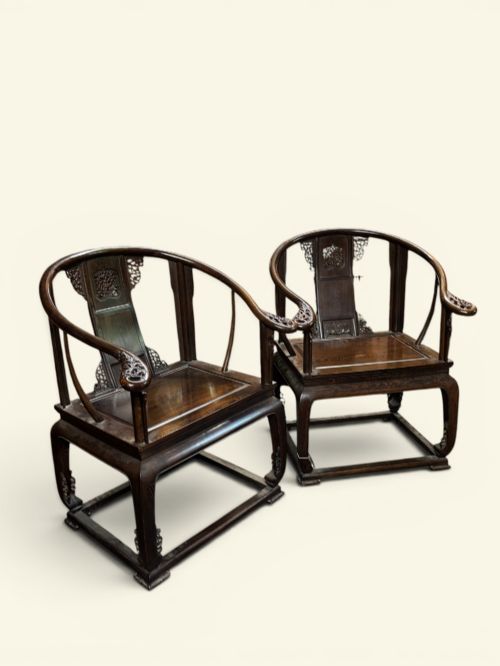
- A traditional seating form characterised by a semicircular crest rail sweeping around the upper frame in a continuous curve. Originating in Chinese craftsmanship, these chairs utilise rigid timbers like elm and hardwood.
- Bergere
- An enclosed upholstered armchair with wooden framing and cane or upholstered sides. Originating in France, this style typically incorporates a loose seat cushion.
- Club chair
- A deep, comfortable armchair traditionally upholstered in leather. Originating in France during the twentieth century, these seats prioritise relaxed lounging.
- Regency
- A British design period spanning the early nineteenth century defined by neoclassical influences and clean architectural lines. Pieces from this era often feature classical motifs and dark polished timbers.
Pair Curved Back Armchairs: Frequently Asked Questions
How do I place two matching armchairs?
These matching chairs work effectively when positioned symmetrically opposite a fireplace or flanking a central sofa to create a balanced seating arrangement. They also anchor empty corners or dialogue well with a low coffee table.
Because curved back profiles soften room layouts, these chairs suit conversational groupings where guests face one another rather than a wall or screen.
What defines an Art Deco curved chair?
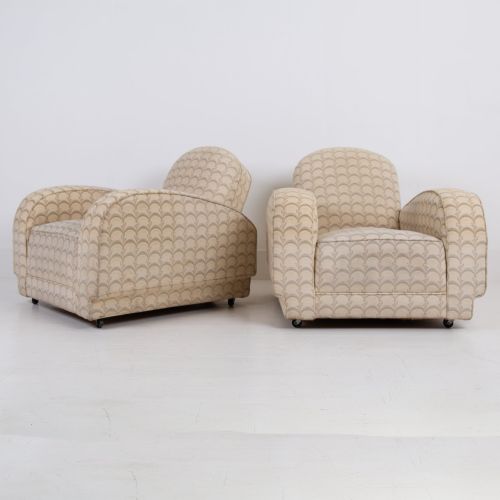
Art Deco seating from the nineteen-thirties relies on streamlined curves, rounded volumes, and polished walnut, teak, or fabric surfaces. Pieces often feature bold architectural silhouettes like cloud forms.
These designs prioritise visual impact and ergonomic comfort, reflecting the modern aesthetic of the interwar period.
How do I identify a horseshoe-back chair?
A horseshoe-back chair is instantly recognised by its continuous semicircular top rail that sweeps downward to form the armrests. This shape derives from classical Chinese joinery traditions.
Constructed from elm, hardwood, or inlaid with brass, these chairs combine structural rigidity with organic curvature.
What is a Napoleon III tub chair?
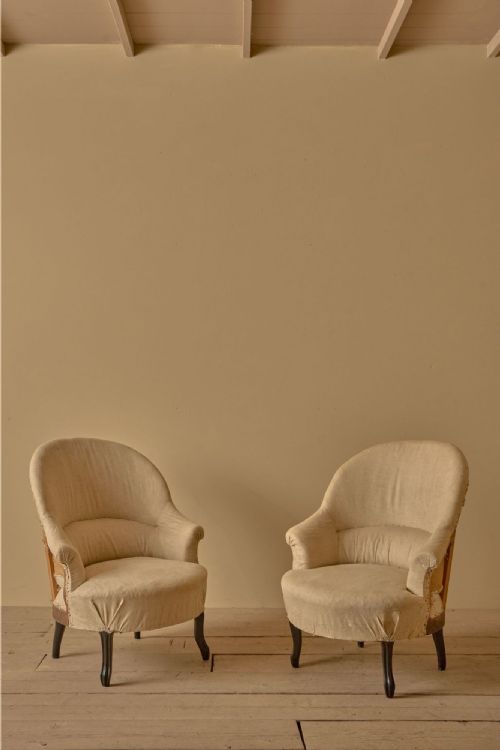
Napoleon III tub chairs date from nineteenth-century France and feature fully upholstered curved backs designed for enclosed comfort. They frequently showcase buttoned upholstery and turned wooden legs.
These compact seats bring decorative presence and plush support to drawing rooms or bedrooms.