
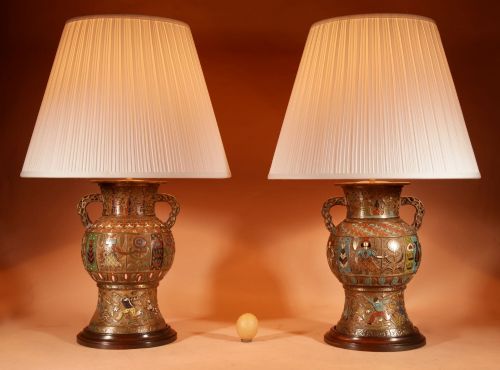
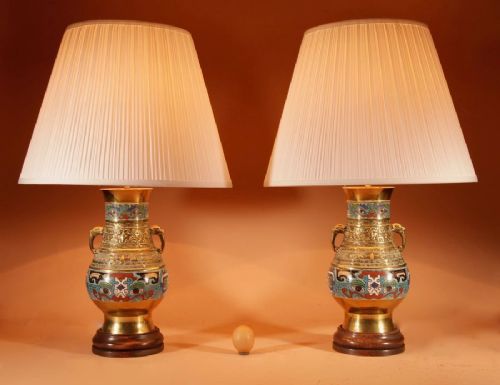
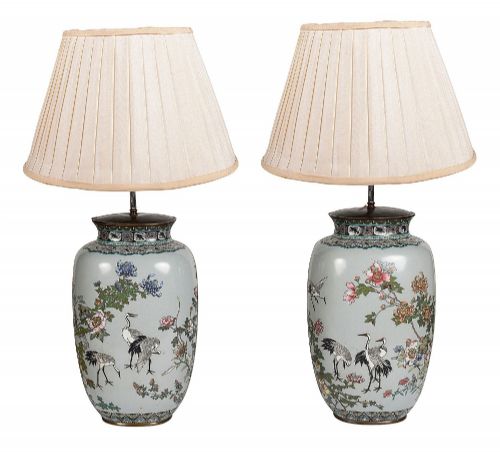


Pair Cloisonne Vase Lamps
These pair cloisonne vase lamps bring vibrant enamel work and patinated metal into a room, offering both decorative presence and functional lighting.
Pair Cloisonne Vase Lamps
When you search for pair cloisonne vase lamps, you are looking at symmetrical sets of vessels that have been converted from decorative vases into functional lighting. These pieces combine traditional metalwork bodies with electrical fittings, originating primarily from the nineteenth and early twentieth centuries.
The versions most commonly met on this page span the late nineteenth century and the early twentieth century, encompassing both Chinese and Japanese production. You will encounter forms styled in the Meiji period tradition, Chinese Export designs, and Qing Dynasty aesthetics.
These lamps frequently arrive mounted on materials such as wood, brass, or gilt bronze, combining traditional vase bodies with fabric shades. The underlying vessels utilise enamel techniques alongside bronze, copper, and brass construction.
How they were made
The makers of these lamps built the bodies from metals such as bronze, brass, or copper, applying wire cells to form intricate surface patterns. Artisans then filled these compartments with coloured enamel pastes before firing the vessels at high temperatures to achieve a hard, glossy finish.
Many of these pieces incorporate champlevé or cloisonné enamel work, where metal wires or carved troughs contain the vitreous colours. Subsequent mounting in ormolu, gilt bronze, or wood provided secure bases suitable for later conversion into table lamps.
Some vases spent decades holding dried flowers before an electrician got hold of them.
What varies in quality
The standard of these lamps rests upon the precision of the wirework and the depth of the enamel surface. Finer examples display meticulous cell alignment and rich, unblemished colour fields across both matching vessels.
Mounting and metalwork further distinguish the range, with superior pieces featuring substantial gilt bronze, ormolu, or heavy brass bases. The integration of the vase body with the lamp fittings demonstrates the care taken during conversion.
The Pair Cloisonne Vase Lamps Glossary
- Cloisonné enamel
- A metalwork technique where flat wires are soldered to a base to form cells that hold enamel paste. This method creates detailed patterns across the surface of the vase before firing.
- Champlevé
- A technique where troughs or cells are carved directly into a thick metal plate and filled with enamel. It differs from cloisonné by relying on excavated metal rather than applied wire.
- Meiji period
- A historical Japanese era spanning from 1868 to 1912 noted for detailed metalwork and enamel production. Pieces from this time often exhibit distinct stylistic refinement.
- Ormolu
- Finely ground high-carat gold applied to a bronze base using a mercury amalgamation process. This treatment imparts a rich golden sheen to mounts and fittings.
- Chinese Export
- Goods manufactured in China specifically for Western markets during the Qing Dynasty and later. These items often blend traditional Eastern motifs with European functional forms.
Pair Cloisonne Vase Lamps: Frequently Asked Questions
How do I date pair cloisonne vase lamps?
Dating these lamps relies on examining the metal composition, the style of the enamel work, and the nature of any secondary mounts. Nineteenth-century examples often feature heavier bronze or brass components and distinct stylistic markers from the Meiji period or Qing Dynasty.
Later pieces from the early twentieth century may show different wiring methods and slightly altered enamel palettes. Comparing the symmetry of the pair helps determine if the conversion into lamps happened concurrently.
Were these always lamps?
Most of these pieces started life as decorative vases before being converted into lamps at a later date. Artisans adapted the original vessels by adding electrical components and mounting them on wooden or metal bases.
This conversion process preserves the historical enamel work while adapting the objects for modern interior lighting. The underlying vases typically originate from the nineteenth or early twentieth centuries.
How do I clean cloisonne lamp bodies?
Cleaning requires a soft, dry cloth to remove dust from the enamel and metal surfaces without causing abrasion. Avoid harsh chemical cleaners or abrasive pads that can damage the delicate wire cells and glass paste.
For the metal mounts, gentle dusting is generally sufficient to maintain their patinated appearance. Care must be taken around the electrical components to prevent moisture from entering the fitting.
How do I style pair cloisonne vase lamps?
These lamps function effectively on sideboards, desks, or large console tables where their symmetrical forms can be appreciated. Selecting fabric shades that complement the colours within the enamel helps integrate them into a room scheme.
Their substantial presence allows them to anchor a seating area or add a focal point to a traditional interior. The combination of patinated metal and vibrant enamel provides both ambient lighting and textural contrast.