




Pair Chinese Seats
Pair chinese seats encompass everything from elm yokeback armchairs to porcelain garden barrels, offering matched symmetry for formal and casual spaces alike.
Pair Chinese Seats
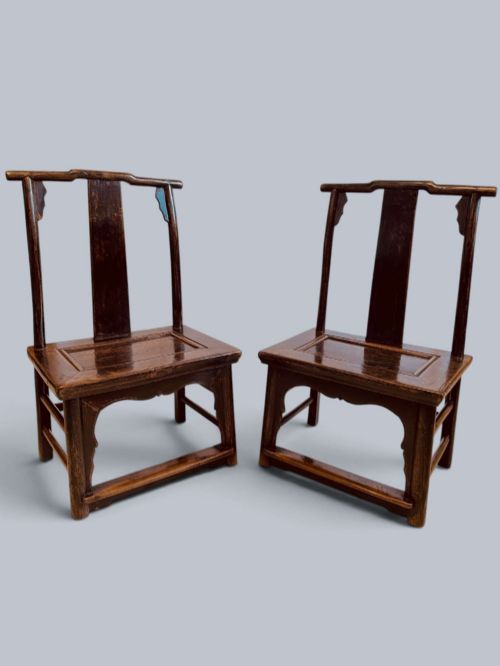
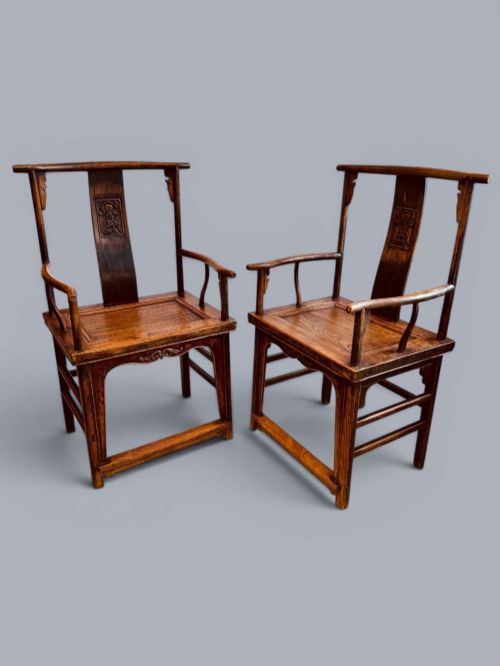
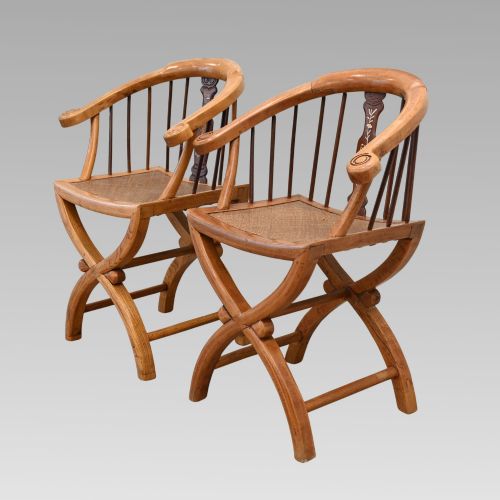
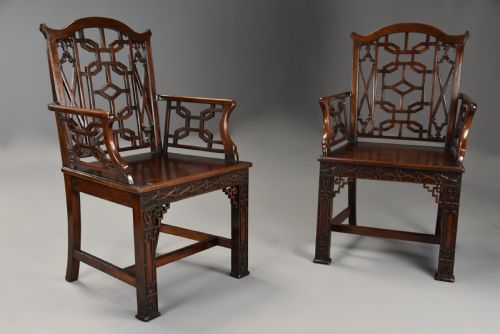
When you search for pair chinese seats, you encounter a varied selection of matching chairs and stools spanning the eighteenth, nineteenth, and early twentieth centuries. These forms include traditional armchairs, folding seats, throne chairs, and ceramic garden stools.
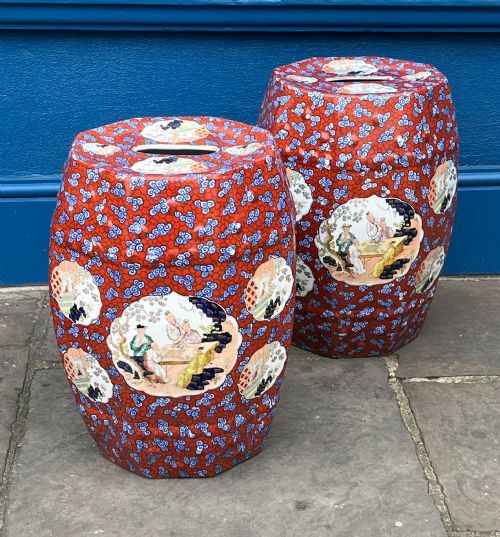
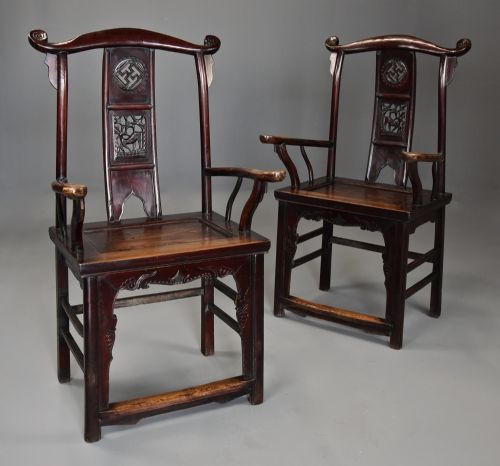
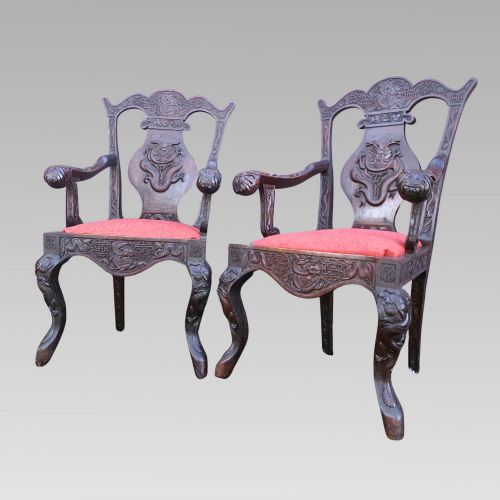
The assortment on this page reflects diverse aesthetic traditions, ranging from native Qing Dynasty hardwood furniture to British Chinese Chippendale designs and export pieces. Elm and hongmu feature heavily among the wooden frames, alongside ironstone and porcelain in barrel forms.
Buyers frequently find armchairs with horseshoe backs or yokeback profiles, alongside specialised seating such as children's chairs and hall furniture. Each pair provides the balanced visual weight required for interior arrangement.
Materials and Construction
Craftsmen utilised dense hardwoods such as hongmu, alongside resilient elm, teak, fruitwood, and mahogany for structural frames. Many examples incorporate cane panels for seat bases, while others rely on solid wooden planks or elaborate carved joinery.
Surface treatments vary from clear finishes highlighting natural wood grain to applications of red lacquer, paint, and intricate bone or brass inlay. Ceramic and ironstone garden seats employ moulded clay decorated with famille rose or rose medallion enamel palettes.
Pair Chinese Seats Retail Price Guide 2026
Typical asking prices for pair chinese seats among the pieces listed under this phrase on Sellingantiques today, from the lower quarter to the upper quarter. They describe what is for sale here now, not the wider market.
Assessing Quality and Execution
Quality rests primarily on the depth and crispness of carved ornamentation, particularly on dragon motifs and structural joints. Superior examples exhibit clean joinery that maintains structural integrity without relying on modern fasteners.
The preservation of original surface elements, such as red lacquer, bone inlay, and hand-painted enamel on porcelain barrels, distinguishes finer iterations. Matching pairs maintain consistent timber grain and symmetrical decorative details across both pieces.
The Pair Chinese Seats Glossary
- Hongmu
- A dense, dark tropical hardwood traditionally utilised in high-status Chinese furniture. It translates literally to red wood and provides exceptional durability.
- Yokeback
- An armchair style featuring a curved top rail resembling a traditional yoke. This design supports the sitter's upper back and shoulders.
- Famille Rose
- A prominent palette of opaque enamels dominated by pink or rose colours, used extensively on nineteenth-century porcelain garden seats. The style was introduced during the Qing Dynasty.
- Horseshoe Chair
- A seating form characterised by a continuous curved back and arm rail that sweeps downward in a single horseshoe-shaped arc. It often incorporates an internal splat for lumbar support.
- Clobbered
- A ceramic term describing older underglaze blue or white porcelain that has been overglazed and refired with coloured enamels in a different workshop. This practice alters the original decorative scheme.
Pair Chinese Seats: Frequently Asked Questions
How do I use these chairs at home?
Matched pairs function effectively as flanking elements in a living room, drawing room, or hallway. They provide balanced seating arrangements that anchor a room's layout.
Ceramic garden seats also transition easily indoors as accent stools, side tables, or plant stands, adding colour and texture to interior spaces.
What is the difference between elm and hongmu?
Elm is a domestic timber known for its fibrous grain and flexibility, frequently used in regional Chinese seating with warm red lacquer finishes. It yields a lighter, more rustic appearance.
Hongmu is a heavy, dense hardwood favoured for formal imperial and scholarly furniture. It carries a darker natural tone and permits sharper, more intricate carved detailing.
How do I care for lacquered wood?
Lacquered surfaces require protection from direct sunlight and extreme humidity fluctuations, which can cause the finish to crack or lift. Dust gently with a dry, soft cloth.
Avoid chemical polishes and abrasive cleaners, as these degrade the historic lacquer and underlying timber over time.
How do I distinguish porcelain garden seats?
Porcelain garden seats from the nineteenth century often feature barrel shapes pierced with coin or cash motifs and decorated with famille rose or rose medallion enamels. They rely on heavy ceramic bodies with glazed finishes.
In contrast, stone or ironstone garden seats present different weight distributions and fired textures, while wooden stools utilise joined timber construction.