
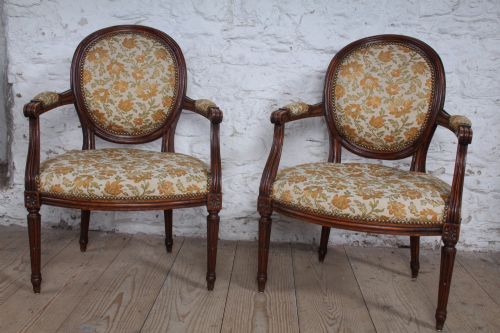
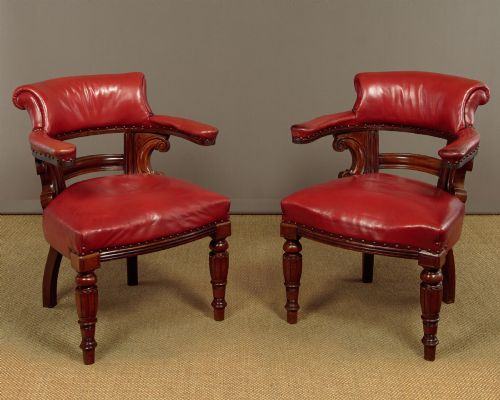
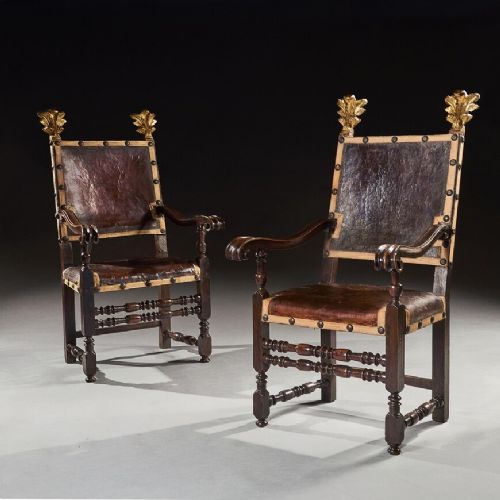
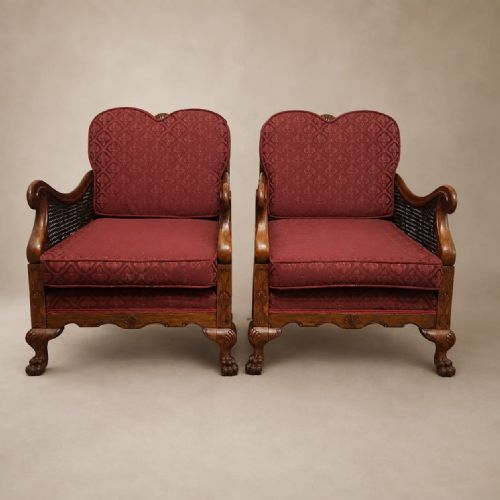
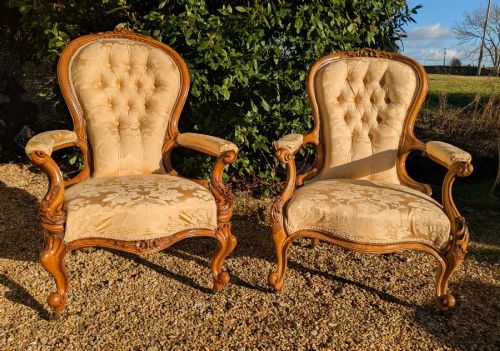
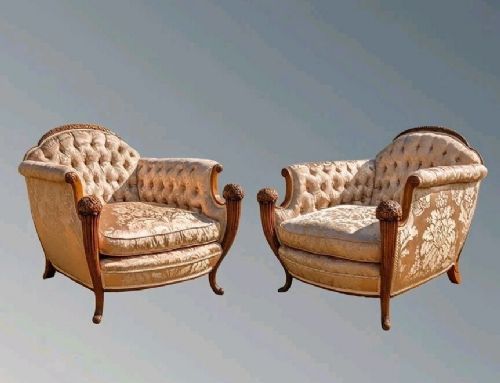
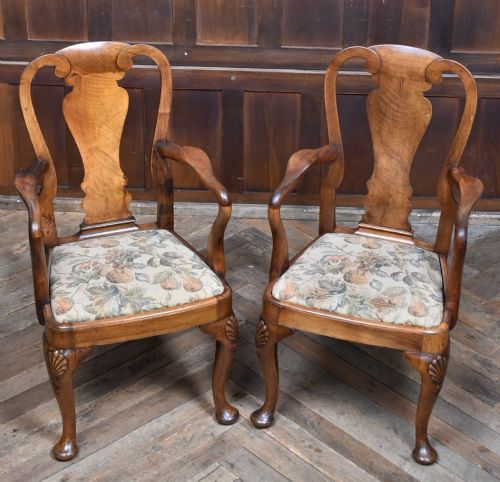
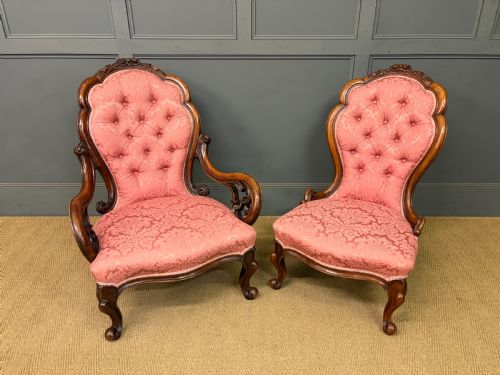
Pair Carved Walnut Armchairs
Pair carved walnut armchairs bring together rich timber frames and classic seating forms across various historic periods.
Pair Carved Walnut Armchairs
When searching for pair carved walnut armchairs, buyers encounter seating designed for drawing rooms, libraries and salons, originating from Victorian workshops and continental makers.
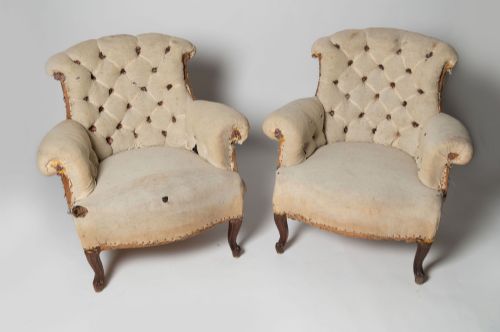
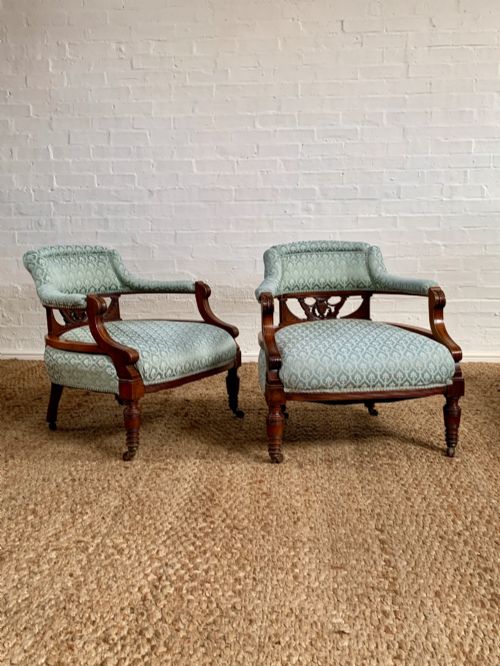
The available selection spans formats from tub chairs and bergere easy chairs to high-backed library seats and salon suites.
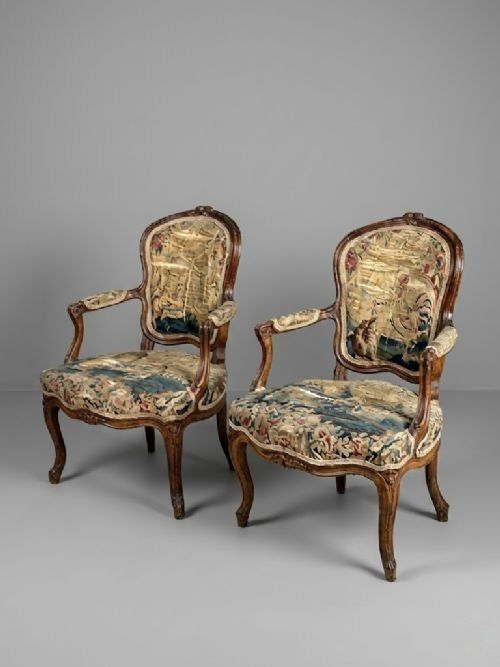
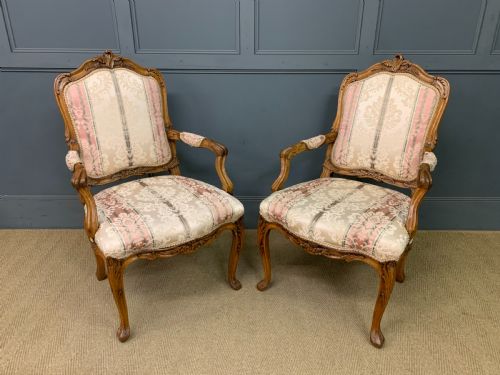
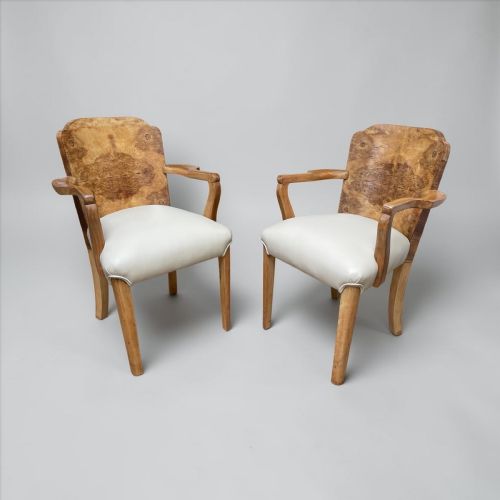
Nineteenth-century Victorian examples and French Louis XV style revivals dominate the choices, alongside early twentieth-century interpretations.
Materials and Construction
The timber framework relies on walnut, chosen for its grain pattern and responsiveness to detailed hand-carving.
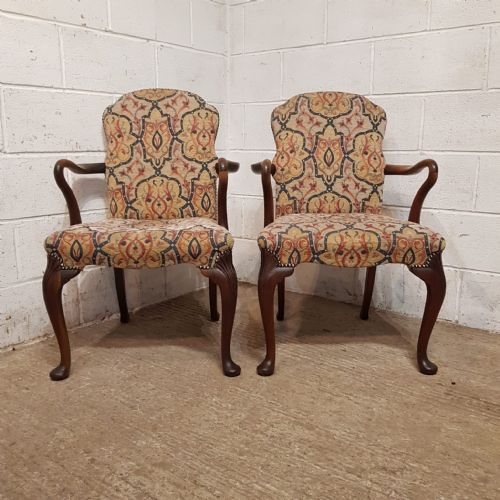
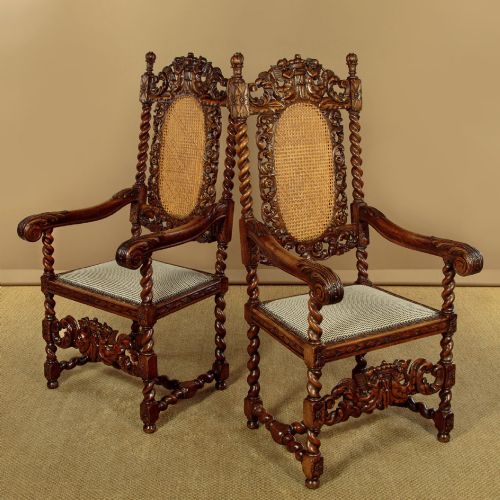
Upholstery methods incorporate traditional horsehair stuffing, springs and webbing, finished with textiles such as leather, velvet, silk, needlepoint and damask, while other versions utilise split cane panels.
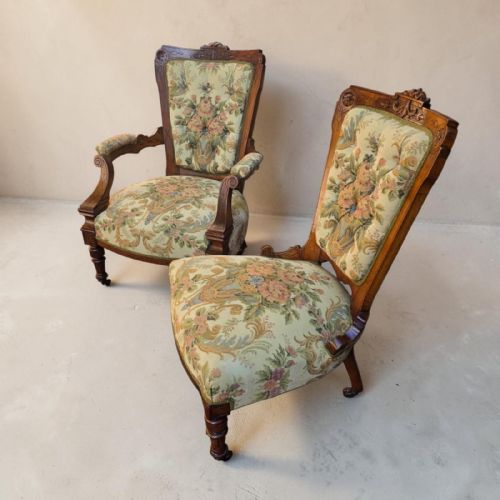
Several sets include matching his-and-hers configurations for Victorian parlours.
Defining Quality
The distinction between tiers rests upon the crispness of the timber carving and the architectural balance of the frame.
Superior examples demonstrate meticulous joinery, balanced proportions and original textiles or high-grade period-appropriate replacement covers.
The Pair Carved Walnut Armchairs Glossary
- Bergere
- An enclosed upholstered armchair with wooden framing, frequently incorporating cane panels on the back and sides.
- Fauteuil
- An open-armed upholstered armchair originating in France, characterised by exposed wooden arm supports and upholstered back and seat.
- Spoonback
- A chair design featuring an oval, concave backrest shaped to mimic the contour of a spoon, common in the Victorian period.
- Parcel-Gilt
- A decoration technique where selected portions of a carved wooden surface receive a thin application of gold leaf.
- Needlepoint
- A type of counted thread embroidery executed on canvas mesh, frequently utilised for historic seat and backrest covers.
Pair Carved Walnut Armchairs: Frequently Asked Questions
How do I identify French styles?
French revival models typically display curved cabriole legs, floral carvings and asymmetry inspired by Louis XV and Rococo movements.
These characteristics separate continental seating from stricter English Victorian or revival iterations.
What is a bergere chair?
Bergere chairs feature solid wooden frames enclosing upholstered side panels and backrests, occasionally built with woven cane.
They offer a deeper, enclosed seating experience compared to open-armed salon models.
Are leather seats period correct?
Leather upholstery appears frequently on library, desk and nineteenth-century English armchairs designed for heavy daily use.
It provides durability alongside the softer silk, velvet and tapestry covers found on drawing room seating.
How are nineteenth-century pieces dated?
Dating relies on stylistic markers, timber finishes and structural assembly techniques associated with Victorian and continental workshops.
Reference points include the revival styles popular between eighteen-eighty and nineteen-twenty.