

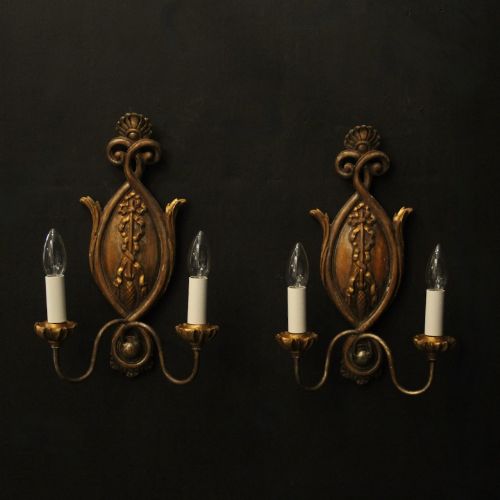
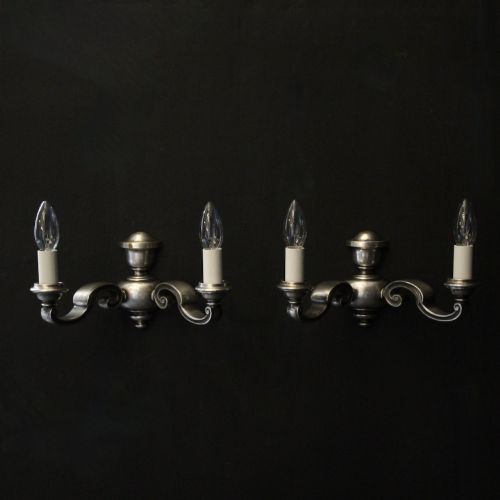
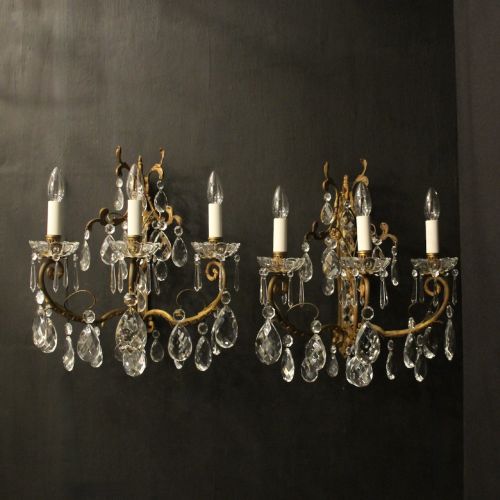
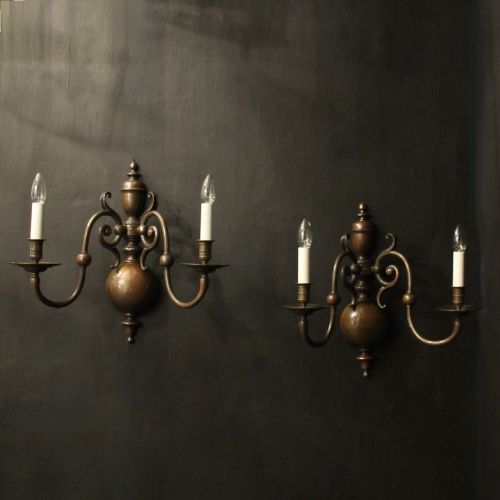
Pair Candle Wall Lights
Pair candle wall lights bring warmth and symmetry to a room, illuminating spaces with period metalwork and candleholders.
Pair Candle Wall Lights
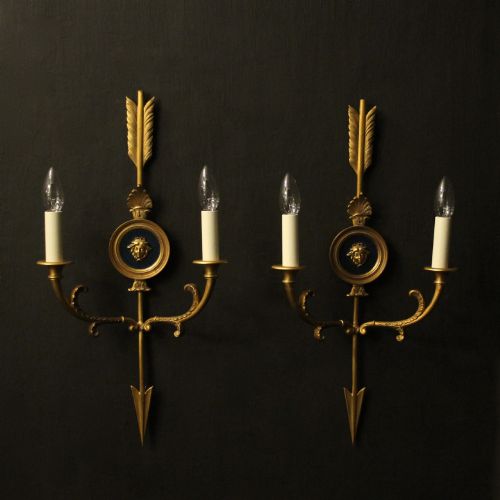
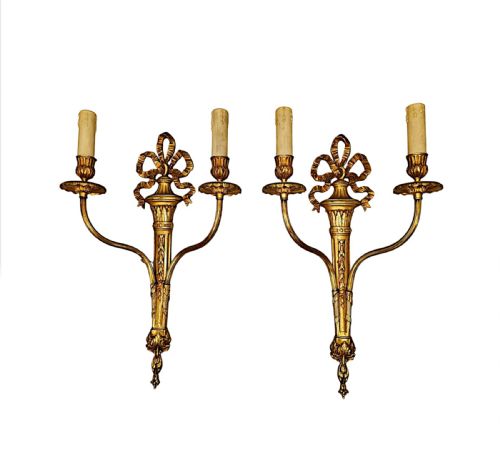
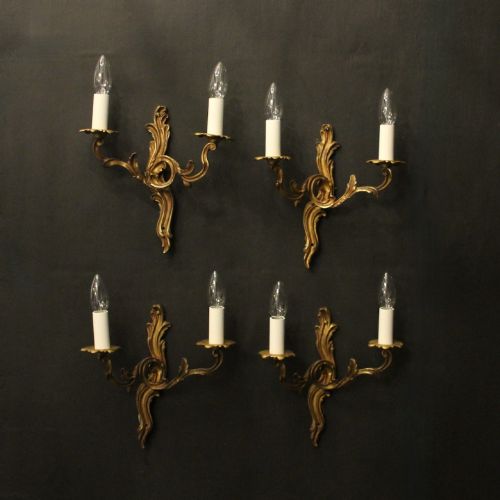
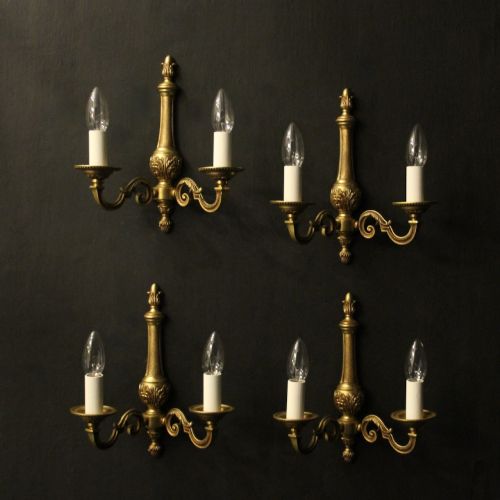
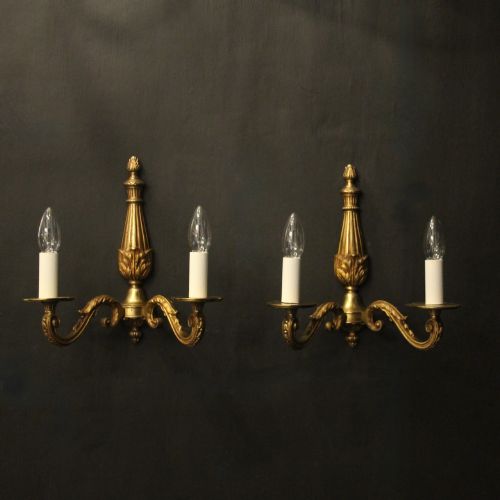
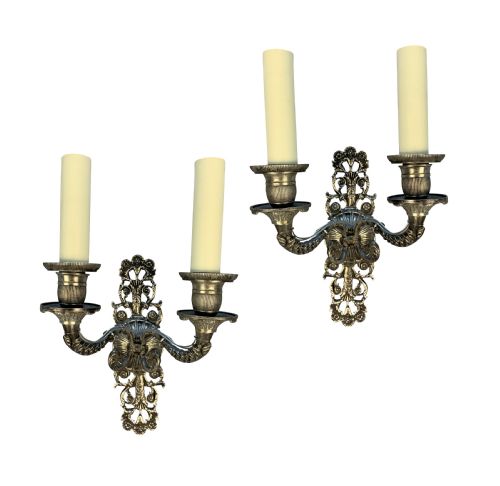
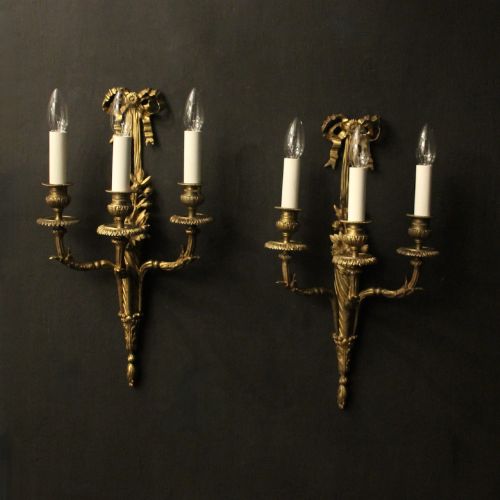
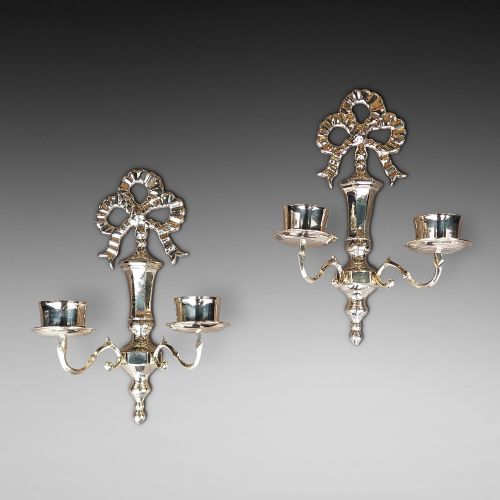
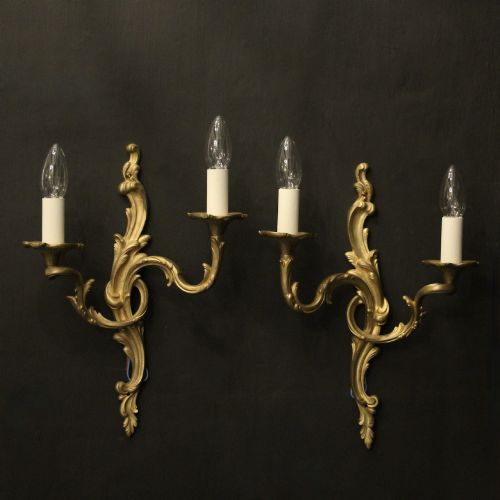
The selections available span periods from the nineteenth century into the twentieth century, reflecting Victorian, Edwardian, and earlier revival aesthetics. French designs involving gilt bronze, brass, and ribbon motifs appear frequently alongside English and Italian examples.
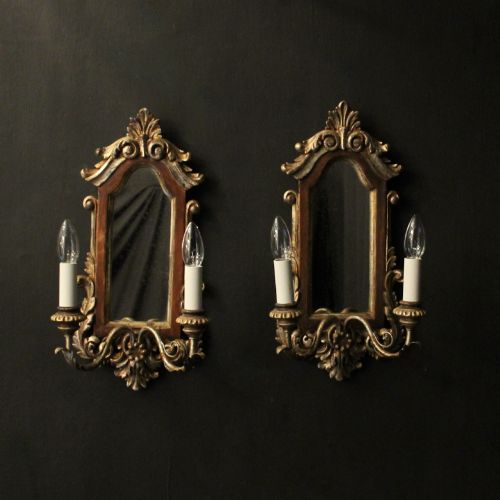
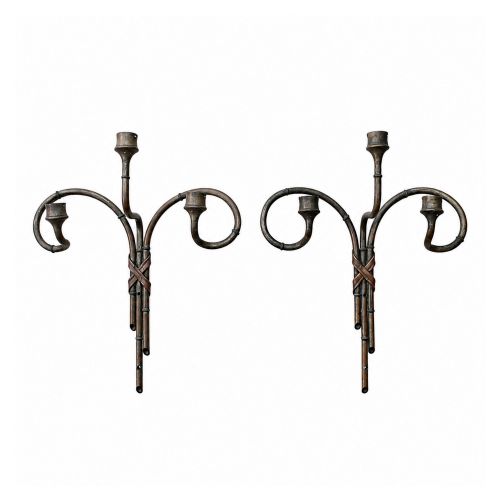
Forms range from single arm configurations to twin arm and triple arm branches. Many pieces incorporate reflective elements such as mirror backs or convex glass to amplify candlelight within the room.
How they were made
Metalwork dominates the construction of these pieces, utilising cast brass, bronze, copper, and silver plating. Gilding, ormolu, and repoussé techniques provide surface ornamentation and texture across the metal components.
Carved wood appears in giltwood frames and sconces, often paired with gesso and gold leaf. Glass panels, crystal drops, and porcelain flowers supplement the metallic structures in specific decorative styles.
Several Victorian fixtures feature nodding porcelain flower heads that pretend to bloom directly from the brass candle branches.
What varies in quality
Quality rests in the crispness of the casting and the depth of the chasing on bronze and brass. Finer examples display sharp detail in leaves, scrolls, and figural elements without the softening seen in secondary casts.
The application of surface finishes creates distinction between items. Hand-applied gilding, mercury ormolu, and heavy silver plating retain their lustre and integrity better than thin lacquer or modern spray treatments.
Bruce Talbert·Maison Baguès
The Pair Candle Wall Lights Glossary
- Girandole
- A branched wall light, frequently incorporating a mirror back to reflect the flame. These fixtures multiply the apparent light in a darker interior.
- Ormolu
- Finely chased gilt bronze utilised for decorative mounts and decorative hardware. The technique involves applying a gold amalgam to heated bronze.
- Repoussé
- Metalwork shaped by hammering from the reverse side to form a raised design on the front. This method creates dimensional relief on brass and copper wall plates.
- Sconce
- A wall-mounted lighting fixture designed to hold candles or lamps. Sconces project outward from the vertical surface to direct illumination.
- Pricket candle sconce
- A candleholder featuring a sharp metal spike upon which the base of the candle is pushed. This medieval and traditional form secures tallow or wax candles upright.
Pair Candle Wall Lights: Frequently Asked Questions
How were pair candle wall lights used historically?
These fixtures provided functional illumination in hallways, parlours, and dining rooms before electricity became common. Positioned in pairs, they framed focal points like fireplaces and mirrors to balance the room's composition.
The reflective surfaces behind the candles helped bounce light into darker corners of the evening interior. They relied on wax or tallow candles, requiring regular trimming of wicks and cleaning of drip pans.
Can these antique sconces be wired for electricity?
Many wall lights can be adapted by a qualified electrician to accept small internal wiring and miniature lamp holders. Professional conversion retains the original candle tubes and drip pans while hiding the electrical cable behind the mounting plate.
Non-invasive conversion preserves the historical metalwork without altering visible exterior components. Buyers often choose to retain true candle use or opt for reversible electrical adaptation.
How do I date a pair of brass wall lights?
Dating relies on examining the casting methods, fastener types, and stylistic influences present in the metal. Nineteenth-century examples often exhibit hand-filed surfaces and older screw threads, whereas twentieth-century pieces show machine tooling.
Design revivals offer clues through their interpretation of French Rococo, Neoclassical, or Arts and Crafts motifs. Comparing the patination of the metal against documented period pieces helps confirm the age.
How do I clean antique gilded bronze sconces?
Maintenance requires gentle dusting with a soft, dry brush to remove particulate matter without disturbing the finish. Avoid liquid polishes, abrasive cloths, and chemical cleaners that strip delicate gilt layers or ormolu.
Accumulated grime can be addressed by a specialist conservator using neutral solutions suited to antique metal surfaces. Regular care prevents the buildup of corrosive residues on brass and bronze.