


Classical Bronze Wall Lights
Classical bronze wall lights bring enduring French and English illumination to interiors through cast metal and ormolu.
Classical Bronze Wall Lights
Classical bronze wall lights encompass wall sconces, girandole mirrors, and wall brackets designed to illuminate rooms from vertical mountings. When buyers search for classical bronze wall lights, they encounter pieces originating largely from French workshops spanning the nineteenth century through the early twentieth century.
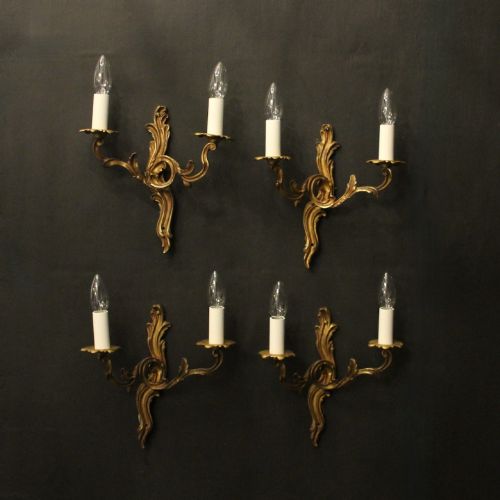
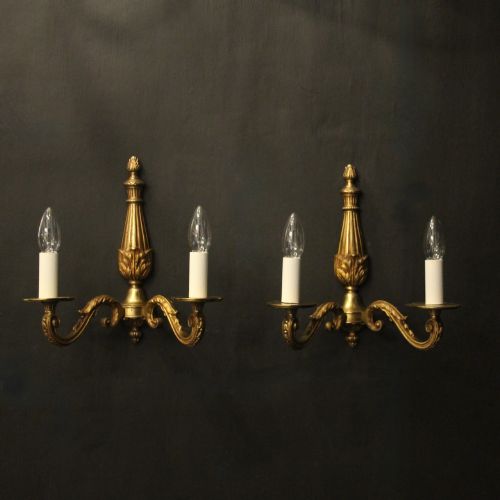
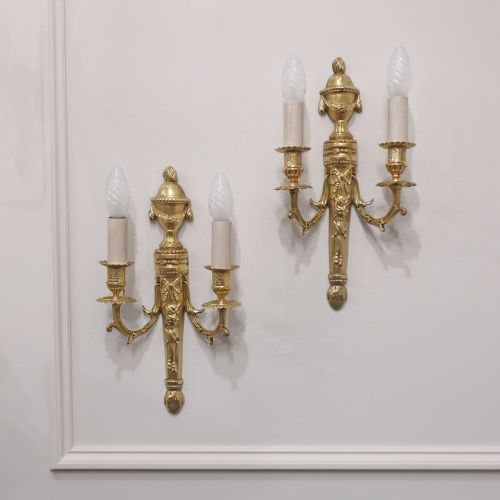
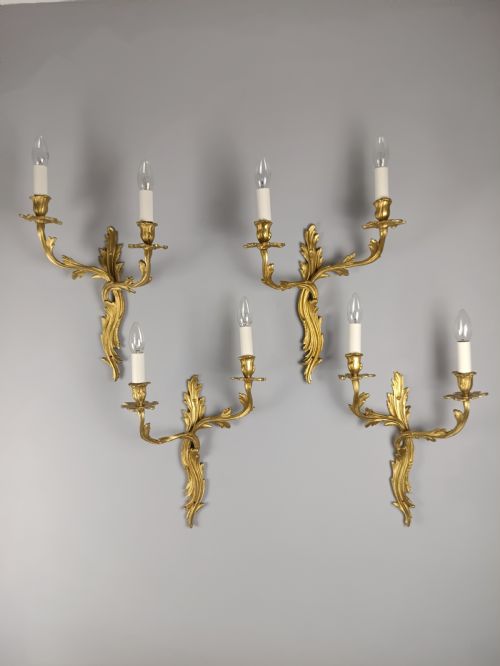
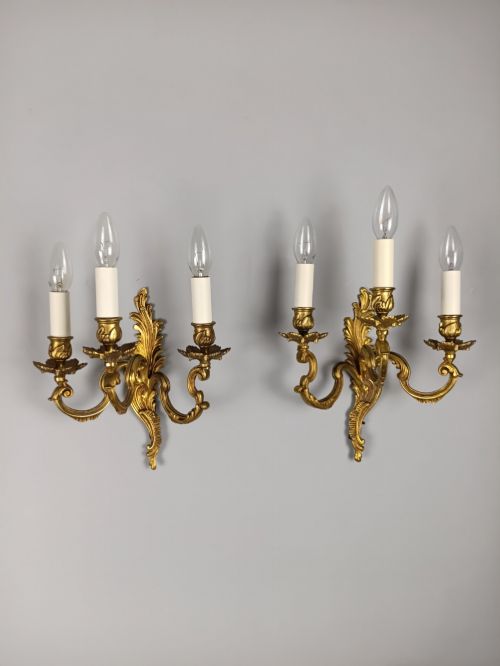
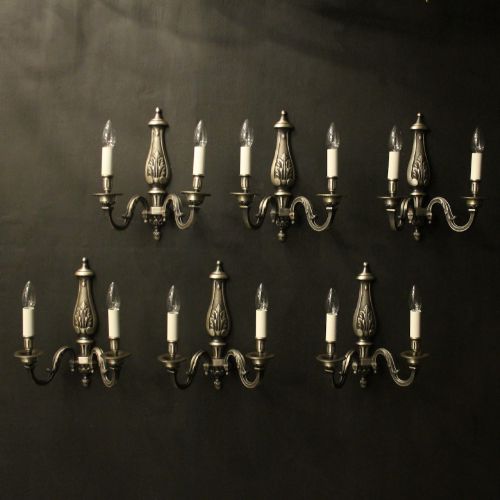
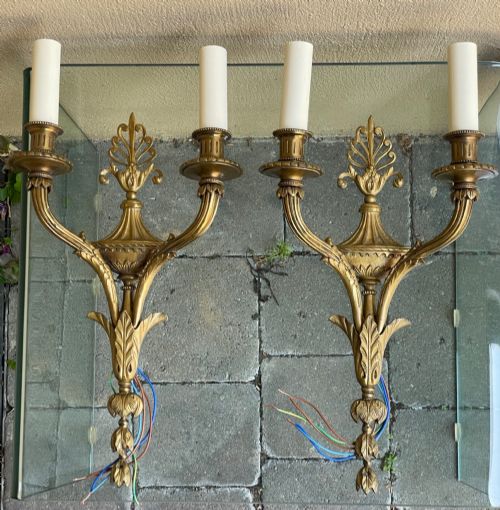
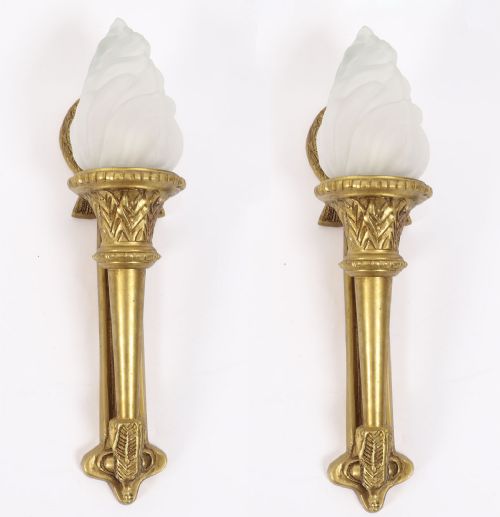
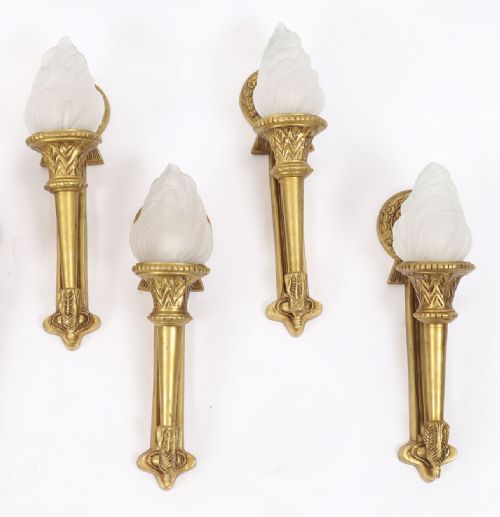
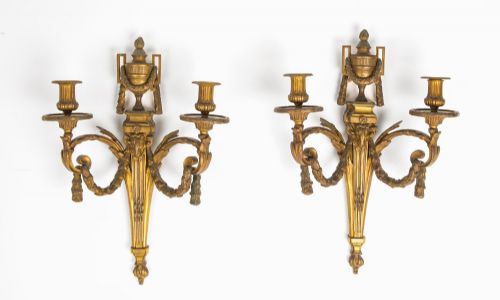
The selections most frequently met on this page include pairs and sets of twin or triple arm wall lights rendered in styles such as Louis XVI, Neo-Classical, and French Rococo. These fixtures incorporate architectural motifs like flaming torches, ram's head masks, and cherubs cast in metal and finished with gilding.
Forms range from small domestic pairs to large, imposing sets designed for grander reception rooms. The inventory draws heavily upon French aesthetic traditions, reflecting period revivals that favoured symmetrical branches and classical ornamentation.
Materials and Construction
These lighting fixtures rely on cast bronze, brass, and ormolu as primary structural and decorative metals. Makers employed foundry casting to shape intricate backplates and branches, applying gilding, silver gilding, or gold finishes to achieve a luminous surface appearance.
Detailing often incorporates secondary elements such as frosted glass shades and mirrored panels within girandole formats. The combination of chased gilt bronze with glass components creates varied light reflection across the fixture.
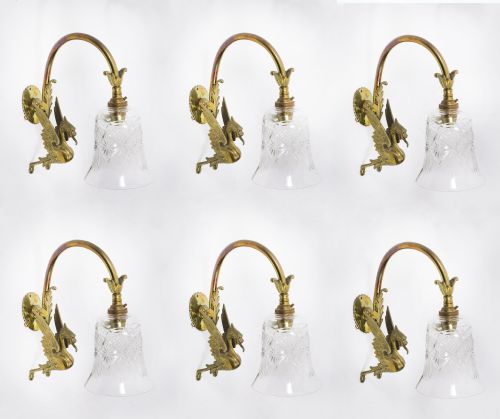
Listings feature materials including gilt bronze, brass, ormolu, and frosted glass across French Neoclassical, Rococo, and Arts and Crafts styles.
Assessing Craftsmanship
Quality in these wall lights rests upon the crispness of the metal chasing and the depth of the original gilding or ormolu. Finer examples display sharp relief in sculptural elements like masks and cherubs, whereas simpler versions exhibit softer surface definition.
The integrity of the construction, from the stability of the mounting backplates to the alignment of the branching arms, distinguishes standard production pieces from masterwork commissions. Larger sets and marked examples by makers such as Casier occupy the upper tier of the range.
Casier
The Classical Bronze Wall Lights Glossary
- Ormolu
- Gilded bronze produced by applying a mercury and gold amalgam to a bronze base and firing it. This technique imparts a rich, durable golden finish characteristic of fine period metalwork.
- Girandole
- A decorative wall mirror fitted with one or more candle branches attached to the frame. The reflective glass doubles the ambient light in the room.
- Applique
- A French term for a wall-mounted light fixture or sconce. It designates a light attached directly to the wall surface rather than standing on furniture.
- Chasing
- The artful finishing of cast metal by hand using small punches and hammers. This process refines surface textures and sharpens details after the casting stage.
- Twin Arm
- A wall light configuration featuring two branching holders for candles or bulbs stemming from a central backplate.
Classical Bronze Wall Lights: Frequently Asked Questions
How do I clean classical bronze wall lights?
Dust the metal gently with a soft, dry cloth to prevent the accumulation of dirt within the chased crevices.
Avoid abrasive polishes or chemical cleaners that can strip away historic gilt or ormolu surfaces.
Were these lights originally wired for electricity?
Most pieces originating from the nineteenth and early twentieth centuries were manufactured for candles before later conversion.
Rewiring for modern electrical standards is standard practice while preserving the original metal body.
How do I distinguish Louis XVI style from Rococo?
Louis XVI style pieces emphasise straight lines, symmetry, and classical motifs such as urns, torches, and laurel wreaths.
French Rococo designs favour asymmetrical curves, scrolling foliage, and flowing organic shapes.
Where should I mount wall sconces?
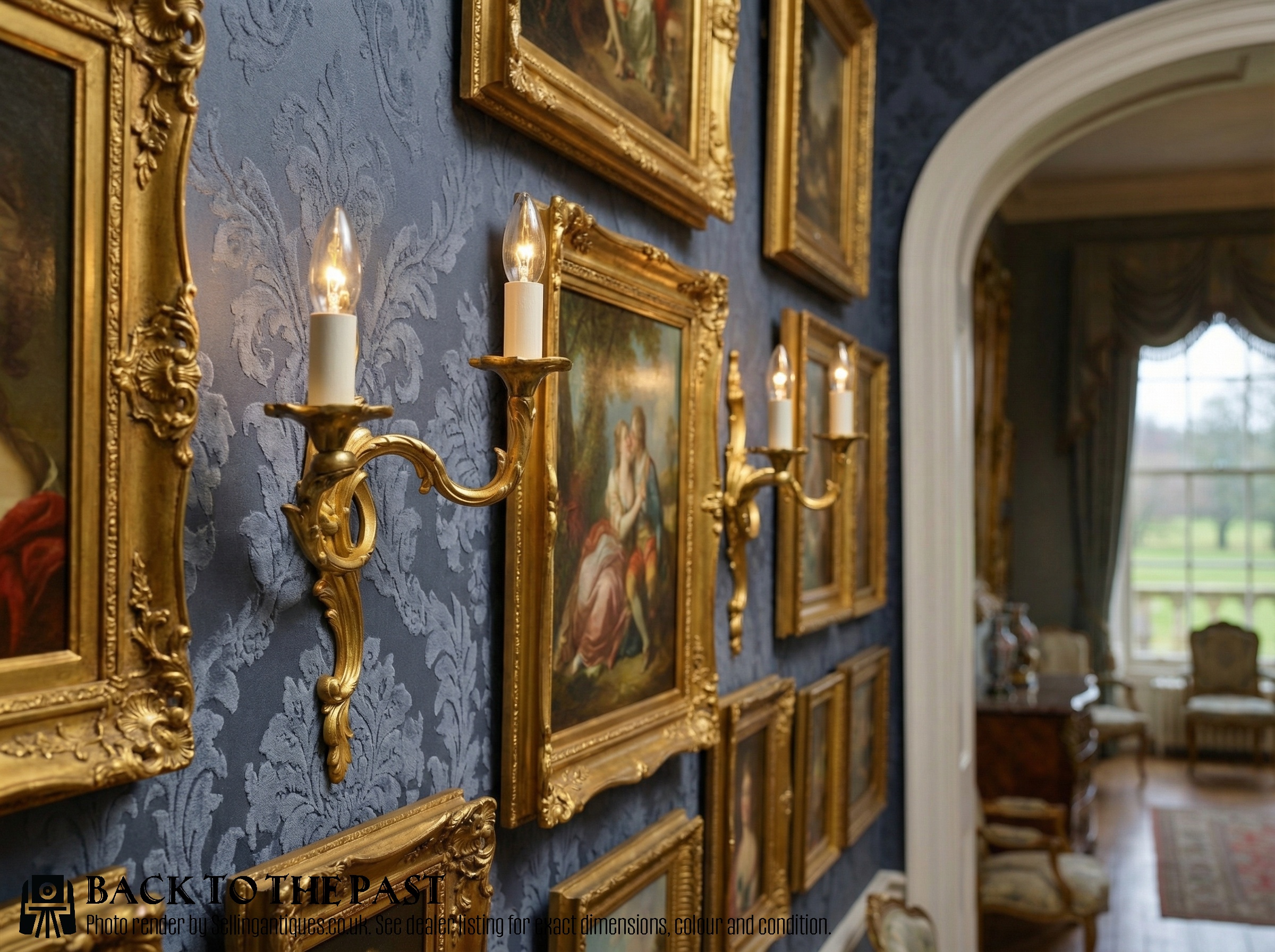
Position fixtures at eye level or slightly above to ensure balanced illumination and proper proportion within the room.
Pairs and sets work effectively flanking mirrors, doorways, or fireplaces to frame architectural focal points.