








Pair Architectural Wall Art
Pair architectural wall art brings symmetry and depth to a room, offering paired panels, paintings, and carvings that transform a blank wall into a focal point.
Pair Architectural Wall Art
When you search for pair architectural wall art, you encounter a diverse selection of symmetric groupings designed to hang together, ranging from carved wooden panels to framed paintings and plaster friezes. These pieces draw on historical forms spanning several centuries, including 17th century carved woodwork, 18th century Italian landscape paintings, and Victorian oil paintings.
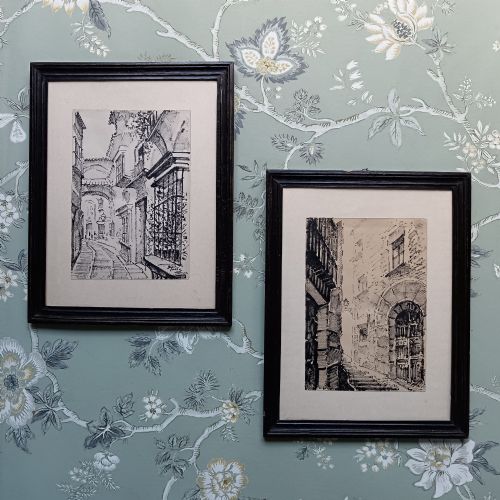
The objects most frequently met on this page include framed prints, wall carvings, and oil paintings that reflect distinct regional traditions such as French chateau styles, Chinese Qing Dynasty temple panels, and Burmese wall panels. Such works often depict classical ruins, street scenes, or architectural fragments salvaged from historic buildings.
How they were made
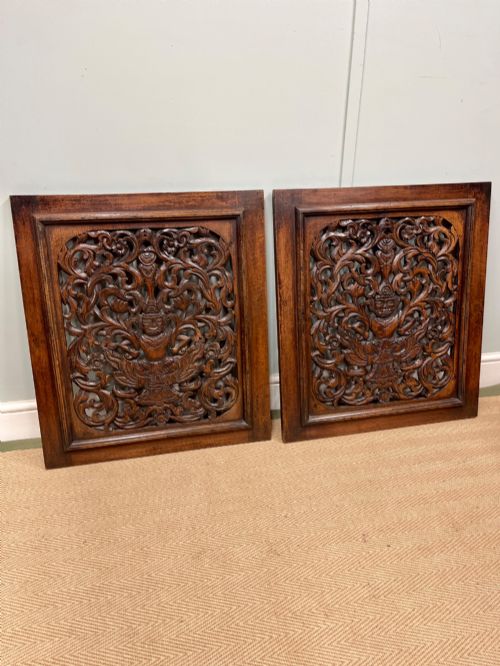
Makers utilised traditional woodworking techniques to shape hardwood, oak, and gilded wood into intricate wall carvings and panels, often applying paint or gold leaf to enhance the relief. Carvers worked by hand to produce detailed motifs found on temple panels and structural fragments.
Painters and printmakers employed oil on canvas, watercolours, pen and ink, and lithographs on paper to capture landscape views and classical ruins. These works were frequently housed in original frames made of wood or glass, preserving the integrity of the paired artworks.
Plaster and iron work also appear among the selections, utilising casting and Wrought Iron techniques to create sculptural wall friezes and gates. These durable materials allowed artisans to achieve substantial scale and intricate surface detail for interior and exterior architectural display.
Pair Architectural Wall Art Retail Price Guide 2026
Typical asking prices for pair architectural wall art among the pieces listed under this phrase on Sellingantiques today, from the lower quarter to the upper quarter. They describe what is for sale here now, not the wider market.
Listings feature works spanning the 17th, 18th, and 19th centuries, alongside Victorian and Edwardian pieces.
What varies in quality
The distinction between tiers of quality rests upon the depth and precision of the craftsmanship, particularly in hand carved wooden panels and sculptural wall friezes where crisp detail distinguishes superior work. Pieces originating from known artistic circles or identified makers command greater interest due to their documented execution.
The preservation of original finishes, such as early gilding, paint layers, and period framing, influences the overall integrity of an artwork. Greater artistry is evident in compositions that demonstrate sophisticated perspective and handling, such as 18th century Italian landscape paintings with classical ruins.
David Roberts RA·Louis Haghe·George Whyatt·Karl Herrle·Samuel Sidley·Francesco Piranesi
The Pair Architectural Wall Art Glossary
- Lithograph
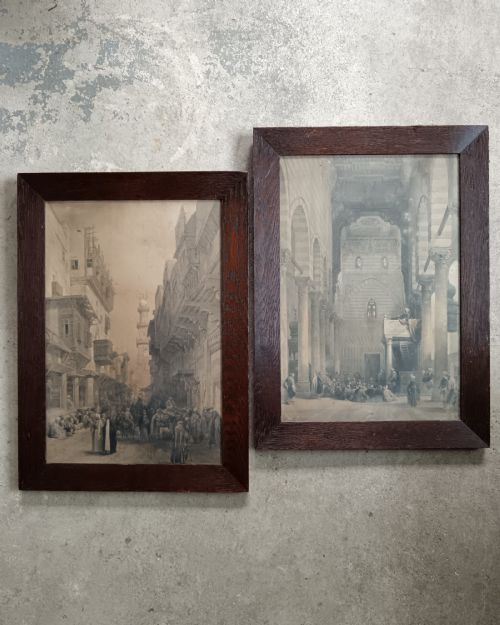
- A print made from a planographic surface, such as a treated limestone plate, where the image is applied using oil-based media. This technique allowed for the faithful reproduction of detailed topographical and architectural views in the nineteenth century.
- Frieze
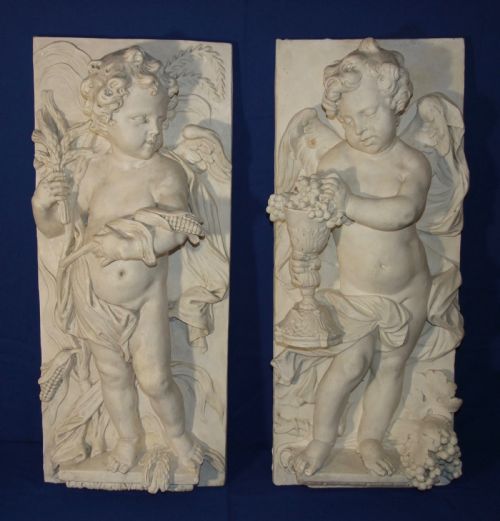
- A long, narrow band of sculpture or painted decoration adorning a wall or ceiling. In architectural wall art, plaster cast versions often depict classical figures and winged cherubs.
- Gilded wood
- Wood surfaces treated with a thin layer of gold leaf or gold dust applied over a prepared ground. This finish was commonly utilised on temple panels and decorative frames to catch and reflect light.
- Dummy board
- A painted wooden figure cut out to life size to create an optical illusion within an interior space. These naive painted wall plaques often appeared in grand settings like the Brighton Pavilion style.
- Engraving
- A printmaking method where an artist cuts an image directly into a metal plate using a sharp tool called a burin. The resulting lines hold ink to produce crisp, detailed architectural prints.
Pair Architectural Wall Art: Frequently Asked Questions
How do I hang heavy wall panels safely?
Heavy carved wooden panels and large plaster friezes require secure fixings into structural wall studs or masonry using appropriate heavy duty brackets. Distributing the weight evenly across two mounting points ensures the paired pieces align correctly.
Consulting a professional installer is recommended for oversized items such as five-foot tribal doors or wrought iron gates to guarantee stability.
How should I clean antique carved wood?
Dust carved wooden wall art gently with a soft, dry brush or a lint-free cloth to prevent the accumulation of dirt within deep recesses. Avoid using liquid cleaners, polishes, or damp cloths, which can damage aged finishes and exposed wood.
Regular, gentle maintenance preserves the natural patina and protects fragile carved details on antique panels.
What is the difference between an engraving and a painting?
Paintings are unique works created by applying wet media such as oil or watercolour directly onto a canvas or paper surface. Engravings are printed multiples produced from a master plate, allowing an artist to publish detailed architectural views in editions.
Framed paintings show individual brushstrokes and texture, whereas engravings present fine, ink-filled lines on paper.
How do I match frames when buying a pair?
Pairs of architectural art often share matching original frames, such as historical H. Alden & Co. enclosures, which maintain historical consistency. When frames differ slightly, ensure the wood tones or moulding styles complement each other before hanging them together.
Matching the scale and visual weight of the frames is more important than finding identical ornamentation.