



Pair Pistols
These pair antique pistols are matched sets of historic sidearms built for personal defence, duelling, and pocket carry.
Pair Pistols
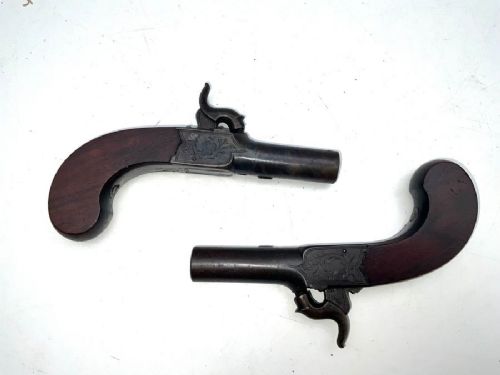
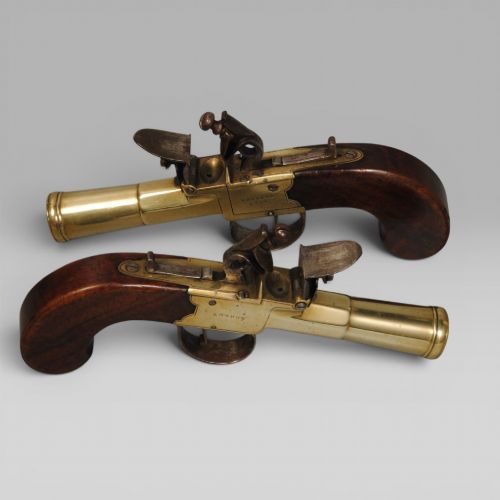
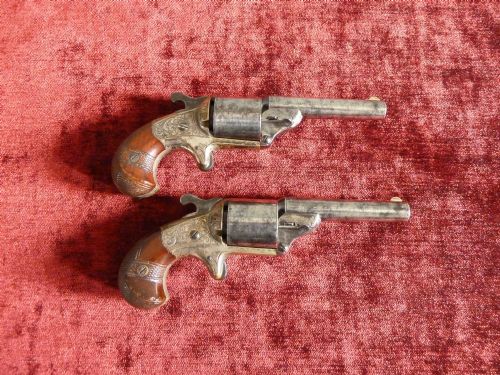
When you search for pair antique pistols, you encounter matched sets of historical firearms designed for protection, sport, and military use. The pieces on this page span the eighteenth and nineteenth centuries, taking forms such as pocket pistols, duelling pistols, and blunderbuss pistols.
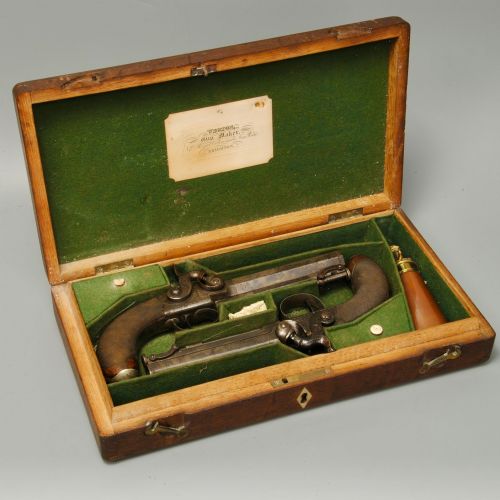
The most frequent examples you will meet date from the nineteenth century and the Georgian period, often preserved in fitted wooden cases lined with baize or velvet. These sets include flintlock and percussion ignition systems, alongside pocket designs featuring flick bayonets or turn-off barrels.
How they were made
Makers constructed these arms using robust metals such as steel, iron, and brass for the barrels, lock plates, and trigger mechanisms. These metal components required precise forging and hand-finishing to ensure reliable ignition.
Stocks were carved from dense timbers like walnut and mahogany, shaped to fit the hand and polished to show the natural grain. Fitted housing cases often incorporated textile linings in baize or velvet to protect the matched pairs during transport.
What varies in quality
Quality in these firearms rests upon the precision of the mechanical action and the crispness of the metal engraving. Superior examples display signed lock plates by known makers, balanced proportions, and seamless integration between metal and wood.
The presence of original fitted cases containing matching accessories elevates a set above standard sidearms. Lesser pieces show heavier wear to the timber stocks, softer metal detail, and lack the harmonious matching seen in higher-tier workshops.
Mortimer·H W Mortimer And Son·John Rimes·Meyer And Mortimer
The Pair Pistols Glossary
- Flintlock
- An ignition mechanism that uses a piece of flint struck against a steel frizzen to create sparks that ignite the gunpowder charge. This system predates percussion caps.
- Percussion
- A later ignition method involving a hammer striking a small detonating cap placed on a nipple, transferring flame to the main charge.
- Boxlock
- A firearm design where the breech and lock are forged as a single unified piece, often featuring internal mechanisms enclosed within the frame.
- Turn-off
- A barrel design that unscrews from the breech to allow loading from the front without a ramrod, commonly found on pocket pistols.
- Dueling
- A term for sidearms manufactured in matched pairs specifically for formal personal combat under strict rules.
- Baize
- A coarse woollen material traditionally used to line wooden storage boxes and instrument cases to protect metal and wood surfaces.
Pair Pistols: Frequently Asked Questions
How do flintlock and percussion pistols differ?
Flintlock pistols rely on a flint striking steel to generate sparks for ignition. Percussion pistols use an external hammer striking a priming cap.
The percussion system arrived later in the nineteenth century, offering faster and more reliable firing in wet weather.
Were these pistols used for duelling?
Some sets were built specifically for formal duels, featuring long rifled or smoothbore barrels and sensitive triggers. Other pairs served as pocket or travel arms for personal defence.
The inclusion of a fitted wooden case often indicates a duelling set meant for gentlemanly transport.
What is a turn-off barrel?
A turn-off barrel unscrews entirely from the frame of the pistol to allow the user to load the ball and powder directly from the breech end.
This nineteenth-century feature made reloading easier without needing a separate ramrod.
How should I store a cased pair?
Keep the pieces in their original fitted cases away from direct sunlight, extreme heat, and damp environments. Stable room temperatures protect the timber stocks and textile linings.
Ensure the internal baize or velvet remains clean and dry to preserve the metal surfaces of the pistols.