



Painted Wrought Iron Stand
A painted wrought iron stand brings robust metalwork and colour to the garden or interior.
Painted Wrought Iron Stand
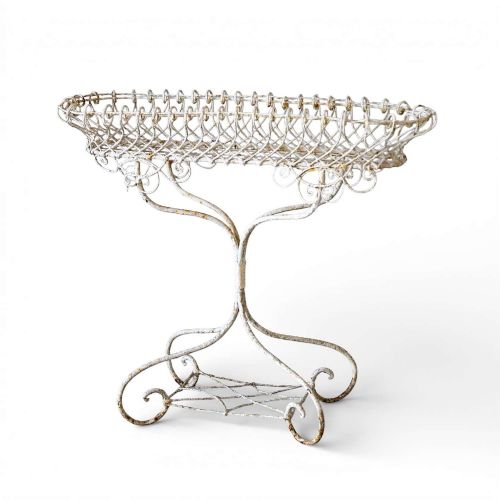
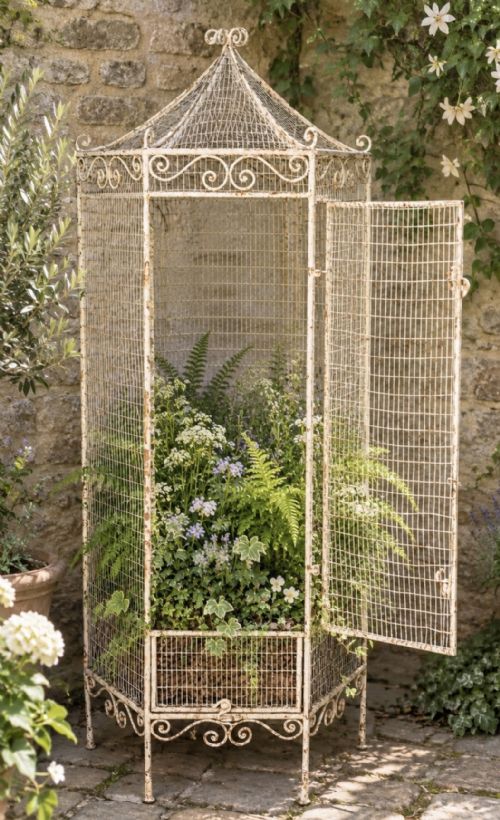
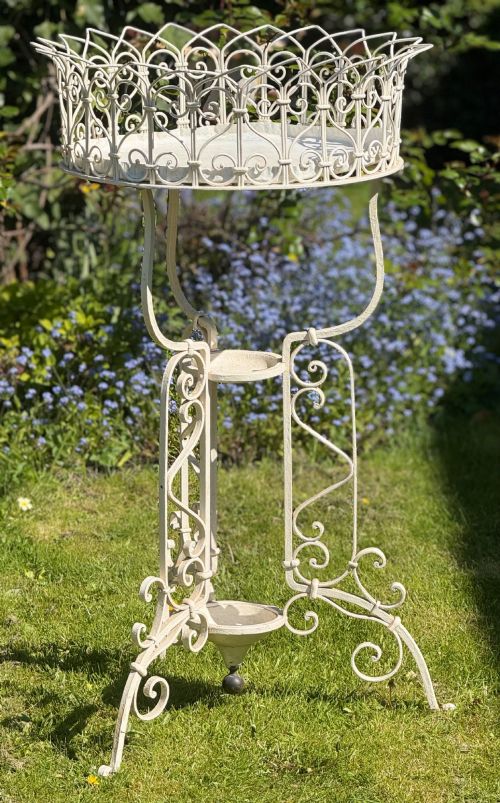
A painted wrought iron stand spans plant stands, jardiniere holders, washstands and console tables found across the nineteenth and early twentieth centuries. These pieces combine utilitarian metal frames with decorative paint finishes designed to withstand garden use or brighten domestic rooms.
The versions most commonly met on this page range from Victorian wirework plant stands and French provincial garden tables to industrial storage racks and standard lamps. Many pieces feature scrollwork, lattice baskets or slatted iron construction dating from the Georgian period through to the 1930s.
Materials and construction methods
Makers utilised wrought iron, cast iron and wire to form the structural frames, often incorporating brass details, sheet metal components or wooden elements. Pieces frequently employ riveted joints and forged scrollwork to build sturdy plant stands and tables.
Surfaces are finished with paint, original gilding or combined treatments designed to protect the metal from weathering while adding decorative colour. Wirework tiered planters and mesh baskets demonstrate specialised bending and joining techniques typical of garden furniture production.
Painted Wrought Iron Stand Retail Price Guide 2026
Typical asking prices for painted wrought iron stand among the pieces listed under this phrase on Sellingantiques today, from the lower quarter to the upper quarter. They describe what is for sale here now, not the wider market.
A cockerel perched proudly atop an early twentieth-century weather vane keeps watch over the entire garden collection.
Assessing quality in metalwork
Quality rests upon the finesse of the blacksmith's forging and the integrity of the structural joinery, distinguishing finely beaten scrollwork from simpler commercial output. Heavier gauge iron and neatly riveted frames offer greater stability than lighter alternatives.
The survival of original painted or gilded decoration significantly elevates a piece, showing how well the surface has aged over time. Finer examples display balanced proportions in lattice baskets and wirework, alongside thoughtful integration of materials such as brass or marble.
The Painted Wrought Iron Stand Glossary
- Wrought iron
- Iron that has been heated and hammered into shape by a smith. This material allows for strong, malleable structures with visible hammer marks.
- Wirework
- Metal construction utilising interwoven or bent wire. It appears frequently in lightweight garden tables and tiered plant stands.
- Jardiniere
- An ornamental pot or stand designed to hold plants and flowers. These items often feature lattice baskets or decorative scrollwork.
- Scrollwork
- Ornamental metalwork formed into spiral or curved scroll patterns. It provides both structural bracing and decorative detail on nineteenth-century pieces.
Painted Wrought Iron Stand: Frequently Asked Questions
How do I care for a painted iron stand?
Keep the metal dry and clean it gently with a soft cloth to protect the painted finish from moisture damage. Avoid harsh abrasives that might strip the historic surface.
Position the stand away from damp garden soil if kept indoors, or maintain protective coatings if used outside on the patio.
Were these stands meant for gardens?
Many pieces were built specifically for botanical use, serving as plant stands, jardinieres and wirework planters for conservatories and gardens. Their durable iron construction handled outdoor conditions with ease.
Other forms like washstands, console tables and standard lamps were designed for domestic interior spaces, reflecting the versatility of painted metal furniture.
How can I tell a Victorian stand apart from later ones?
Victorian examples often rely on intricate wirework, detailed scrollwork and heavier cast iron elements characteristic of nineteenth-century production. Look closely at the construction methods, such as riveted joints and hand-forged sections.
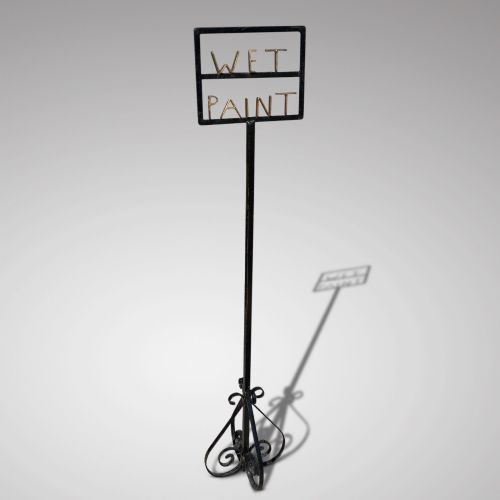
Twentieth-century pieces from the 1920s and 1930s tend to show simpler industrial lines, slatted construction or utilitarian signage and storage formats.
Did these stands always have painted finishes?
Paint was applied extensively to protect wrought iron from rust while offering decorative colour such as white or green. Original painted and gilded surfaces survive on several nineteenth and early twentieth-century pieces.
Over the decades, many items received multiple layers of paint, making the underlying condition of the metal an important detail to examine.