


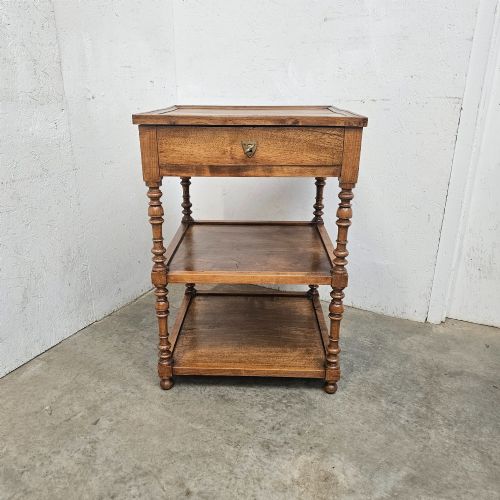
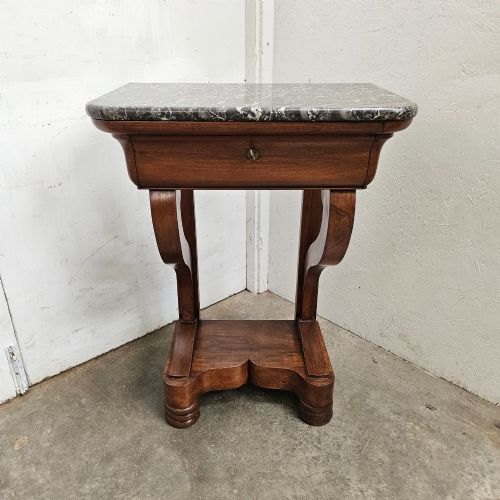
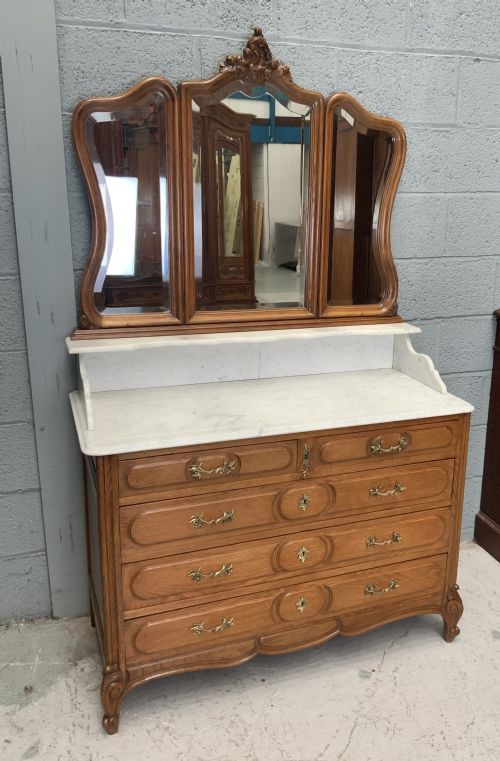


French Provincial Washstand
These french provincial washstand examples bring practical regional utility and timber warmth into modern interiors.
French Provincial Washstand
A french provincial washstand serves as a traditional piece of regional furniture designed originally for personal hygiene and washing before indoor plumbing became universal. These items appear across various periods from the eighteenth century through to the nineteen thirties, encompassing styles such as Louis Philippe and Art Deco.
Buyers encountering this category will find washstands alongside related forms like dressing tables, bedside cabinets, and console tables. Materials span solid woods alongside decorative additions such as marble tops and metal fittings.
Origins trace directly to continental workshops, with pieces taking the form of robust wooden cabinets, carved oak washstands, and marble topped consoles. The selection bridges utilitarian regional items and more decorative urban interpretations.
How they were made
Construction relies heavily on traditional timber joinery utilising regional woods such as oak, walnut, chestnut, and mahogany. Carpenters shaped these hardwoods through turning, carving, and panel construction to build durable frames capable of supporting heavy stone surfaces.
Many examples incorporate fitted marble tops designed to resist moisture during daily washing routines. Additional components frequently include cast brass hardware, pewter cisterns with basins, and forged iron structural elements.
French Provincial Washstand Retail Price Guide 2026
Typical asking prices for french provincial washstand among the pieces listed under this phrase on Sellingantiques today, from the lower quarter to the upper quarter. They describe what is for sale here now, not the wider market.
The documented pieces demonstrate regional styles ranging from eighteenth-century provincial work to twentieth-century Art Deco interpretations.
What varies in quality
The standard of a french provincial washstand depends on the crispness of the hand carving and the selection of timber figure in the panels. Pieces featuring substantial marble slabs and integrated metal elements such as original pewter cisterns show superior original assembly.
Proportion and structural integrity distinguish simpler utilitarian examples from finer pieces influenced by specific stylistic revivals like Rococo Revival or Art Deco. The retention of original hardware and matching stone surfaces adds to the integrity of any given piece.
The French Provincial Washstand Glossary
- Lavabo cabinet
- A enclosed wooden unit designed to house a water reservoir and basin for washing. These pieces often incorporate pewter cisterns.
- Marble top
- A stone slab fitted to the upper surface of a washstand or console table to provide a waterproof workspace. This material protects the underlying timber from water damage.
- Etagere
- An open shelving unit used for displaying small objects or toiletries within a bedroom or dressing room. These open structures rely on turned or carved supports.
- Pewter cistern
- A metal container used to hold water above a wash basin. Such vessels form part of older plumbing arrangements on regional cabinets.
French Provincial Washstand: Frequently Asked Questions
What is a french provincial washstand?
A french provincial washstand is a regional wooden cabinet or table created for personal washing before modern indoor plumbing. These pieces typically feature durable wooden frames and often include stone surfaces.
They reflect the traditional domestic habits of continental households across the eighteenth and nineteenth centuries.
How were washstands used originally?
These items held wash basins, pitchers, and toiletries in bedrooms before fitted bathrooms became standard in homes. The surfaces were chosen to withstand daily exposure to water.
Cabinets below stored linens, jugs, and chamber items out of sight.
How do I style a washstand today?
A washstand works well as a console table in a hallway or as a surface in a bathroom. The stone tops and wooden storage suit contemporary spaces needing character.
Items can be topped with ceramics, mirrors, or daily essentials.
How do I tell different periods apart?
Earlier pieces from the eighteenth century utilise regional timbers like chestnut with hand-forged metal additions. Later examples from the early twentieth century often display Art Deco influences or simpler turned legs.
Stylistic cues in the carving help indicate the decade of manufacture.