

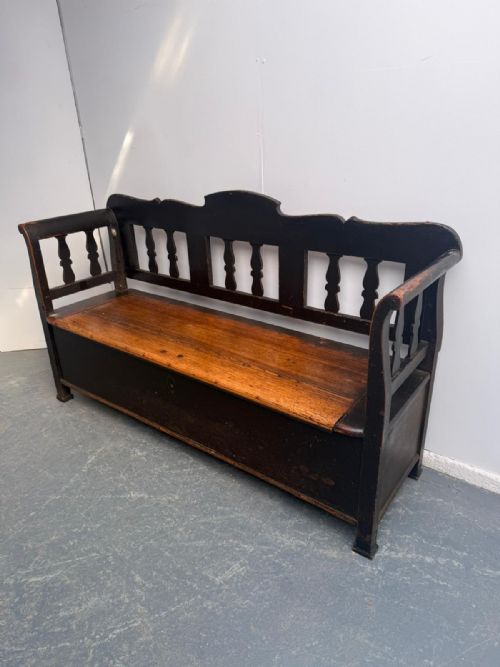
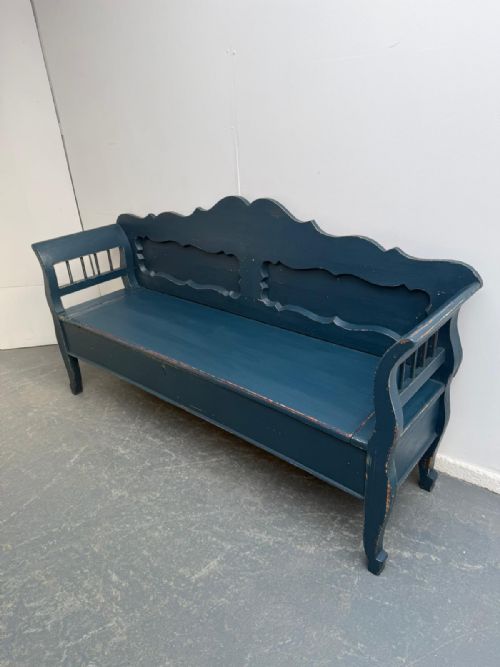
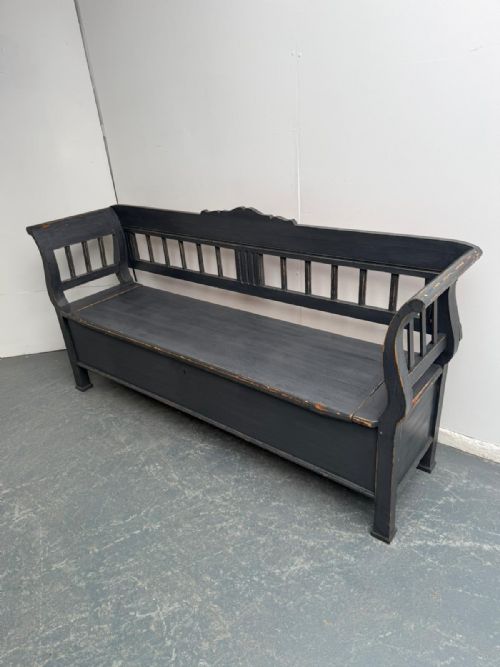

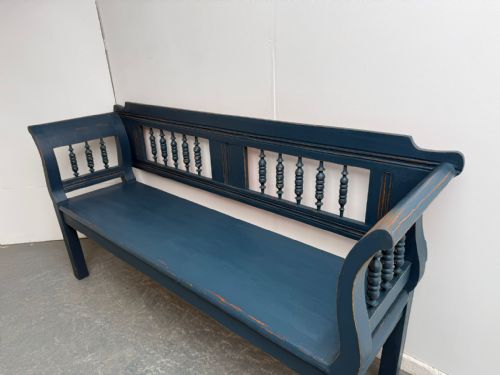


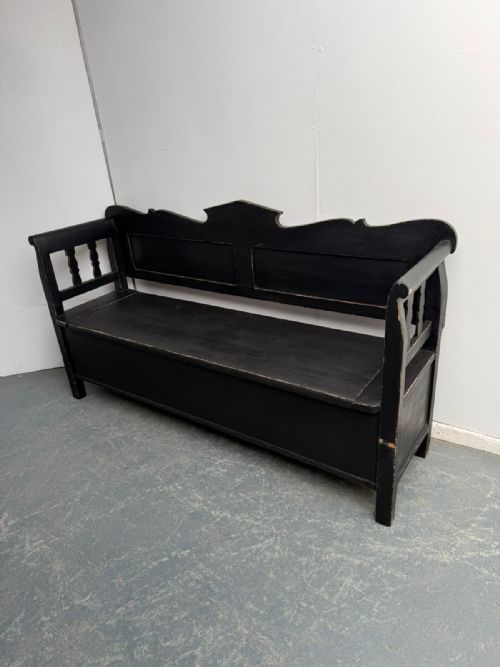

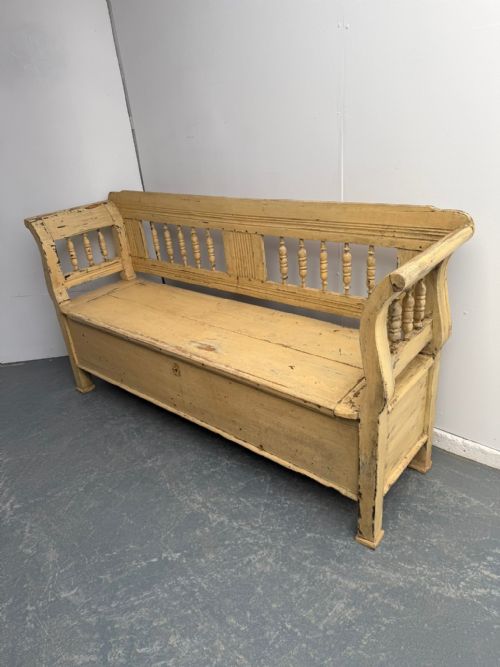
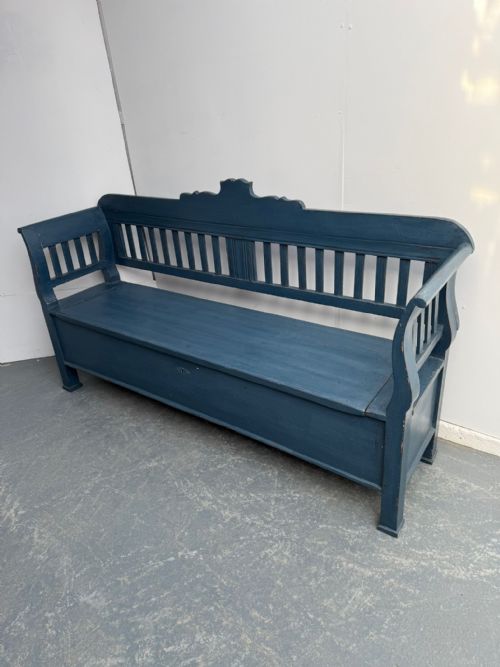
Painted Wooden Settle Bench
A painted wooden settle bench brings rural history into a room, offering high backs and box seats handed down from European farmhouses and taverns.
Painted Wooden Settle Bench
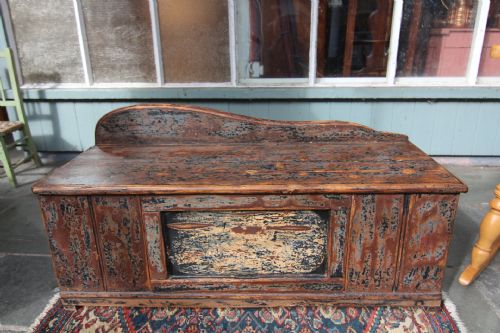
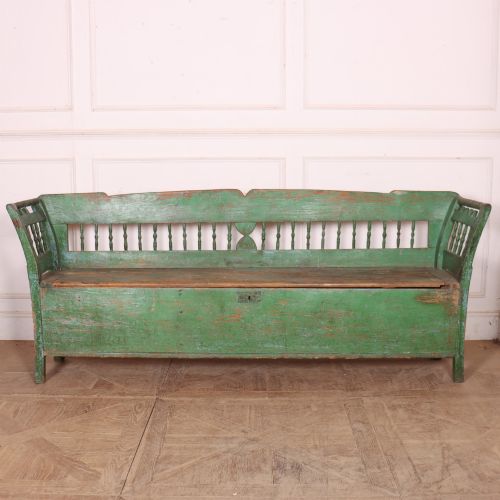
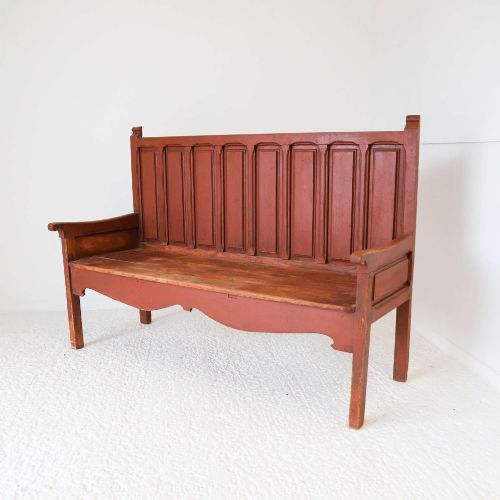
A painted wooden settle bench provides high backs and enclosed box bases designed to keep out drafts in older homes. The forms range from three-seater Hungarian pine settles to Swedish Gustavian sofas and Welsh tavern benches.
Hungarian examples frequently feature original blue, grey, black, or cream paint on pine, while Swedish pieces lean towards Gustavian styles or rustic country finishes. English and Spanish variants appear alongside Austrian and French forms.
The periods span the 18th century through the Victorian era and the 1900s. Buyers will frequently encounter 19th-century pine items alongside Georgian and 18th-century country pieces.
Materials and construction
Makers utilised pine and general timber as the primary structural materials for these benches, pairing the wood with traditional iron fixings and hinges for storage lids.
Surfaces received layers of paint, creating finishes that range from folk art patterns to solid blues, greys, and creams applied over original pine timber.
Joinery techniques relied on sturdy panel construction to support the high backs and heavy box seat lids characteristic of taverns and farmhouses.
Regional styles include Gustavian, Hungarian Folk Art, and English Country forms.
Assessing quality and finish
The survival of original paint determines much of the character, with untouched early finishes commanding greater interest than later overpainting.
Proportion and scale separate simple utility pieces from larger tavern settles or refined Gustavian sofas, while the presence of integrated box storage adds functional depth.
The Painted Wooden Settle Bench Glossary
- Box settle
- A wooden bench featuring an enclosed compartment beneath the seat, often accessed via a hinged lid. This design served to store blankets or household goods while blocking floor drafts.
- Gustavian style
- The Swedish interpretation of French neoclassical design, characterised by restrained carving, lighter colour palettes, and simplified classical motifs. It flourished from the late 18th century onwards.
- Tavern bench
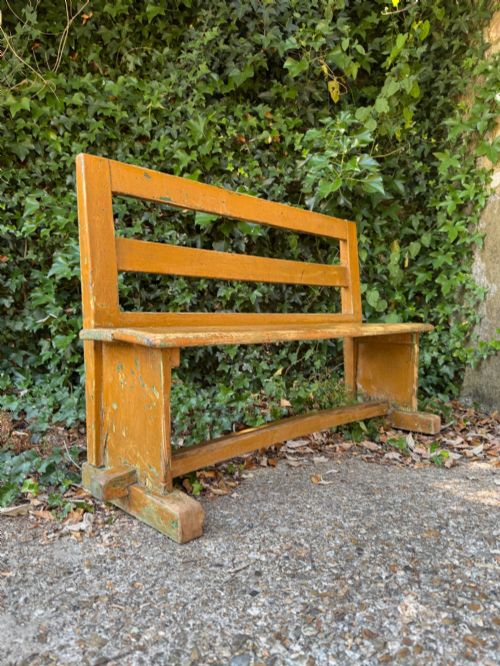
- A long seating form built for public houses and inns, constructed to withstand heavy daily use. These pieces often lack box storage in favour of open underframes.
- Folk art
- Decorative painting and ornamentation executed by regional artisans rather than academic artists. It defines much of the Hungarian and European country furniture seen here.
Painted Wooden Settle Bench: Frequently Asked Questions
What is a painted wooden settle bench used for?
These benches served as primary seating in kitchens, hallways, and public houses, where their high backs blocked cold drafts from stone floors. The integrated box seats additionally provided concealed storage for household linens and provisions.
Today, they function as hallway seating or dining room benches that double as storage chests for bulky items.
How do I identify original paint?
Original paint surfaces show natural wear, oxidation, and subtle craquelure consistent with age and domestic use over centuries. Hand-mixed pigments settle into the grain of the pine timber in ways modern synthetic paints cannot easily replicate.
Examining edges and protected underside areas reveals the sequence of layers and confirms whether the current finish dates to the period of manufacture.
Where did these benches originate?
The pieces originate from farmhouses, village taverns, and rural households across Europe, including Hungary, Sweden, Wales, Austria, Spain, and England. Regional carpentry traditions dictated whether a bench received a Gustavian aesthetic or rustic folk art decoration.
Local timber availability meant pine was the predominant choice for construction across these various European regions.
How do I care for antique pine furniture?
Keep wooden settles away from direct heat sources and sudden humidity shifts to prevent the pine timber from splitting or warping. Dust gently with a dry cloth and avoid harsh chemical cleaners that might strip the original paint.
Applying microcrystalline wax occasionally helps protect older painted surfaces without altering the historic finish.