
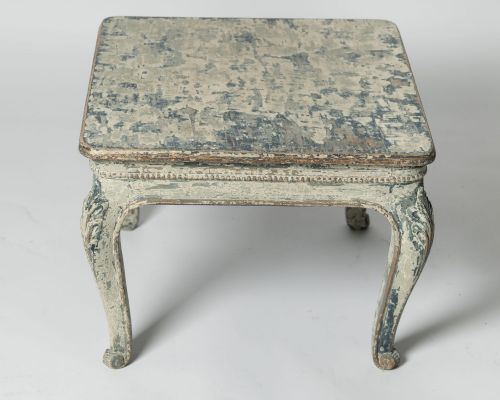
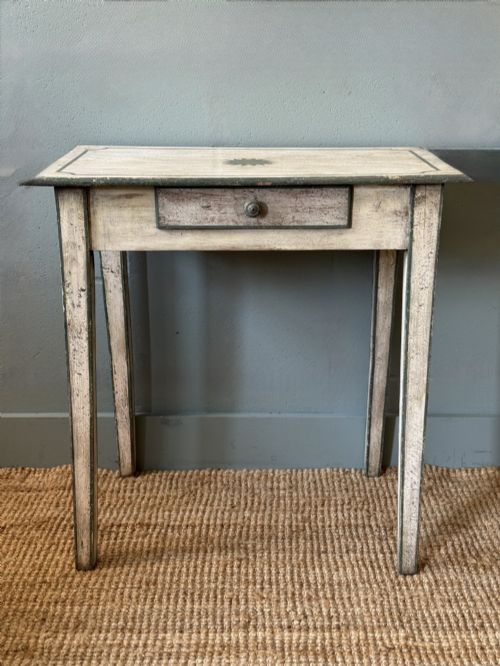
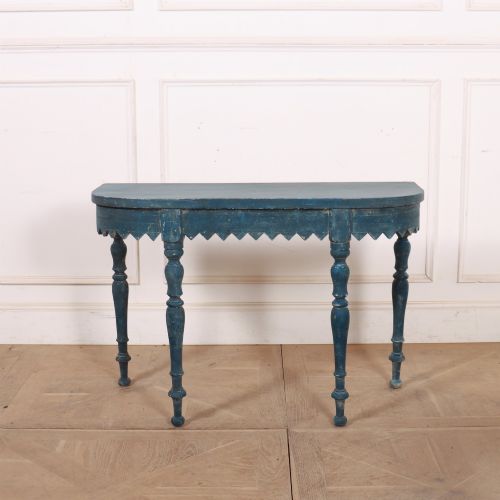

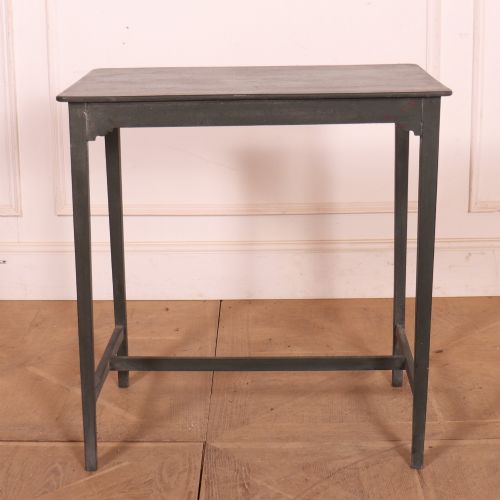


Painted Wooden End Table
A painted wooden end table brings a useful surface and a coloured finish to a room, offering both practical utility and decorative character.
Painted Wooden End Table
A painted wooden end table serves as a functional small surface for a lamp or books, appearing most frequently in forms such as lamp tables, side tables, and occasional tables. These pieces span centuries from the eighteenth century through to the mid-twentieth century.
The selection includes regional interpretations such as English country pieces, French provincial designs, and Scandinavian pine examples. Side tables and lamp tables dominate the forms, alongside occasional tables and small console pieces.
Origins vary from English workshops to French and Swedish origins, each bringing distinct regional proportions and surface treatments to the basic domestic table form.
Materials and construction
Construction relies primarily on timbers such as oak, pine, fruitwood, mahogany, and general timber, combined with applied paint finishes, brass details, and metal fixings. Solid pine and oak form the structural base for many country and provincial pieces.
Surface treatments involve layered paintwork, sometimes over satinwood or decorated panels, protecting the underlying wood while providing colour and pattern. Joinery methods reflect traditional cabinet-making and carpentry appropriate to each period.
Several tables maintain traces of early domestic life, having spent centuries supporting reading lamps and teacups.
Quality variations
Quality rests on the integrity of the timber frame, the skill of the original construction, and the character of the painted surface over time. Tables retaining their early or original paint layers hold a different presence compared to those with later or renewed decoration.
Proportion and regional carpentry distinguish standard utilitarian items from finer examples produced within Georgian, Edwardian, or continental traditions.
The Painted Wooden End Table Glossary
- Lamp table
- A small occasional table designed specifically to hold a lighting fixture beside a seating area.
- Cricket table
- A small round table featuring three legs and typically a triangular underframe, originating from vernacular English traditions.
- Pine
- A softwood timber commonly utilised in Scandinavian and English country furniture, frequently found beneath painted finishes.
- Satinwood
- A fine hardwood utilised for high-status cabinet-making, often paired with inlay and painted decoration during the Edwardian period.
Painted Wooden End Table: Frequently Asked Questions
What is a painted wooden end table used for?
These pieces serve primarily as small surfaces next to chairs or beds for lamps, books, and everyday items.
They also provide a decorative focal point through their painted finishes within a room scheme.
How do I date a painted wooden end table?
Dating relies on observing timber types, construction methods, and the style of the painted decoration.
Eighty or nineteenth century pieces often show distinct regional joinery and surface wear compared to later twentieth century examples.
Are these tables made of solid wood?
Most examples utilise solid timbers such as oak, pine, fruitwood, or mahogany beneath their painted surfaces.
Constructed using traditional methods, they rely on the natural strength of these woods.
Where do these painted tables originate?
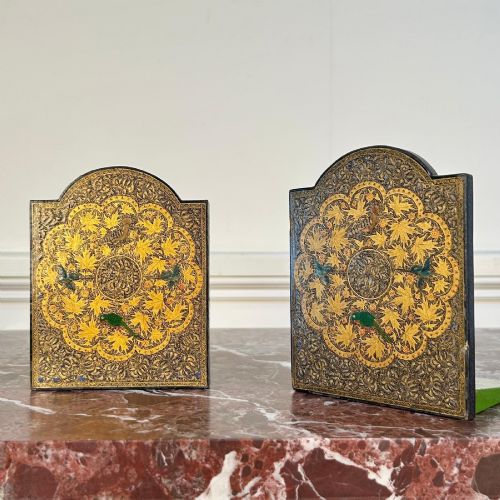
The pieces originate from various regions including England, France, Sweden, and India.
Each region employs local timber species and distinct decorative traditions on their domestic furniture.