
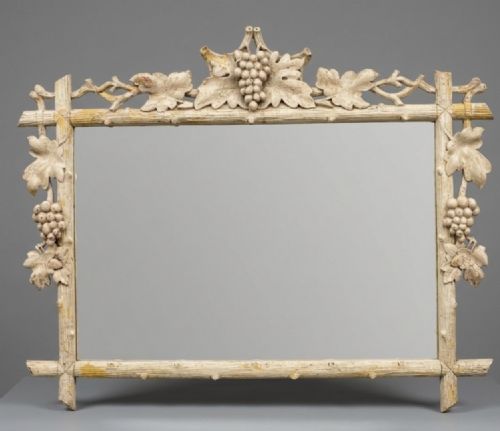

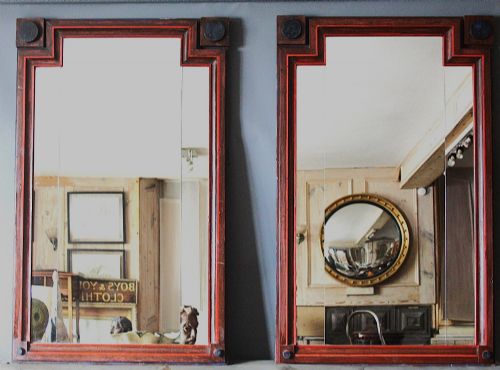

Painted Wood Framed Mirror
A painted wood framed mirror brings texture and historic charm to a room, combining practical reflection with artisanal surface decoration.
Painted Wood Framed Mirror
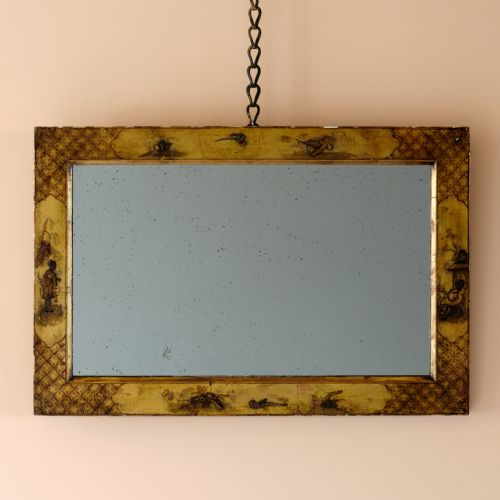
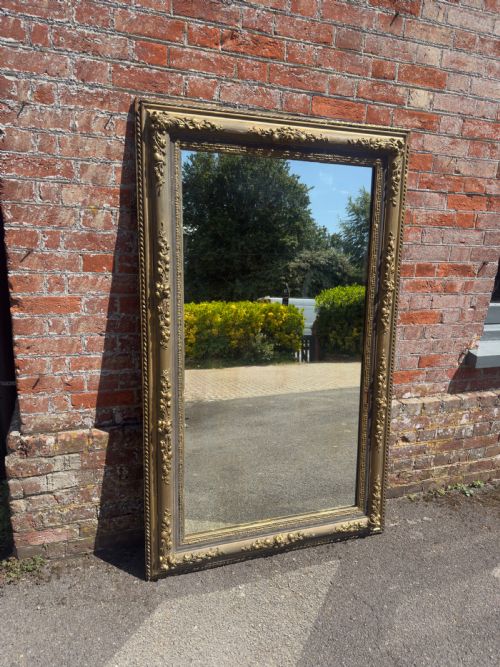
A painted wood framed mirror encompasses a variety of wall-hanging and overmantel looking glasses originating primarily from the nineteenth and early twentieth centuries.
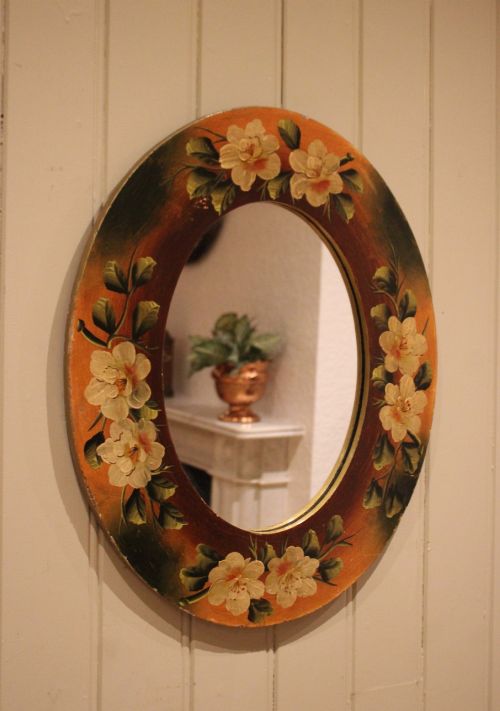
Makers utilised timber substrates coated in gesso and paint, frequently combining polychrome finishes with gilt highlights or integrated pastoral artwork.
How They Were Made
Craftsmen built structural frames from solid timbers such as pine or mahogany, shaping the wood through carving and joinery before applying surface decoration.
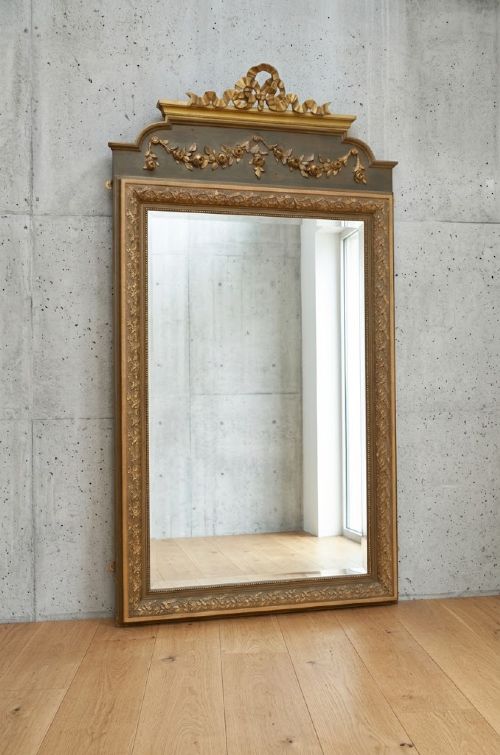
Gesso, a mixture of plaster and glue, was layered onto the wood base to create smooth surfaces or relief ornaments like ribbons, ropes, and laurel leaves.
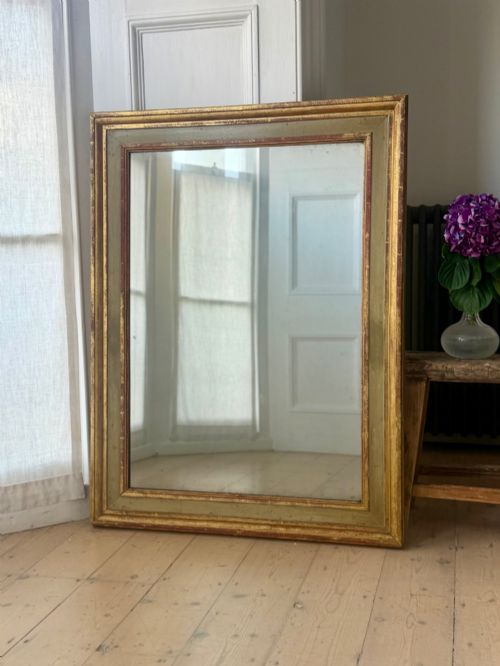
Finishing involved hand-applying paint, often combined with gold leaf or gilding, alongside the incorporation of traditional mirror glass or historical mercury glass.
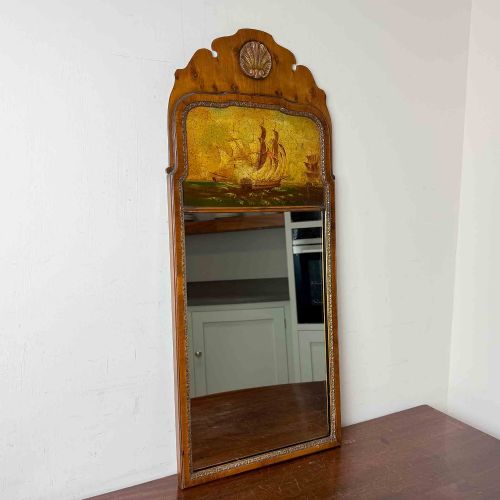
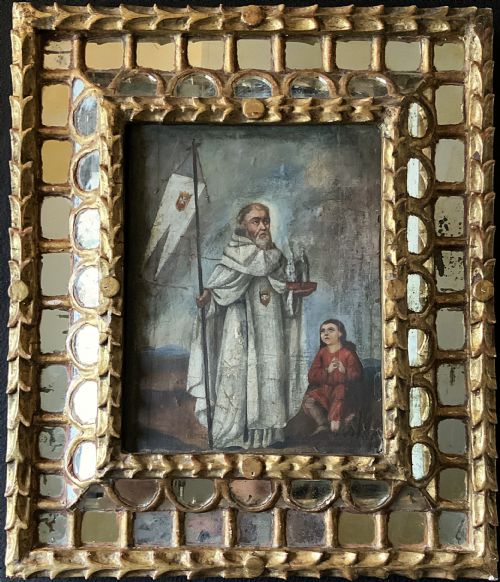
Some nineteenth-century mirrors hide small wooden frames originally designed to hold maritime scenes or pastoral oil paintings.
What Varies In Quality
The depth and complexity of the carved wooden ornament determine the initial standard of the piece, with hand-tooled details surpassing simpler moulded decorations.
The integrity of the gesso and paint layers dictates preservation, where original hand-painted polychrome surfaces hold greater artisanal merit than later overpainting.
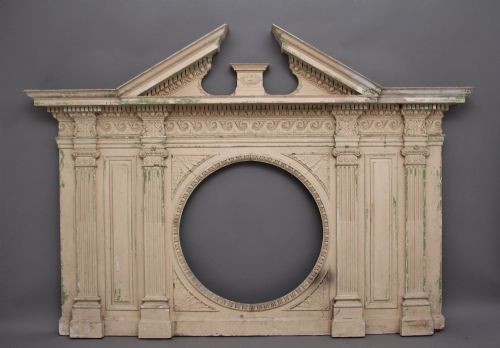
Proportion and scale play significant roles, particularly in architectural trumeau and overmantel formats where balanced framing enhances the visual impact.
The Painted Wood Framed Mirror Glossary
- Gesso
- A traditional plaster mixture applied to wood frames to provide a smooth base for gilding and paint. It is often moulded into decorative relief patterns.
- Trumeau
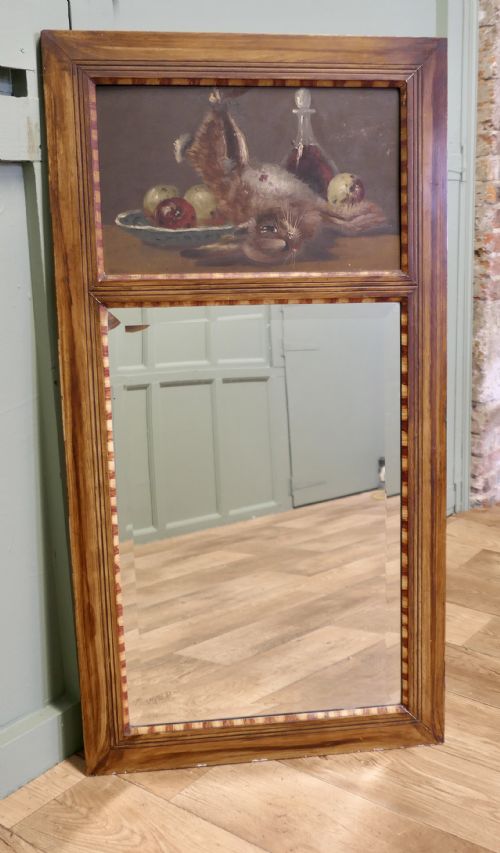
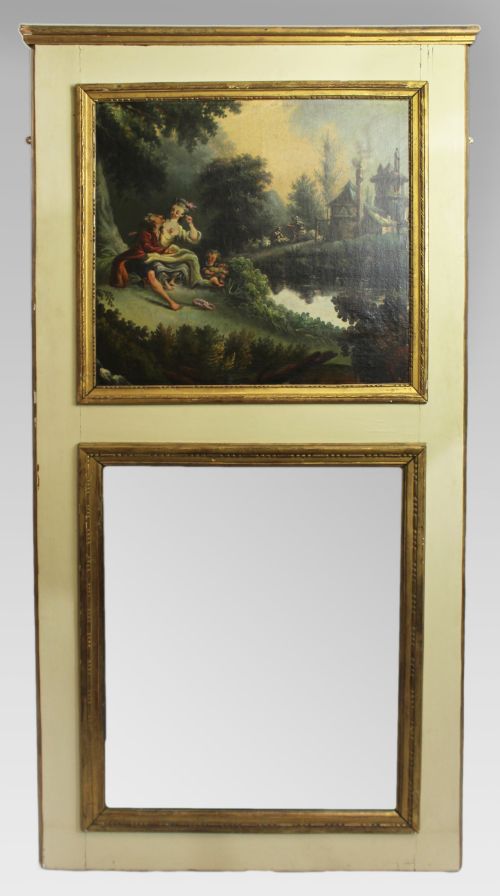
- A decorative wall mirror featuring an upper panel containing an oil painting or carving. These tall pieces were designed to sit between windows or above fireplaces.
- Giltwood
- Timber that has been coated with a thin layer of gold leaf. It frequently appears alongside painted elements on nineteenth-century frames.
- Overmantel
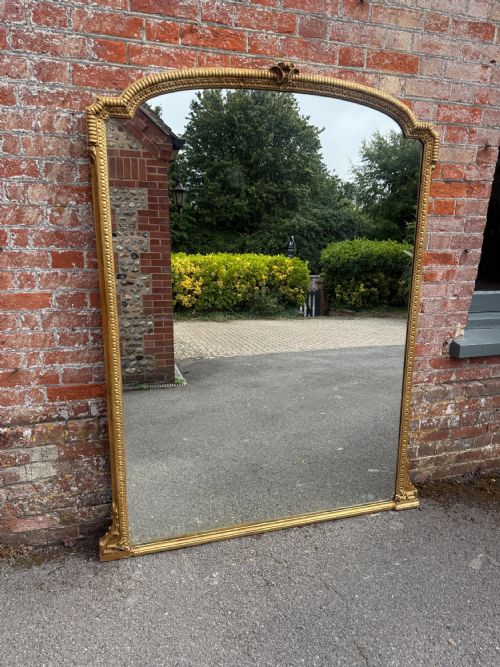
- A large mirror specifically proportioned to hang above a fireplace mantelpiece. They often feature arched tops and architectural framing.
- Mercury glass
- An early type of silvered mirror glass produced by pouring a mercury and tin amalgam behind the glass plate. It displays characteristic mottled dark spots due to age.
Painted Wood Framed Mirror: Frequently Asked Questions
How do I date an antique wooden mirror?
Dating relies on examining the construction methods of the timber frame, the composition of the gesso, and the manufacturing characteristics of the glass plate. Examining the reverse side often reveals period fixings and tool marks.
Stylistic cues such as Victorian ornamentation, Edwardian lacquering, or French Neoclassical motifs further help place the piece within a specific decade.
Where should I hang a large overmantel mirror?
An overmantel mirror is traditionally placed directly above a fireplace mantelpiece, serving as a striking focal point in a reception room. Its generous scale helps reflect natural light across the space.
Ensure the wall fixings are secured into structural studs to safely support the substantial weight of the timber and glass.
What is a French trumeau mirror?
A trumeau mirror is a tall architectural wall glass that incorporates a decorative painted panel or fine art piece directly above the mirror plate. Originating in grand interiors, they were designed to sit harmoniously between windows or above mantelpieces.
Their painted woodwork often includes pastoral scenes or floral motifs.
How do I care for antique painted frames?
Maintain painted wooden frames by dusting them gently with a dry, soft cloth to prevent the accumulation of grit. Avoid using chemical cleaners, water, or abrasive cloths that might damage fragile gesso or historic paint.
Keep the mirror away from direct sunlight and damp environments to protect the integrity of the wood and the silvered glass.