
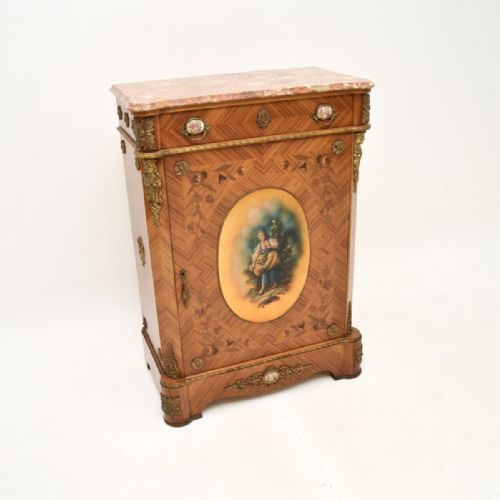


Painted Vernis Martin Furniture
Painted vernis martin furniture brings together rich French revival design and delicate painted panels to transform any formal interior.
Painted Vernis Martin Furniture
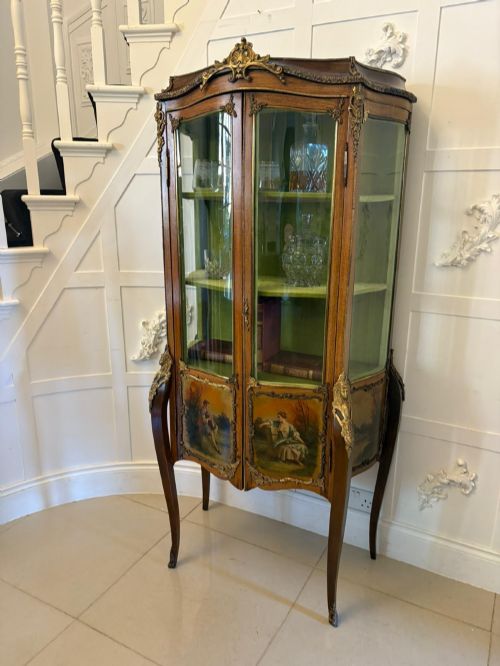
When you search for painted vernis martin furniture, you encounter grand nineteenth-century French revival pieces designed to command attention in a formal room. These items originate predominantly from the nineteenth century, spanning decades such as the eighteen-eighties alongside later interpretations from the early twentieth century.
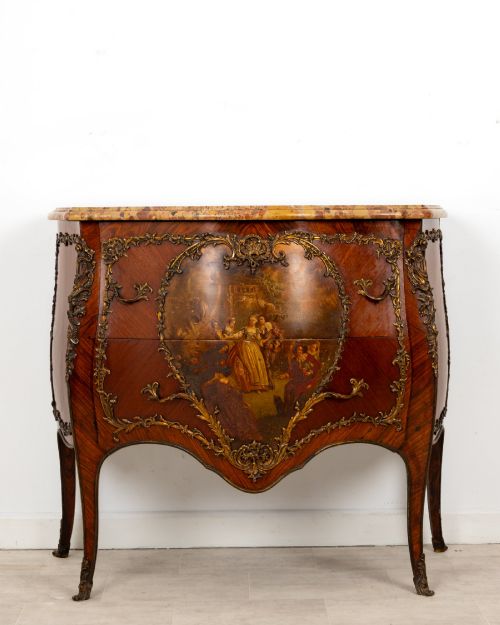
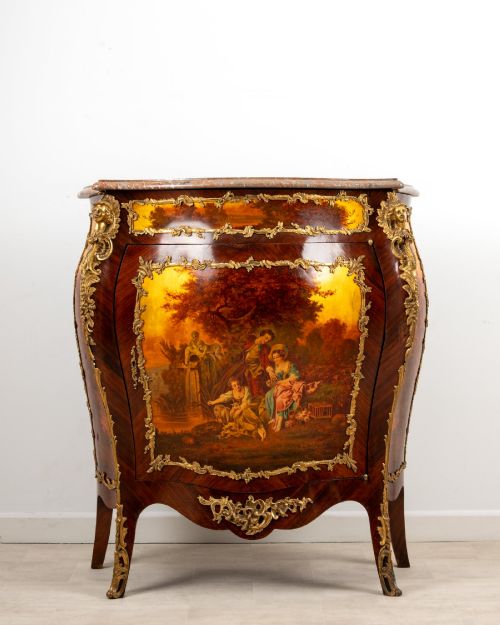
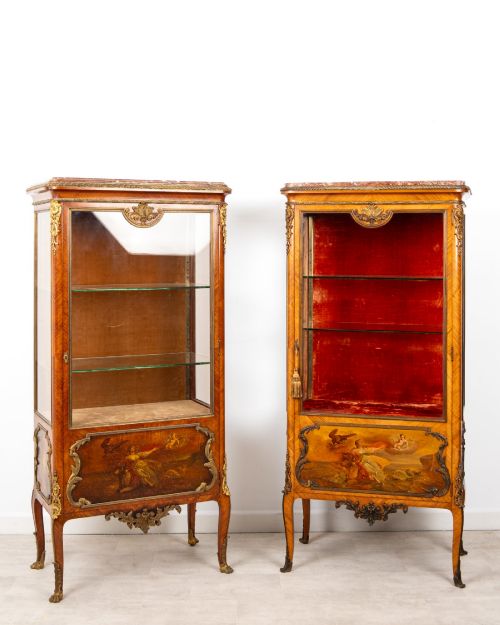
The selection on this page centres on elaborate storage forms and display pieces rather than simple utility items. Cabinets, commodes, display cabinets, and vitrines dominate the offerings, frequently accompanied by occasional tables and secretaires.
Makers drew heavily on French rococo and Louis the fifteenth styles to shape these carcasses. You will regularly find curved bombe silhouettes and glass-fronted vitrines intended to showcase decorative objects alongside paintings.
Materials and construction
The structural framework relies on dense timbers like kingwood and rosewood to form stable carcasses for cabinets and commodes. Artisans then applied specialist lacquer and paint finishes to create the characteristic vernis martin appearance across the panels.
Gilt bronze and ormolu mounts punctuate the exterior surfaces, accentuating the curves of the revival forms. Many of these cabinets also incorporate marble tops, adding substantial weight and a polished stone surface above the painted woodwork.
Some secretaire cabinets conceal secret drawers, reminding us that nineteenth-century makers loved a hidden compartment for private correspondence.
What separates the finest pieces
Quality in these revival pieces rests upon the finesse of the painted panels and the crispness of the gilt bronze mounts. Finer examples display meticulously detailed figural or landscape scenes within the lacquer, whereas lesser versions feature repetitive or heavy-handed brushwork.
The integration of the ormolu mounts and the selection of figured kingwood or rosewood dictate the overall stature of a commode or vitrine. Heavier, thicker casting in the mounts and harmonious grain matching across the doors separate standard production from exceptional craftsmanship.
The Painted Vernis Martin Furniture Glossary
- Vernis Martin
- A simulated Japanese lacquer technique developed in France, utilised here on decorative furniture panels. It allowed eighteenth-century aesthetics to be recreated during later revival periods.
- Ormolu
- Gilt bronze mounts applied to furniture edges and corners. These cast elements protect vulnerable areas while enhancing the decorative scheme.
- Bombé
- A swelling, outward-curving furniture profile. This shape requires skilled carpentry and creates dynamic surfaces for painted lacquer decoration.
- Vitrine
- A glass-fronted display cabinet intended for porcelain and curiosities. These pieces rely on clear glazing to make the contents visible from multiple angles.
- Kingwood
- A dense, richly grained timber frequently employed in French cabinetmaking. Its dark tones provide a strong contrast against gilt mounts and painted panels.
Painted Vernis Martin Furniture: Frequently Asked Questions
How do I clean marble top cabinets?
Marble surfaces require gentle cleaning with a soft cloth and neutral soap to avoid scratching the polished stone. Acidic substances must be kept away from the marble to prevent etching.
The surrounding wood and painted panels should be dusted regularly with a dry cloth.
Where were these cabinets made?
The majority of these revival pieces originate from French workshops active during the nineteenth and early twentieth centuries. Paris served as a primary hub for crafting luxury furniture featuring ormolu mounts and lacquer.
These items were built to satisfy an international demand for lavish French interior decoration.
Can I use a vitrine for display?
Vitrines are designed specifically to display porcelain, glassware, and small collectibles behind glass doors. The enclosed shelving protects items from dust while offering clear visibility.
Interior lighting can often be added discreetly to highlight the objects inside.